📌Key Takeaways
- Chair exercises are perfect for seniors with limited mobility
- They help maintain muscle strength, flexibility, and balance
- Can be done anywhere with a sturdy chair—no equipment needed
- Low risk of falls or injury compared to standing workouts
- Specific exercises make standing from a chair easier over time
- Ideal for beginners and those recovering from surgery
Yes. The chair is not a compromise with exercise—it is the equipment. A solid, armless kitchen chair supports you while you march, lift, and twist, and the ordinary act of lowering yourself into it and standing back up is itself one of the most useful movements in this guide. Seated work removes the impact and the fall risk of floor exercise while the same muscles still have to pull.
A short session—15-20 minutes, 3-5 times per week—builds strength, keeps joints moving, and rehearses the weight shifts and ankle reactions that keep you upright. People with arthritis, balance concerns, or a recent surgery can start here, because the chair sets the difficulty: feet flat, hands on the seat as needed, move only as far as control allows. Progress, eventually, means rising out of that same chair with less help from your hands.
The Ultimate Chair Exercise Guide for Seniors
The first sign is usually small: you hesitate before a low sofa, push off the armrest with both hands, or catch yourself planning errands around how long you will have to stand. None of that means exercise has to happen somewhere else. The chair you are already sitting in is strong enough to train with—and getting out of it, slowly and on purpose, is the first movement in this guide.
The National Institute on Aging counts staying physically active among the things that matter most for healthy aging. Seated workouts make that practical even on days when standing for long periods is not an option: the chair holds your balance so your muscles can do the work.
Who Is This For?
The routines here fit anyone who sits more than they would like, including:
- Seniors with limited mobility: Those who have difficulty standing for extended periods
- Individuals recovering from injury or surgery: Gentle movement aids rehabilitation
- People with balance concerns: Seated workouts reduce fall risk
- Arthritis sufferers: Low-impact exercises protect joints
- Seniors new to exercise: Easy way to start a fitness routine
- Care facility residents: Can be done in common areas or individual rooms
- Anyone seeking gentle daily movement: A simple option for staying active
Benefits of Chair Exercises for Seniors
Physical Benefits
- Joint protection: Low-impact movement preserves joint health
- Improved circulation: Gentle movement boosts blood flow
- Increased strength: Targeted exercises build muscle mass
- Better flexibility: Stretching improves range of motion
- Enhanced mobility: Daily activities become easier
- Weight management: Supports healthy weight maintenance
Mental and Emotional Benefits
- Reduced stress: Physical activity releases endorphins
- Improved mood: Regular movement combats depression and anxiety
- Increased confidence: Achieving fitness goals boosts self-esteem
- Better sleep: Exercise improves sleep quality and duration
Cognitive Benefits
- Sharper focus: Physical activity enhances brain function
- Improved memory: Blood flow to the brain supports cognitive health
- Neuroplasticity: Movement encourages neural connections
Research Evidence
Studies from the Centers for Disease Control and Prevention show that regular physical activity, even when seated, can help manage chronic conditions like heart disease, diabetes, and arthritis in older adults. The American Council on Exercise confirms that chair-based exercises significantly improve strength, flexibility, and cardiovascular health while providing a safe, accessible option for those with mobility limitations.
Getting Started: What You Need
The Right Chair
- Sturdy, stable chair that won't tip or slide
- Firm seat (not too soft or cushiony)
- Back support for comfort and safety
- No wheels or casters
- Armless design preferred (allows better movement range)
- Appropriate height (feet should rest flat on floor)
That usually means a dining or kitchen chair—four solid legs, a flat, firm seat, nothing that rolls. A wheeled office chair is the wrong tool: it can slide or swivel away in the middle of a movement, and a deeply cushioned desk chair makes it hard to tell whether you are actually sitting tall. If the chair slides on a smooth floor, push its back against a wall.
Your Environment
- Clear space around the chair for arm movements
- Non-slip floor surface
- Good lighting
- Water nearby for hydration
- Comfortable room temperature
What to Wear
- Comfortable, loose-fitting clothing
- Supportive shoes or sturdy slippers (or bare feet if preferred)
- Avoid tight or restrictive clothing
Complete Seated Exercise Routine
Warm-Up Exercises (5-10 minutes)
Start every session with a warm-up. The goal is mechanical: work up a light sweat, move fluid through the shoulders, hips, and ankles, and settle your breathing before any muscle has to pull hard:
Neck Rolls:
- Slowly roll head from side to side
- Move chin to chest, then tilt head back gently
- Repeat 5 times in each direction
Shoulder Shrugs:
- Raise shoulders toward ears
- Hold for 2 seconds
- Relax and repeat 10 times
Arm Swings:
- Swing arms forward and backward gently
- Keep movements controlled
- Do 10 swings in each direction
Ankle Circles:
- Lift one foot slightly off the floor
- Rotate ankle clockwise 5 times
- Rotate counterclockwise 5 times
- Switch feet and repeat
Seated Breathing and Posture Check:
- Sit tall with feet flat on the floor, hip-width apart
- Place hands on your thighs
- Take 5 deep breaths, inhaling through nose, exhaling through mouth
- Focus on sitting tall with shoulders relaxed and chest open
Strength-Building Exercises
Move at a conversational pace and breathe through every repetition—exhale as the limb lifts, inhale as it lowers.
Seated Marching:
- Sit tall with back straight
- Lift one knee toward chest
- Lower and repeat with other leg
- Do 10-15 marches per leg
- Keep core engaged throughout
Leg Extensions:
- Sit with feet flat on floor
- Straighten one leg in front of you
- Hold for 2-3 seconds
- Lower slowly
- Do 10-12 repetitions per leg
- Keep knee cap pointing up
Seated Leg Press:
- Place feet shoulder-width apart
- Press feet firmly into floor
- Hold for 3 seconds
- Release slowly
- Repeat 10-15 times
- Focus on pushing through heels
Arm Lifts:
- Hold light weights or water bottles
- Raise arms to shoulder height
- Keep elbows slightly bent
- Lower slowly
- Do 10-12 repetitions
- Keep shoulders relaxed
Seated Row:
- Hold a resistance band or towel
- Pull hands toward chest
- Squeeze shoulder blades together
- Hold for 2 seconds
- Release slowly
- Do 10-12 repetitions
Hand Squeezes:
- Hold a stress ball or soft object
- Squeeze gently
- Hold for 2 seconds
- Release
- Do 10-15 squeezes per hand
Seated Torso Twists:
- Sit tall with arms crossed over chest or hands on shoulders
- Slowly rotate your upper body to the right
- Keep hips facing forward—only twist the torso
- Hold for 3 seconds, looking over your shoulder
- Return to center slowly
- Repeat on the left side
- Do 5 twists in each direction
Side Leg Lifts:
- Sit tall with feet together
- Slowly lift right knee out to the side (about 45 degrees)
- Keep the movement controlled—don't swing
- Hold for 3 seconds
- Lower with control back to starting position
- Repeat 8-10 times on each leg
Flexibility Exercises
Seated Cat-Cow:
- Sit tall with hands on thighs
- Inhale, arch back gently
- Exhale, round shoulders forward
- Repeat 5-8 times
Hamstring Stretch:
- Extend one leg straight
- Lean forward from hips
- Keep back straight
- Hold 15-30 seconds
- Switch legs
- Never bounce during stretch
Chest Opener:
- Clasp hands behind back
- Straighten arms and lift gently
- Hold for 15-30 seconds
- Keep shoulders relaxed
Tricep Stretch:
- Raise one arm overhead
- Bend elbow, reaching toward opposite shoulder
- Use other hand to gently pull elbow
- Hold 15-30 seconds
- Switch arms
Neck Stretch:
- Tilt head to one side
- Keep shoulder relaxed
- Hold 15-30 seconds
- Switch sides
- Avoid straining
Wrist Circles:
- Extend arms forward with palms facing down
- Rotate wrists clockwise 10 times
- Rotate wrists counterclockwise 10 times
- Keep forearms steady throughout
- Repeat 2-3 sets
Hand Stretches:
- Extend one arm forward, palm facing out
- Use other hand to gently pull fingers back
- Hold for 20-30 seconds
- Switch hands and repeat
- Make fists and squeeze tightly, then release
- Repeat 5 times
Balance and Coordination Exercises
Keep a fingertip on the chair even when a movement feels easy; the support is part of the setup, not a concession.
Weight Shifts:
- Sit tall with feet flat
- Shift weight to right side
- Hold for 3 seconds
- Shift to left side
- Repeat 10 times
- Keep movements slow and controlled
Foot Taps:
- Tap foot to floor in front
- Tap to side
- Tap behind other foot
- Do 10 taps per foot
- Increase speed as you improve
Finger-to-Nose:
- Touch index finger to nose
- Alternate hands
- Keep eyes open, then try closed
- Do 10 repetitions per hand
Single-Leg Holds:
- Sit tall with feet flat
- Lift one foot slightly
- Hold 5-10 seconds
- Lower slowly
- Repeat with other leg
- 5-10 times each leg
Heel and Toe Raises:
- Sit with feet flat on floor, hip-width apart
- Lift your heels off the ground, keeping toes down
- Hold for 3 seconds at the top
- Lower heels back down
- Then lift toes off the ground, keeping heels down
- Hold for 3 seconds
- Repeat the sequence 10-15 times
Standing Exercises Using Chair for Support (Optional)
For seniors who can safely stand with support, these exercises add variety and challenge:
Standing Leg Curls:
- Stand behind chair, holding the backrest for balance
- Keep standing leg slightly bent for stability
- Slowly bend the other knee, bringing heel toward buttock
- Hold for 3 seconds
- Lower with control
- Repeat 8-10 times each leg
Mini Squats:
- Stand behind chair, hands on backrest for support
- Feet shoulder-width apart
- Slowly bend knees slightly (only 2-4 inches)
- Keep weight in heels, chest lifted
- Hold for 3 seconds
- Straighten back up
- Repeat 8-10 times
Cool-Down Exercises (3-5 minutes)
Gentle stretches:
- Neck stretches
- Shoulder stretches
- Back stretches
- Leg stretches
- Hold each 15-30 seconds
Deep breathing:
- Inhale deeply through nose
- Exhale slowly through mouth
- Repeat 5-10 times
- Focus on relaxation
Morning Chair Exercises for Seniors
Morning is when stiffness tends to announce itself—tight shoulders after sleep, ankles that feel slow on the kitchen floor. The ten-minute routine below loosens those joints before the day's sitting really begins and gets blood moving without getting out of your chair.
Essential Morning Routine (10-15 minutes)
Neck and Shoulder Warm-Up:
- Gently tilt head to right, hold 15 seconds, then left
- Shoulder rolls forward 5 times, backward 5 times
- 2-3 sets of each
Upper Body Wake-Up:
- Arm circles: 10 forward, 10 backward
- Arm raises overhead: 10-15 times
- Seated row movements: 10-15 times
Core Activation:
- Seated twists: 5 each side
- Pelvic tilts: 10-15 times
- Seated cat-cow: 10-15 times
Lower Body Mobility:
- Leg extensions: 10-15 each leg
- Ankle pumps: 10-15 times
- Heel-to-toe taps: 10-15 each foot
Weekly Morning Focus
| Day | Focus Area | Duration |
|---|---|---|
| Monday | Gentle Start | 10 min |
| Tuesday | Upper Body | 10 min |
| Wednesday | Core & Posture | 10 min |
| Thursday | Lower Body | 10 min |
| Friday | Full Body | 15 min |
| Saturday | Extended Session | 15-20 min |
| Sunday | Light Stretching | 10 min |
Proper Morning Technique
Sitting posture: Sit tall with back straight, feet flat on floor, shoulders relaxed, head aligned over shoulders, core gently engaged.
Breathing technique: Inhale before movement, exhale during movement, breathe deeply and regularly, maintain a steady rhythm, never hold your breath.
Exercises to Stand Up From a Chair More Easily
Rising from a chair is a bodyweight squat you perform every day without thinking about it—until it starts requiring thought. The six movements below rebuild that exact action, not a gym imitation of it.
Why Standing Up Gets Harder
Standing up from a chair requires coordinated action across several muscle groups:
- Quadriceps — The large muscles in the front of your thighs are the primary drivers of standing
- Hip flexors — These pull your torso forward as you rise
- Gluteal muscles — Your buttocks muscles push you upward
- Core muscles — Abdominal and back muscles stabilize your trunk
- Ankle muscles — These provide a stable base for pushing through the floor
When these muscles weaken from disuse, standing becomes a struggle—and the resulting avoidance leads to further weakness. The good news is that research shows functional exercises can improve sit-to-stand ability within 4 weeks for most older adults.
6 Exercises to Regain Standing Strength
1. Chair Sit-to-Stand Practice
This exercise directly trains the motion of standing up.
How to do it:
- Sit in a sturdy chair with your feet flat on the floor
- Position your feet shoulder-width apart, slightly behind your knees
- Lean forward slightly so your nose is over your toes
- Push through your feet and stand up smoothly
- Pause at the top for a moment
- Slowly lower yourself back down
- Repeat 8-12 times
- Rest and do 2-3 sets
If standard height chairs feel too challenging, start with a higher surface.
2. Assisted Squat Holds
This builds quadriceps strength and improves rise-from-seated ability.
How to do it:
- Stand in front of a sturdy chair, holding its arms for support
- Lower yourself halfway down toward the chair
- Hold this position for 5-10 seconds
- Use the chair arms to help push yourself back up
- Repeat 6-8 times
- Gradually decrease assistance as you get stronger
3. Seated Leg Extensions
This isolation exercise strengthens the quadriceps without requiring you to stand.
How to do it:
- Sit tall in a sturdy chair
- Extend your right leg straight out in front of you
- Hold for 3-5 seconds
- Slowly lower your foot back down
- Repeat with your left leg
- Alternate legs for 10-12 repetitions each
- Do 2-3 sets
4. Step-Ups
This functional exercise mimics everyday stair climbing and chair standing.
How to do it:
- Stand in front of a sturdy step or bottom stair
- Hold onto a railing or wall for balance
- Step up with your right foot
- Bring your left foot up to meet it
- Step down with your left foot
- Bring your right foot down
- Repeat 8-10 times
- Lead with the opposite leg in the next set
5. Heel Raises
Strong ankles help you push through the floor when standing.
How to do it:
- Stand behind a sturdy chair, holding it for balance
- Rise up onto your toes, lifting your heels off the ground
- Hold for 1-2 seconds
- Slowly lower your heels back down
- Repeat 10-15 times
- Rest and do 2-3 sets
6. Hip Flexor Stretches
Tight hip flexors can make it harder to lean forward when standing.
How to do it:
- Stand beside a chair for balance
- Take a large step backward with your right foot
- Keep your right heel off the ground
- Bend your left knee and push your hips forward gently
- Feel a stretch in the front of your right hip
- Hold for 20-30 seconds
- Switch sides and repeat
- Do 2-3 stretches on each side
How Long Before Improvement?
Most older adults who practice these exercises consistently notice easier standing after 3-4 weeks. Significant changes typically appear after 6-8 weeks. The key is consistency: performing the exercises several times per week, even just a few minutes each day.
Sample Weekly Routine for Standing Strength
| Day | Exercises | Duration |
|---|---|---|
| Monday | Sit-to-Stand Practice + Heel Raises | 10 min |
| Tuesday | Rest or light walking | - |
| Wednesday | Seated Leg Extensions + Step-Ups | 10 min |
| Thursday | Rest or light walking | - |
| Friday | Assisted Squat Holds + Hip Flexor Stretches | 10 min |
| Saturday | Light walking or gentle activity | 15 min |
| Sunday | Rest | - |
At-A-Glance: Complete Chair Exercise Routine
| Category | Exercises | Duration | Key Benefit |
|---|---|---|---|
| Warm-Up | Neck rolls, shoulder shrugs, ankle circles | 5-10 min | Prepares body for movement |
| Strength | Seated marching, leg extensions, arm lifts, seated rows | 10-15 min | Builds muscle for daily tasks |
| Flexibility | Hamstring stretch, chest opener, neck stretch, wrist circles | 5-10 min | Improves range of motion |
| Balance | Weight shifts, heel-to-toe raises, single-leg holds | 5 min | Reduces fall risk |
| Stand-Up Help | Sit-to-stand practice, heel raises, squat holds | 5-10 min | Makes standing easier |
| Cool-Down | Gentle stretches + deep breathing | 3-5 min | Aids recovery |
Sample Chair Exercise Routines
Quick 15-Minute Routine
| Exercise | Sets | Repetitions | Focus Area |
|---|---|---|---|
| Neck Rolls | 1 | 5 each direction | Neck mobility |
| Shoulder Shrugs | 1 | 10 | Shoulder tension |
| Seated Marching | 2 | 15 per leg | Leg strength |
| Leg Extensions | 2 | 12 per leg | Quadriceps |
| Arm Lifts | 2 | 12 | Upper body |
| Seated Row | 2 | 12 | Back strength |
| Hand Squeezes | 1 | 15 per hand | Grip strength |
| Hamstring Stretch | 1 | 30 sec per leg | Flexibility |
| Chest Opener | 1 | 30 sec | Chest flexibility |
| Weight Shifts | 1 | 10 per side | Balance |
Complete 30-Minute Routine
Warm-up (5 minutes):
- Shoulder rolls: 10 forward, 10 backward
- Neck stretches: gentle tilts and turns, 20 seconds each direction
- Ankle pumps: 1 minute of continuous movement
- Deep breathing: 5 slow breaths
Main Workout (20 minutes):
- Upper Body (8 min): Arm raises, seated rows, wrist circles, hand stretches
- Lower Body (8 min): Leg lifts, side leg lifts, marching in place, ankle pumps
- Balance (4 min): Weight shifts, heel and toe raises, single-leg holds
Cool-down (5 minutes):
- Gentle hand stretches
- Neck and shoulder stretches
- Deep breathing exercises
- Relaxation
Creating Your Chair Exercise Plan
Weekly Exercise Plan
| Day | Focus Area | Duration | Key Exercises |
|---|---|---|---|
| Monday | Full Body | 20 min | Arm raises, leg extensions, seated twists, weight shifts |
| Tuesday | Upper Body | 15 min | Shoulder presses, seated rows, arm circles, neck stretches |
| Wednesday | Core | 15 min | Pelvic tilts, seated twists, leg lifts, deep breathing |
| Thursday | Lower Body | 15 min | Leg extensions, ankle pumps, knee bends, foot taps |
| Friday | Balance & Stand-Up | 15 min | Single-leg holds, weight shifts, sit-to-stand, heel raises |
| Saturday | Extended Session | 30 min | Combination of all exercises, focus on weak areas |
| Sunday | Rest or Light | 10 min | Gentle stretching, deep breathing, relaxation |
Progression Strategies
- Increase repetitions — Add 2-3 more reps to each exercise weekly
- Add light resistance — Use resistance bands or small weights (1-2 lbs)
- Combine movements — Do arm exercises while marching
- Increase duration — Extend each exercise slightly longer
- Add new exercises — Incorporate standing exercises when safe
Safety Tips for Chair Exercises
Before You Start
- Consult your doctor if you have any health concerns, especially heart conditions, recent surgeries, or severe arthritis
- Choose the right chair—sturdy, firm seat, back support, no wheels
- Wear comfortable clothing and supportive shoes
- Clear your space—ensure there's enough room to move arms freely
- Have water nearby to stay hydrated
- Use proper posture—sit tall with feet flat on floor
During Exercise
- Maintain proper posture—sit tall, keep back straight, engage core
- Breathe steadily—don't hold your breath during exertion
- Move slowly and deliberately—no jerky or sudden movements
- Stay within your limits—stop if you feel sharp pain
- Start with fewer repetitions and gradually increase
- Rest between exercises as needed
After Exercise
- Cool down with gentle stretches for 2-3 minutes
- Hydrate by drinking water
- Rest and listen to your body
- Note any discomfort to discuss with your doctor
- Track your progress to stay motivated
Consult Your Doctor If:
- You have severe osteoporosis or recent fractures
- You have uncontrolled high blood pressure
- You have a recent shoulder, knee, or hip injury
- You experience dizziness or vertigo when moving
- You have severe arthritis with acute inflammation
- You're recovering from recent surgery (check with your physical therapist first)
- You have significant heart disease or breathing problems
Chair Exercises for Specific Conditions
For Arthritis:
- Focus on gentle range of motion exercises
- Apply heat to joints before exercising
- Move slowly and smoothly
- Stop if joint pain increases
For Recovery After Surgery:
- Follow your doctor's specific recommendations
- Start very gently and progress slowly
- Focus on circulation exercises first
- Build strength gradually as healing progresses
For Limited Mobility:
- Prioritize exercises that maintain range of motion
- Focus on upper body if leg movement is limited
- Include breathing exercises throughout
- Consider wheelchair-specific adaptations
For Osteoporosis:
- Avoid forward flexion
- Focus on extension
- Use gentle movements
- Avoid twisting
- Consult healthcare provider
Making Chair Exercises Enjoyable
Ways to Stay Motivated:
- Play favorite music while exercising
- Watch television during your routine
- Exercise with a friend or family member (even via video call)
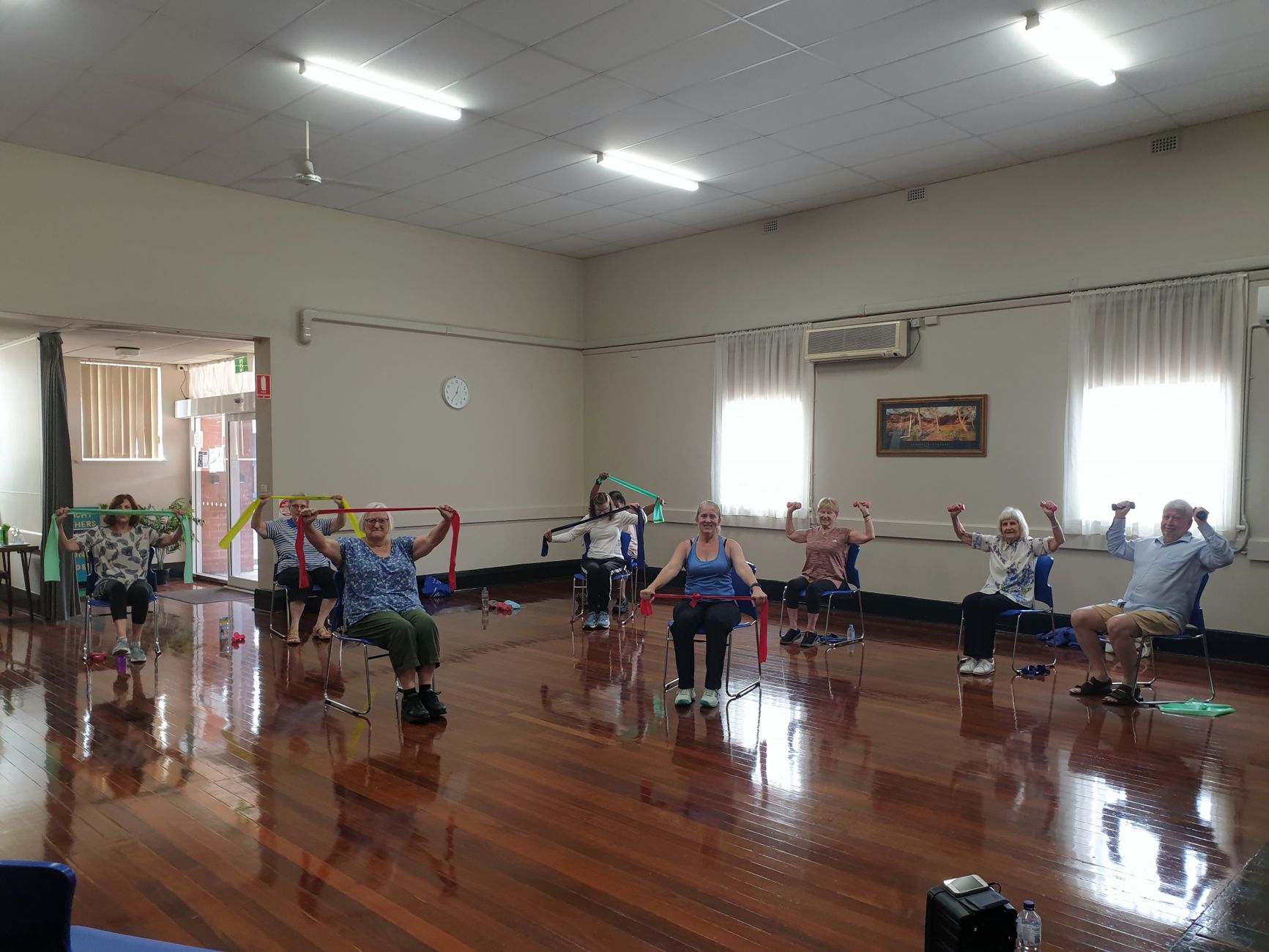
- Join a senior center chair exercise class for social benefits
- Set small goals and celebrate achieving them
- Track progress in a simple journal or calendar
- Reward yourself after completing sessions
Related Articles
- The Ultimate Senior Exercise Guide — Back to main guide
- Balance Exercises for Seniors — Ready for more active exercise?
- Stretching Exercises for Seniors — Flexibility for recovery
- Exercises to Stand Up From Chair More Easily — Targeted standing strength
- Fall Prevention Master Guide — Stay safe and steady
- Yoga for Seniors Beginners — Gentle stretching
- Walking With Knee Arthritis — Safe walking tips
- Leg Strengthening Exercises for Seniors — Build lower body power
- Aqua Aerobics for Arthritis — Water-based workouts
Medically Reviewed Sources
- American Heart Association. (2024). Physical Activity Guidelines for Older Adults.
- Centers for Disease Control and Prevention. (2024). Exercise for Older Adults.
- National Institute on Aging. (2024). Exercise and Physical Activity: Your Everyday Guide.
- Arthritis Foundation. (2024). Chair Exercises for Arthritis.
- American College of Sports Medicine. (2023). Exercise Prescription for Older Adults.
- Journal of Geriatric Physical Therapy. (2023). Seated Exercise Programs for Seniors.
- Mayo Clinic. (2024). Exercise Tips for Older Adults.
- Harvard Medical School. (2023). "Chair Exercises: A Safe Option for Seniors." Harvard Health Publishing.
- American Council on Exercise. (2024). Chair Exercise Guidelines.
Disclaimer: This information is for educational purposes only and should not replace professional medical advice. Consult healthcare providers for personalized guidance before starting any exercise program.