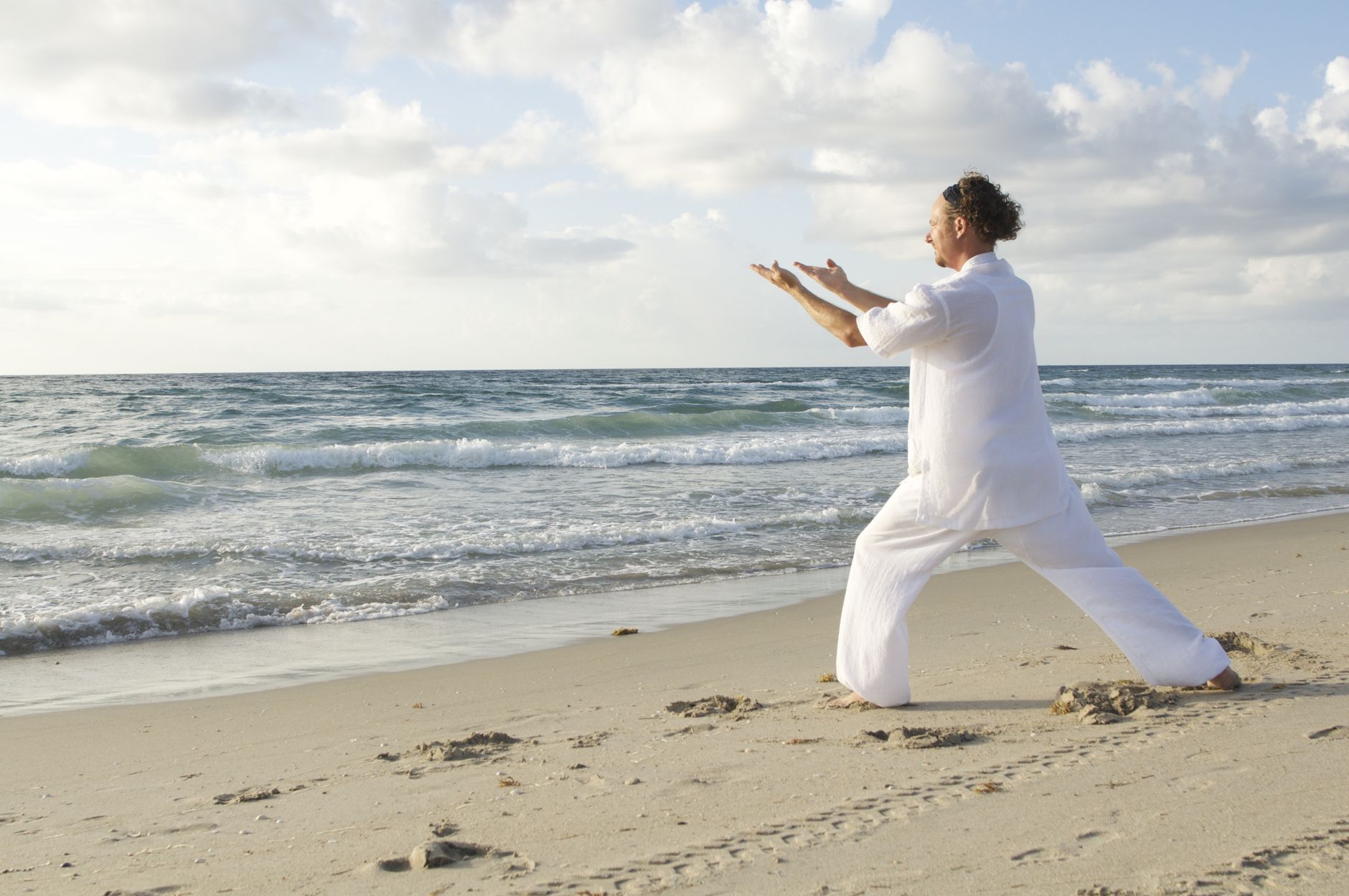
Tai Chi for Fall Prevention
Falls represent the leading cause of injury among older adults, with over 36 million falls occurring each year in the United States, according to the Centers for Disease Control and Prevention. One out of every five falls causes a serious injury such as broken bones, hip fractures, or head trauma. These injuries often lead to hospitalization, surgery, prolonged rehabilitation, and sometimes permanent disability.
The good news? Many falls are preventable. And Tai Chi stands out as one of the most effective, scientifically validated methods for preventing falls in seniors.
Multiple research studies published in respected journals including the Journal of the American Geriatrics Society, JAMA Internal Medicine, and BMJ have consistently found that Tai Chi reduces fall risk by 30-40% in seniors. The CDC's STEADI (Stopping Elderly Accidents, Deaths, and Injuries) initiative specifically recommends Tai Chi for fall prevention.
Take Action Today
If you're concerned about falling, Tai Chi offers one of the safest and most effective ways to improve your balance and reduce your risk. Starting Tai Chi before a fall occurs is far better than waiting until after.
Why Falls Matter for Seniors
Understanding Fall Risk in Older Adults:
Physical Changes That Increase Risk:
- Decreased balance due to reduced vestibular function and proprioception
- Weakened leg muscles from age-related muscle loss (sarcopenia)
- Slower reaction time when balance is challenged
- Vision changes affecting depth perception and spatial awareness
- Joint stiffness limiting mobility and recovery ability
- Medication side effects causing dizziness or balance problems
Psychological Factors:
- Fear of falling ironically increases fall risk through reduced activity
- Decreased confidence leading to cautious, unstable walking patterns
- Anxiety about mobility limiting movement practice
Environmental Factors:
- Uneven surfaces, clutter, poor lighting
- Lack of handrails on stairs
- Slippery floors, especially bathrooms
- Loose rugs or carpets
The combination of these factors creates a cascade where reduced activity leads to weaker muscles and worse balance, further increasing fall risk. Tai Chi addresses multiple factors simultaneously.
👉 See our comprehensive balance exercises guide for additional fall prevention strategies
Why Tai Chi Is So Effective for Fall Prevention
Tai Chi's effectiveness comes from its unique approach to balance and movement training:
1. Direct Balance Training
Tai Chi trains balance through specific mechanisms:
- Weight shifting from one leg to another - The fundamental skill for stable walking and standing
- Single-leg stance practice - Builds stability when weight is on one foot
- Coordinated movements challenging stability - Dynamic balance training
- Slow, controlled transitions - Develops smooth balance recovery
Unlike static balance exercises, Tai Chi trains dynamic balance—the ability to maintain stability during movement, which is exactly what's needed for daily activities.
2. Progressive Leg Strength Building
The slow, controlled movements of Tai Chi build significant leg strength through:
- Sustained muscle engagement - Holding poses builds endurance
- Controlled weight bearing - Gentle strength training without joint stress
- Functional movement patterns - Movements that mirror daily activities
- Gradual progression - Strength increases safely over weeks
Strong legs provide the foundation for stable standing and quick recovery if balance is momentarily lost.
3. Proprioception Enhancement
Proprioception—the body's ability to sense where it is in space—is crucial for balance:
- Focused movement awareness - Tai Chi emphasizes feeling body position
- Ground connection training - Developing sense of foot contact with floor
- Spatial orientation practice - Understanding body position relative to environment
- Integration of sensory information - Combining vision, vestibular, and proprioceptive inputs
Improved proprioception helps seniors sense balance challenges earlier and respond more effectively.
4. Reducing Fear of Falling
Ironically, fear of falling is a major risk factor for falls. Tai Chi addresses this psychological factor:
- Building confidence through practice - Real skills create real confidence
- Safe, supported learning environment - Reduces anxiety about falling during practice
- Gradual progression - Allows confidence to build alongside ability
- Success experiences - Regular practice demonstrates capability
Research shows that seniors practicing Tai Chi report significantly reduced fear of falling, which leads to more confident movement and actually lower fall risk.
5. Improved Reaction Time
The deliberate slowness of Tai Chi paradoxically improves reaction time:
- Training attention to movement - Heightened awareness enables faster response
- Building muscle memory - Automatic responses when balance is challenged
- Practicing weight recovery - Repeated practice of weight redistribution
- Developing balance recovery skills - Specific training for regaining stability
When a stumble or balance challenge occurs, Tai Chi practitioners can recover more quickly and effectively.
Comprehensive Approach
Tai Chi's fall prevention effectiveness comes from addressing physical, neurological, and psychological factors simultaneously. This comprehensive approach explains why Tai Chi outperforms single-focus interventions like strength training alone or balance exercises alone.
The Science: Research Evidence for Tai Chi
Major Studies Demonstrating Effectiveness:
Journal of the American Geriatrics Society (2019) A systematic review analyzing 21 randomized controlled trials found:
- Tai Chi reduced falls by 43% in studies lasting at least 6 months
- Participants had significantly better balance scores than control groups
- Fewer serious fall injuries occurred in Tai Chi groups
- Most effective for seniors with existing balance concerns
JAMA Internal Medicine (Multiple Studies) Research comparing Tai Chi to other fall prevention interventions:
- Tai Chi was more effective than most other exercise programs for reducing falls
- Particularly beneficial for seniors with prior falls or balance problems
- Cost-effective intervention - inexpensive to implement
- High adherence rates - seniors stick with Tai Chi better than many other programs
BMJ (British Medical Journal) Large-scale studies in community settings:
- Consistent 30-40% fall reduction across different populations
- Benefits maintained over 12-month follow-up periods
- Effective across age ranges - from 60 to 90+ years old
- Safe implementation - minimal adverse events
CDC STEADI Program Recommendation The Centers for Disease Control and Prevention's fall prevention initiative specifically recommends Tai Chi as:
- Evidence-based intervention for fall prevention
- Suitable for most older adults
- Implementable in community settings
- Effective for both primary and secondary prevention
👉 For structured exercise progression, see our free 4-week fitness program
Key Tai Chi Movements for Fall Prevention
These specific movements target the skills needed to prevent falls:
1. Weight Shifting Training (The Foundation)
Instructions:
- Stand with feet shoulder-width apart
- Slowly shift weight completely to right leg
- Feel right foot pressing firmly into ground (rooting)
- Left leg becomes light, heel may rise
- Keep upper body centered and relaxed
- Shift weight slowly to left leg
- Feel left foot rooting
- Continue back and forth 10-15 times
- Extremely slow—each shift takes 5-10 seconds
Fall Prevention Benefit: Trains the essential skill of transferring weight between legs—the basis of stable walking and standing. Builds proprioception (sense of foot position).
Modification: Use chair for support initially. Practice smaller shifts at first.
2. Single Leg Balance Practice
Instructions:
- Stand behind sturdy chair, holding backrest
- Shift weight to standing leg
- Lift other foot slightly (1-2 inches initially)
- Hold for 5-10 seconds
- Keep upright posture, don't lean on chair
- Lower foot with control
- Switch legs
- Practice 3-5 times each leg
- Gradually increase height and duration
- Progressively reduce chair support
Fall Prevention Benefit: Directly builds single-leg standing ability—the skill needed when stepping, recovering from a stumble, or navigating uneven surfaces.
Modification: Keep toe touching floor for added stability initially. Use walker if needed.
3. Step Training (Gait Improvement)
Instructions:
- Stand behind chair for support
- Take small step forward with right foot
- Transfer weight to right foot slowly
- Step left foot forward to meet right
- Take small step backward with right foot
- Transfer weight backward
- Continue forward and backward stepping
- Keep steps small and controlled
- Practice 10-15 steps each direction
Fall Prevention Benefit: Improves stepping ability, trains forward and backward weight transfer, develops gait stability for walking.
Modification: Practice smaller steps initially. Use walker if needed.
4. Wave Hands (Dynamic Balance)
Instructions:
- Stand with feet wider than shoulder-width
- Shift weight to left leg
- Right hand rises in circular motion
- Left hand moves downward
- Shift weight to right leg smoothly
- Right hand moves down, left rises
- Continue flowing side to side
- Practice 2-3 minutes
- Coordinate breathing with movement
Fall Prevention Benefit: Trains lateral balance (side-to-side stability), develops coordination during movement, builds continuous balance control.
Modification: Practice seated by shifting weight in chair and moving arms.
5. Grasp the Sparrow's Tail (Turning Balance)
Instructions:
- Stand in basic stance
- Shift weight to right leg
- Turn body slowly to the right
- Right arm moves outward in circle
- Left arm moves inward
- Return to center slowly
- Shift weight to left leg
- Turn body slowly to the left
- Repeat 5-8 times each direction
Fall Prevention Benefit: Trains balance during turning—a common situation where falls occur. Develops ability to maintain stability while changing direction.
Modification: Use chair for support during turns. Reduce turning range initially.
👉 For comprehensive balance training, combine with strength training for seniors
Getting Started with Tai Chi for Fall Prevention
Finding Proper Instruction:
Best Options for Seniors:
- Senior centers with dedicated Tai Chi classes for older adults
- Community wellness programs at hospitals or health organizations
- Local parks offering free community Tai Chi sessions
- Online videos specifically designed for senior fall prevention (YouTube, senior fitness websites)
- Physical therapy clinics incorporating Tai Chi into balance rehabilitation
- Senior living communities with wellness programs
What to Look For:
- Classes labeled specifically for seniors or older adults
- Instructors with experience teaching seniors
- Programs emphasizing balance and fall prevention
- Options for supported/seated practice if needed
- Progressively structured curriculum
Starting Safely:
Essential Safety Steps:
- Use support initially - Chair, wall, or walker without hesitation
- Practice on stable surface - Non-slip flooring, flat even ground
- Start with simplest movements - Weight shifting and basic stance first
- Keep movements small - Full range of motion not needed initially
- Have supervision initially - Instructor or family member watching
- Practice in safe environment - Clear space, good lighting, no obstacles
Building Practice Habit:
Recommended Schedule:
- Aim for 3-5 sessions per week minimum
- Start with 10-15 minute sessions initially
- Gradually increase to 20-30 minutes over weeks
- Consistency matters more than duration
- Daily practice ideal for maximum benefit
Progression Approach:
Week 1-2: Foundation Phase
- Learn basic stance with support
- Practice weight shifting with chair
- Establish comfortable, safe practice routine
- Focus on feeling stable, not challenging balance
Week 3-4: Building Phase
- Progress weight shifting without support (if ready)
- Add single-leg balance practice (with support)
- Increase session duration to 15-20 minutes
- Notice improved confidence
Week 5-8: Development Phase
- Reduce support progressively
- Add dynamic movements (wave hands)
- Include step training
- Practice 20-30 minutes
Week 9+: Maintenance Phase
- Full routine without significant support
- Practice all key movements regularly
- Maintain 3-5+ sessions weekly
- Notice balance improvements in daily life
👉 Combine Tai Chi with stretching exercises for flexibility
What to Expect from Tai Chi Practice
Short-Term Benefits (Weeks 1-4):
- Improved confidence and reduced fear of falling
- Better posture and body awareness
- Familiarity with basic movements
- Initial sense of improved stability
- Understanding of weight shifting concept
Medium-Term Benefits (Weeks 4-8):
- Noticeable improvement in balance testing
- Less stiffness and better mobility
- Improved sleep quality
- Better posture in daily activities
- More confident walking
- Ability to stand longer without support
Long-Term Benefits (Months 3-6):
- Significantly reduced fall risk (30-40%)
- Improved leg and core strength
- Better reaction time when balance challenged
- Enhanced overall coordination
- Lower stress levels
- Improved mood and mental clarity
- Tai Chi becoming enjoyable, sustainable habit
Real Improvements
Seniors practicing Tai Chi consistently report not just feeling better, but demonstrating measurable improvements in balance tests, walking stability, and confidence. Falls that previously occurred may stop happening, and stumbles may be recovered instead of turning into falls.
Fall Prevention: Beyond Tai Chi
While Tai Chi is highly effective, comprehensive fall prevention requires multiple strategies:
Physical Environment Modifications:
- Remove tripping hazards - clutter, loose rugs, cords
- Install grab bars in bathrooms (toilet, shower)
- Add handrails on all stairs
- Improve lighting throughout home
- Use non-slip mats in shower/bathroom
- Secure or remove loose rugs
- Clear walking paths throughout home
Medical Interventions:
- Review medications with doctor for fall-risk side effects
- Regular eye exams to maintain vision
- Check for balance-related conditions (inner ear, neurological)
- Address foot problems affecting stability
- Manage chronic conditions affecting balance
Lifestyle Factors:
- Stay physically active regularly
- Wear appropriate footwear - non-slip, supportive
- Use assistive devices as recommended (cane, walker)
- Move deliberately - don't rush
- Stay hydrated and well-nourished
- Avoid alcohol excess affecting balance
Comprehensive Exercise:
Beyond Tai Chi, incorporate:
- Strength training for leg muscles
- Balance exercises variety
- Walking programs for endurance
- Stretching for flexibility
Common Concerns Addressed
"I've already fallen—can Tai Chi help?"
Absolutely! Many seniors start Tai Chi specifically after experiencing a fall to rebuild confidence and prevent future falls. Tai Chi is effective for both primary prevention (preventing first falls) and secondary prevention (preventing repeat falls). Starting after a fall is wise, not too late.
"I'm in a wheelchair—can I do Tai Chi?"
Yes! Chair Tai Chi provides many balance-related benefits for those who cannot stand. Upper body movements, trunk stability, and breathing exercises can be done seated. Chair Tai Chi may also help build strength for eventual standing if that's a goal.
"I'm not flexible—will that prevent Tai Chi benefits?"
Tai Chi doesn't require flexibility. You move within your comfortable range of motion. Benefits come from slow, controlled movement and balance training, not from achieving extreme positions. Many seniors practice Tai Chi with limited flexibility and gain significant fall prevention benefits.
"How long until I see reduced fall risk?"
Many seniors report improved confidence within 2-4 weeks. Measurable balance improvements typically develop over 8-12 weeks. Significant fall risk reduction is demonstrated in studies after 12+ weeks of consistent practice. Patience is essential—progress happens gradually.
"I'm afraid of falling while practicing Tai Chi"
Use chair, wall, or walker support freely. Tai Chi practice should feel safe. Start with supported practice, gradually reducing support as ability improves. The goal is to build skills safely, not to risk falling during practice. Most falls during Tai Chi occur when seniors push beyond their safe ability level.
"Can Tai Chi help if I have severe balance problems?"
Tai Chi can be adapted for severe balance issues. Seated practice, supported standing, and modified movements work well. Work with physical therapist or specialized Tai Chi instructor for individualized modifications. Even highly modified Tai Chi provides benefits.
Related Articles
Build comprehensive fall prevention with these resources:
- Tai Chi for Beginners Over 70 - Specific guidance for older seniors
- Tai Chi for Elderly Beginners - Comprehensive beginner movements
- Balance Exercises for Seniors - Additional balance training
- Low-Impact Exercises for Seniors - Gentle workout options
- Strength Training for Seniors Over 65 - Build leg strength
- Chair Exercises for Beginners - Seated exercise options
- Morning Exercises for Elderly at Home - Daily routine
Frequently Asked Questions
Q: Can Tai Chi really prevent falls?
A: Yes! Multiple rigorous scientific studies confirm Tai Chi reduces fall risk by 30-40% in seniors. This isn't anecdotal—it's evidence-based. The CDC and major medical organizations recommend Tai Chi specifically for fall prevention.
Q: How often should I practice Tai Chi for fall prevention?
A: Aim for at least 3-4 sessions per week, ideally daily. Studies showing significant fall reduction used programs of 2-3 sessions weekly for 12+ weeks. Consistency matters more than duration—regular short practice is more effective than occasional longer sessions.
Q: Is Tai Chi safe for seniors with health conditions?
A: Tai Chi is generally safe for most seniors because movements are gentle, low-impact, and can be modified. However, check with your doctor before starting if you have severe balance problems, heart conditions, significant osteoporosis, or recent surgery.
Q: Do I need special equipment for Tai Chi fall prevention?
A: No special equipment is required. Comfortable clothes and flat, non-slip shoes suffice. A sturdy chair for support is helpful initially. Tai Chi is inexpensive to practice—no gym, machines, or expensive gear needed.
Q: Can I practice Tai Chi at home for fall prevention?
A: Yes! Many excellent online videos teach Tai Chi specifically for senior fall prevention. Home practice works well once you understand basic movements. Many seniors start with classes, then supplement with home practice.
Q: What's the best Tai Chi style for fall prevention?
A: Yang style Tai Chi, with its slow, gentle movements and emphasis on weight shifting, is most commonly used in fall prevention studies and programs. Sun style, which uses smaller movements and higher stance, is excellent for seniors with significant mobility limitations.
Q: Should I combine Tai Chi with other fall prevention strategies?
A: Yes! Tai Chi works best as part of comprehensive fall prevention that includes home safety modifications, medication review, vision care, proper footwear, and possibly other exercises like strength training. Tai Chi alone reduces risk significantly; combined approaches reduce it even more.
Q: How does Tai Chi compare to other fall prevention exercises?
A: Research shows Tai Chi often outperforms single-focus interventions like strength training alone or balance exercises alone because it addresses multiple factors simultaneously—balance, strength, proprioception, confidence, and reaction time. The comprehensive approach explains its effectiveness.
References
-
Centers for Disease Control and Prevention. (2024). "Falls Among Older Adults: Statistics and Prevention." https://www.cdc.gov/steadi/
-
Journal of the American Geriatrics Society. (2019). "Tai Chi for Preventing Falls in Older Adults: Systematic Review and Meta-Analysis." https://journals.lww.com/jgeriatrics
-
JAMA Internal Medicine. (2023). "Effectiveness of Tai Chi for Fall Prevention in Older Adults." https://jamanetwork.com/journals/jamainternalmedicine
-
National Institute on Aging. (2024). "Fall Prevention: Tai Chi and Other Interventions." https://www.nia.nih.gov/health/fall-prevention
-
Harvard Medical School. (2023). "Tai Chi for Balance and Fall Prevention." Harvard Health Publishing. https://www.health.harvard.edu/staying-healthy
-
BMJ. (2023). "Tai Chi for Fall Prevention in Community-Dwelling Older Adults." https://www.bmj.com/content
Falls are a serious concern for seniors, but Tai Chi offers one of the most effective, scientifically validated approaches to reducing fall risk. Start practicing before a fall occurs, use support as needed, practice consistently, and expect gradual but significant improvement. Tai Chi addresses both the physical and psychological aspects of fall prevention, creating comprehensive risk reduction.
If you have severe balance problems, significant osteoporosis, or other serious health conditions, work with a physical therapist or healthcare provider to develop an individualized Tai Chi approach suitable for your specific needs.