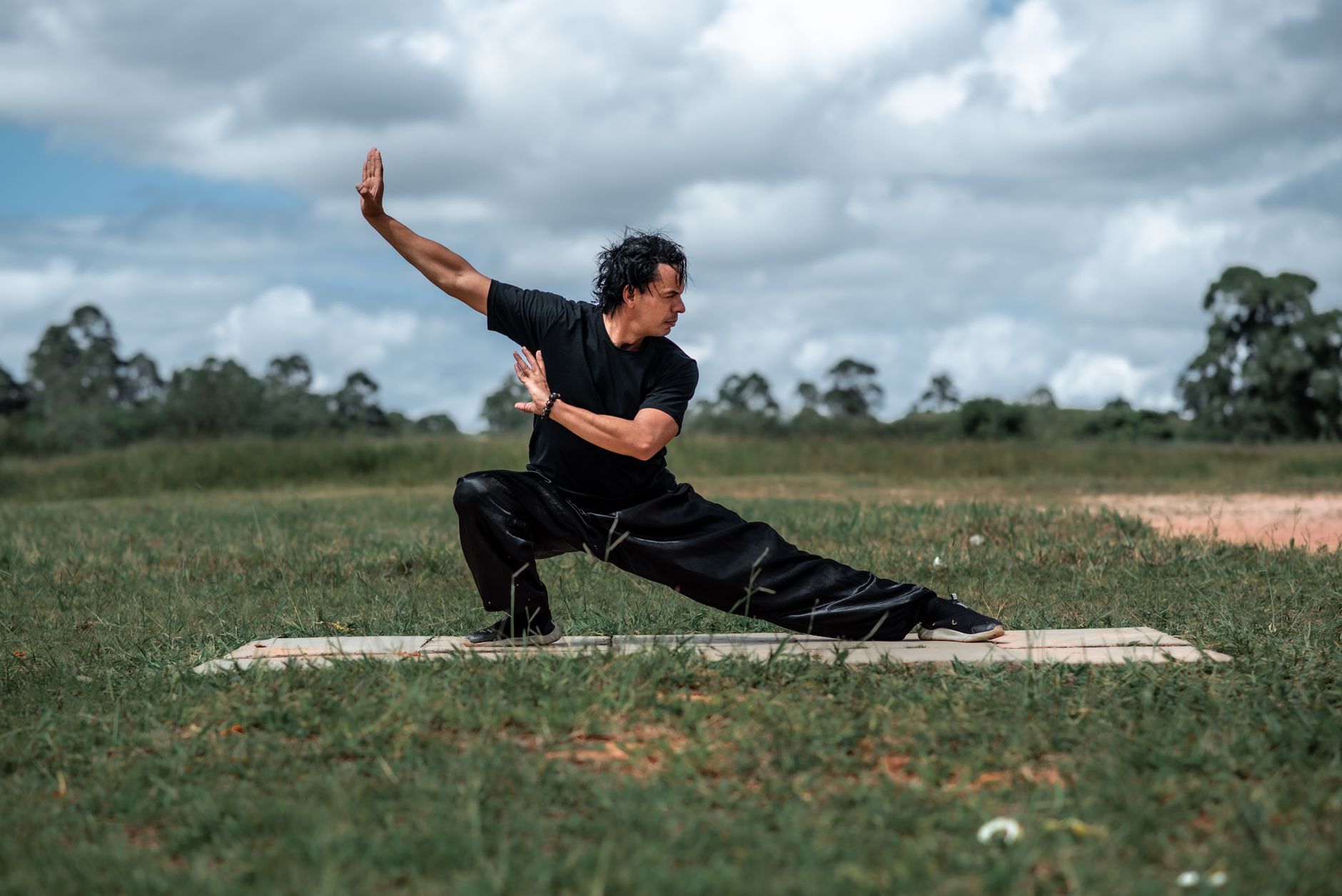
Best Tai Chi Movements for Balance
Balance is one of the first things to decline as we age. According to the CDC, falls are the leading cause of injury among seniors, with over 36 million falls occurring each year in the United States. Poor balance is a major contributing factor to these falls, and the consequences can be serious—from broken bones to head injuries to loss of independence.
Tai Chi is uniquely effective for improving balance because it trains the body to maintain stability through slow, controlled movements. Unlike walking or strength training alone, Tai Chi specifically targets the balance system through weighted shifting, single-leg stands, and coordinated movements that challenge stability while remaining gentle on joints.
The key principle is weight shifting—transferring weight from one leg to the other while keeping the body upright and relaxed. This simple action trains your vestibular system, proprioception, and muscle coordination all at once.
This guide covers the best Tai Chi movements for improving balance, with detailed instructions and modifications for different ability levels.
Start with Support
If you're new to Tai Chi or have balance concerns, start with a chair or wall for support. Gradually reduce support as your balance improves. There's no shame in using support—it's a smart approach to safe progress.
Key Principles of Tai Chi Balance Training
Before diving into movements, understand these core principles that make Tai Chi so effective for balance:
1. Slow, Controlled Movement
Speed is the enemy of balance. Moving slowly gives your nervous system time to process information and make adjustments. Quick movements can overwhelm your balance system, while slow movements train it to respond precisely.
2. Weight Shifting
Most Tai Chi movements involve shifting weight from one leg to the other. This trains your balance system by:
- Challenging your vestibular system (inner ear balance)
- Improving proprioception (body position awareness)
- Building leg strength in the supporting leg
- Teaching coordination between upper and lower body
3. Rooted Stance
Keep your feet firmly planted and your knees slightly bent. This creates a stable base. Think of yourself as a tree with deep roots—you're grounded and stable, not rigid and stiff.
4. Relaxed Upper Body
Your arms should move gently, not stiffly. Let your shoulders relax down away from your ears. Tension in your upper body actually makes balance harder by interfering with natural adjustments.
5. Focused Mind
Tai Chi is "meditation in motion." Focus on your body position and breathing. A distracted mind leads to a distracted body, which affects balance. Keep your attention on what you're doing in this moment.
6. Continuous Flow
Movements should flow smoothly from one to the next without stopping. This continuous motion trains your body to maintain balance through transitions, which is where many falls actually occur.
The Best Tai Chi Movements for Balance
1. Weight Shifting (Basic)
Purpose: Train basic balance through controlled weight transfer
How to do it:
- Stand with feet shoulder-width apart, knees slightly bent
- Slowly shift your weight to your right foot
- Keep your left foot lightly touching the ground
- Hold for 2-3 seconds, feeling the stability
- Slowly shift back to center
- Transfer weight to your left foot
- Hold for 2-3 seconds
- Return to center
- Repeat 5-10 times on each side
Key points:
- Keep your upper body relaxed and your gaze forward
- Don't look down at your feet—this can actually affect balance
- Feel the weight transfer completely before switching sides
- Move slowly enough that you could stop at any point
Modification: Use a chair for support initially. Place one hand on the chair back while practicing.
2. Single Leg Balance (Modified)
Purpose: Improve single-leg stability and build confidence
How to do it:
- Stand next to a chair for support
- Hold onto the chair with one hand
- Slowly lift your right foot off the ground
- Keep your knee slightly bent, not locked
- Hold for 2-3 seconds initially
- Lower your foot slowly with control
- Repeat 5-10 times on each side
- Gradually increase hold time as you improve
Key points:
- Focus on feeling stable before lifting your foot
- Keep your lifted leg relaxed
- Don't rush—take your time with each repetition
- Reduce chair support gradually: from one hand to one finger to no support
Progression: As you get stronger, try lifting your foot higher or holding for longer periods.
3. The Wave Hands
Purpose: Improve coordination and balance through arm movement while challenging stability
How to do it:
- Stand with feet shoulder-width apart
- Raise your arms to shoulder height, palms facing down
- Slowly move your right arm forward and left arm back
- Shift your weight to your right foot as your right arm moves forward
- Continue the wave motion, alternating arms and weight
- Keep movements smooth and controlled
- Practice for 1-2 minutes
Key points:
- Coordinate your breathing with the movement—inhale as your arm moves forward, exhale as it moves back
- Keep your arms at shoulder height throughout
- Let the arm movement guide the weight shift naturally
- Move as if your hands are floating through water
4. Step Forward and Back
Purpose: Train balance during movement transitions, which is where many falls occur
How to do it:
- Stand with feet together
- Slowly step forward with your right foot
- Shift your weight to your right foot completely
- Hold for a moment, feeling the stability
- Step back with your right foot, returning to starting position
- Repeat with your left foot
- Do 5-10 steps on each side
- Keep your steps small and controlled
Key points:
- Focus on placing your foot gently, not stomping
- Complete the weight transfer before stepping back
- Keep your gaze forward throughout
- Use a chair for support if needed
5. The "Grasp the Sparrow's Tail" (Modified)
Purpose: Improve balance through a series of coordinated movements involving turning and weight shifting
How to do it:
- Start in the opening stance with feet shoulder-width apart
- Raise your arms in front of you to shoulder height
- Slowly turn to your right, shifting weight to your right foot
- Extend your right arm forward, palm facing out
- Left arm comes across your body
- Return to center, shifting weight back to both feet
- Repeat on the left side
- Do 5-8 repetitions on each side
Key points:
- This is a classic Tai Chi movement that trains multiple balance skills
- Focus on smooth transitions between positions
- Keep your knees bent throughout
- Let your hips lead the turning movement
6. The "Cloud Hands" (Simplified)
Purpose: Improve upper body coordination and balance while moving sideways
How to do it:
- Stand with feet wider than shoulder-width
- Raise your arms to chest height, palms facing each other
- Slowly move your right hand up and left hand down in a circular motion
- Shift your weight slightly to your right foot
- Then reverse: left hand up, right hand down
- Shift weight to left foot
- Continue the circular motion, alternating hands
- Keep movements smooth and flowing
- Practice for 1-2 minutes
Key points:
- Imagine your hands are moving through clouds—soft and gentle
- Let your weight shift naturally with the hand movement
- Keep your gaze forward, not on your hands
- The side-to-side movement trains lateral stability
Practice Tips for Balance
Get the most out of your Tai Chi practice:
Creating a Balance-Focused Tai Chi Routine
Warm Up (2-3 minutes)
- Stand in opening stance
- Deep breathing for 30 seconds
- Gentle neck rolls
- Shoulder shrugs
- Light marching in place
Main Practice (10-15 minutes)
- Weight shifting: 2-3 minutes
- Single leg balance: 2-3 minutes
- Wave hands: 2-3 minutes
- Step forward and back: 2-3 minutes
- Grasp the sparrow's tail: 2-3 minutes
- Cloud hands: 2-3 minutes
Cool Down (2-3 minutes)
- Return to opening stance
- Deep breathing for 1 minute
- Gentle stretching for major muscle groups
- Acknowledge your effort and progress
Common Mistakes to Avoid
Mistake 1: Moving Too Fast
Solution: Slow down! The slowness is what builds balance. Your nervous system needs time to process and respond. If you're moving quickly, you're missing the benefit.
Mistake 2: Stiffening Up
Solution: Relax your shoulders and arms. Let movements flow naturally. Tension actually interferes with balance by preventing natural adjustments.
Mistake 3: Looking Down
Solution: Keep your gaze forward. Looking down at your feet can disrupt your balance system. Your eyes provide important information about your position.
Mistake 4: Forgetting to Breathe
Solution: Coordinate your breath with movement. Inhale for expansion movements, exhale for contraction movements. Holding your breath creates tension.
Mistake 5: Trying Too Hard
Solution: Tai Chi should be relaxing. Don't strain or force movements. Effortless effort is the goal—you're working, but it doesn't feel like work.
Mistake 6: Not Using Support When Needed
Solution: Use a chair or wall for support whenever you need it. There's no shame in being safe. Progress comes from consistent practice, not from being unsafe.
FAQ: Tai Chi for Balance
Q: How long does it take to improve balance with Tai Chi? A: Many seniors report improved balance within 4-6 weeks of regular practice. However, individual results vary based on starting fitness level, consistency of practice, and any underlying conditions.
Q: Can Tai Chi really prevent falls? A: Yes! Multiple studies, including research published in the Journal of the American Geriatrics Society, confirm that Tai Chi reduces fall risk by up to 40% in older adults.
Q: Do I need to learn formal Tai Chi forms? A: No! Even simple movements like weight shifting and single-leg stands provide significant balance benefits. You don't need complex sequences to improve stability.
Q: Is Tai Chi safe for people with balance issues? A: Yes! Tai Chi is one of the safest forms of balance training. Start with support and progress gradually. The gentle, controlled movements minimize fall risk during practice.
Q: How often should I practice? A: Aim for at least 3 times per week. Consistency is more important than duration. Daily practice of even 10 minutes provides better results than occasional longer sessions.
Q: Can I practice Tai Chi sitting down? A: Yes! Chair Tai Chi offers many of the same balance benefits for those who can't stand. Seated weight shifting and arm movements train balance even without standing.
Q: Should I continue if I feel unsteady? A: If you feel very unsteady, use more support or reduce the challenge level. However, some feeling of challenge is normal—you're training your balance system. Stop if you feel unsafe.
Q: Can I practice Tai Chi if I use a cane? A: Absolutely. Many seniors practice Tai Chi with mobility aids. Use your cane for support during practice, and some movements can even incorporate the cane.
Related Articles
- Tai Chi for Seniors - Comprehensive guide to Tai Chi benefits and practice
- Tai Chi for Beginners Over 70 - Gentle movements specifically designed for seniors over 70
- Tai Chi for Fall Prevention - How Tai Chi reduces fall risk
- Chair Tai Chi for Seniors - Seated Tai Chi options
- 10 Minute Daily Tai Chi Routine - Quick daily practice routine
- Balance Exercises for Seniors - Additional balance training options beyond Tai Chi
- Fall Prevention Balance Routine - Daily fall prevention exercises
- Low-Impact Exercises for Seniors - Gentle exercise alternatives
References
- Journal of the American Geriatrics Society: Tai Chi and Falls - Research on Tai Chi effectiveness for fall prevention
- CDC: Fall Prevention - Government resource on fall prevention strategies
- National Institute on Aging: Tai Chi - Information on Tai Chi benefits for seniors
- Mayo Clinic: Balance Exercises - Medical perspective on balance training
- Harvard Health: Tai Chi for Balance - Research on Tai Chi benefits