📌Key Takeaways
- Cycling can provide a low-impact way for many older adults to stay aerobically active
- The best bike depends on comfort, mobility, balance, terrain, and how you plan to ride
- Step-through, hybrid, e-bike, recumbent, and tricycle designs each solve different problems
- New riders can start with short, easy rides and gradually increase duration
- The talk test is a simple way to keep recreational rides at a comfortable intensity
- Persistent knee, back, hip, or hand pain can be a sign that your bike fit or riding routine needs attention
- Safe routes, a properly fitted helmet, and a well-maintained bike matter more than riding speed
Cycling for Seniors: How to Ride Safely and Enjoyably After 50
A bicycle does not have to feel like exercise.
For some older adults, it is simply a way to get outside. You can ride to a park, meet a friend for coffee, take a familiar neighborhood route, or spend an hour exploring somewhere you have not visited before.
That can be especially appealing when traditional workouts start to feel repetitive or uncomfortable.
Cycling also gives you control. You decide how far to go, how hard to pedal, when to stop, and whether today's ride is ten minutes around the block or an afternoon on a trail.
But getting back on a bike after years away can bring some very practical questions.
Is my balance good enough?
What if my knees hurt?
How do I get on and off the bike safely?
Should I buy a traditional bicycle, a step-through, or an e-bike?
How long should I ride?
And what should I do if my back or hands start hurting?
Those questions matter more than your age alone.
Cycling after 50 does not need to be about speed, distance, or performance. The goal is to find a bike and a riding routine that feel comfortable enough to keep doing.
Is Cycling Good for Seniors?
For many older adults, cycling is a useful form of aerobic activity that puts relatively little impact on the joints compared with activities such as running.
The bike supports much of your body weight while you pedal, and resistance can be adjusted to match your current fitness.
Cycling can also be adapted in several ways:
- Ride outdoors on a quiet road or paved trail
- Use an indoor stationary bike
- Choose an upright or step-through bicycle
- Use an e-bike when hills or distance become a barrier
- Choose a recumbent bike when back or balance concerns make a conventional bicycle uncomfortable
The important distinction is that low impact does not mean risk-free.
A poorly fitted bicycle, difficult route, excessive resistance, or sudden increase in riding time can cause problems. Outdoor cycling also involves traffic, uneven surfaces, weather, and the possibility of falling.
The best approach is to make the activity fit the rider rather than trying to make the rider fit a particular type of bicycle.
For other joint-friendly ways to stay active, see our Low-Impact Exercises for Seniors guide.
Why Cycling Can Work Well After 50
One of the biggest advantages of cycling is flexibility.
You do not have to ride at a particular speed. You do not have to cover a certain number of miles. And you do not need to turn every ride into a workout.
A comfortable ride around the neighborhood can still count as physical activity.
It keeps the legs working
Pedaling involves the quadriceps, hamstrings, glutes, and calves.
Those muscles matter outside the bicycle, too. Stronger legs support everyday activities such as walking, standing from a chair, climbing stairs, and getting around independently.
Cycling should not replace strength training entirely, but it can be one enjoyable way to keep the legs active.
It builds aerobic fitness
Cycling can raise your heart rate and breathing without requiring the repeated impact of running.
Over time, regular aerobic activity can help you become more comfortable with sustained physical effort.
You might notice that a hill, a long walk, or an everyday task feels less demanding than it did before.
For a broader explanation of sustainable cardio intensity, see our Zone 2 Cardio for Seniors guide.
It is relatively low impact
Because the bicycle supports much of your body weight, cycling generally places less impact on the joints than running and jumping activities.
That can make it an attractive option for some people who find higher-impact exercise uncomfortable.
But your joints still move repeatedly during cycling. A bike that does not fit well, a gear that is too hard, or a sudden increase in mileage can still irritate the knees, hips, or other areas.
It can support an active lifestyle
Cycling is not limited to exercise sessions.
You might ride to:
- A local park
- A friend's house
- A coffee shop
- A grocery store
- A community center
- A scenic trail
When exercise becomes part of something you already enjoy doing, it can be easier to maintain.
It can be social
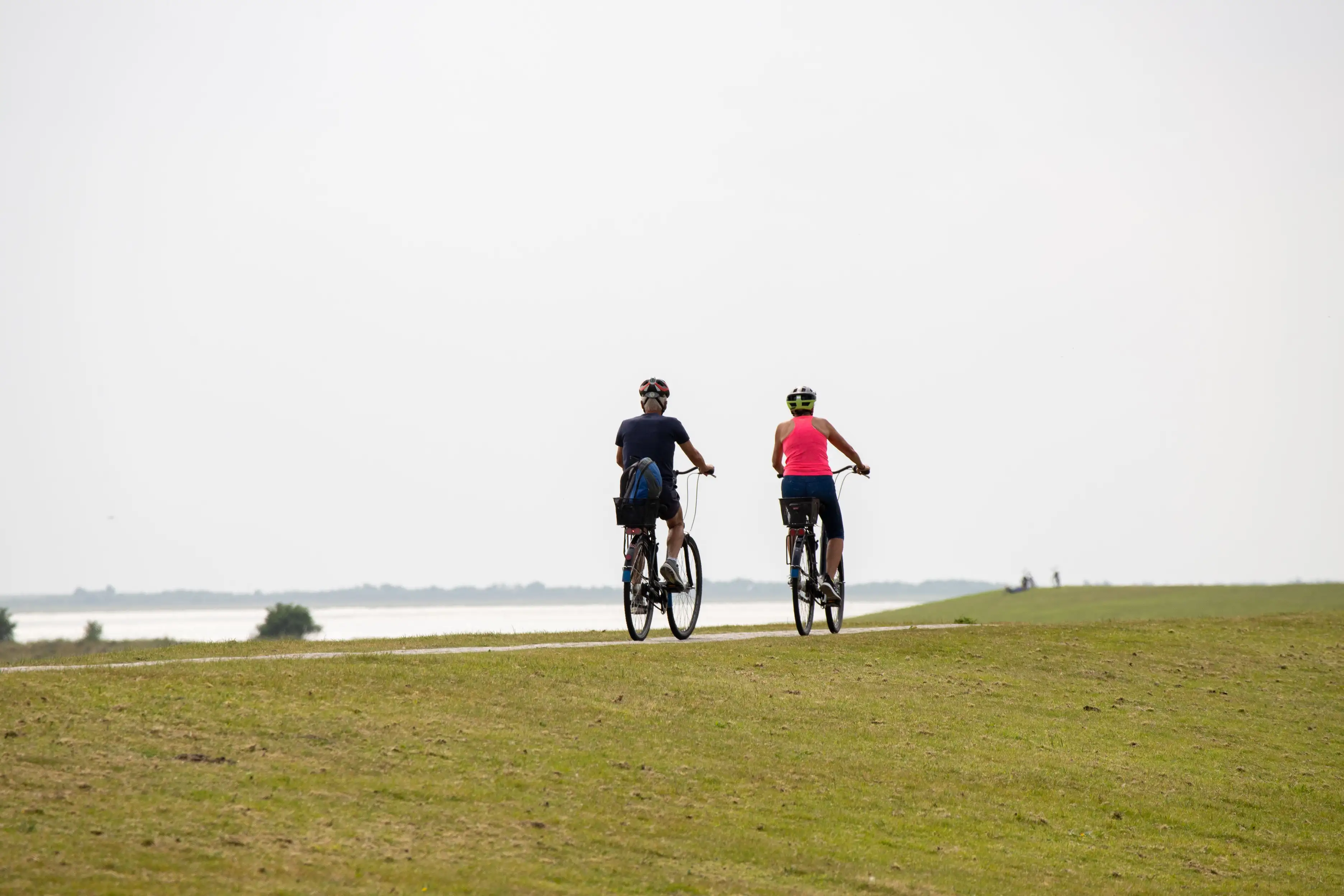
A leisurely ride with a spouse or friend is a very different experience from exercising alone in a gym.
You can choose a pace that allows conversation, stop when you want, and make the destination part of the outing.
For some people, that social aspect is what makes cycling sustainable.
Does Your Age Determine What Kind of Cycling You Can Do?
Not by itself.
A healthy, active 72-year-old may be capable of riding farther than a sedentary 55-year-old. Age is useful context, but it does not tell you everything about someone's fitness or cycling ability.
Four factors are usually more useful:
Fitness: How much activity can you comfortably do now?
Balance: Can you start, stop, turn, and remain stable on two wheels?
Mobility: Can you comfortably lift a leg over the frame and get on and off the bike?
Recovery: How does your body feel later that day and the following morning?
These factors can change over time.
A rider who was comfortable on a traditional road bike at 55 may prefer a more upright bicycle at 70. Someone else may continue riding the same type of bike for decades.
The right choice is the one that matches your current body and your actual riding environment.
Choosing the Right Bike for an Older Adult
There is no single "senior bike."
Instead, think about the problem you are trying to solve.
Do you want easier mounting?
A more upright posture?
Help with hills?
More stability?
Longer rides?
Back support?
Once you know the priority, choosing becomes much easier.
Step-Through Bikes: Easier Mounting and Dismounting
A step-through bicycle has a low top tube or an open frame design that allows the rider to step through rather than swing a leg over a high top tube.
This can be especially convenient for people with limited flexibility or stiffness who find traditional frames awkward to mount.
The advantage becomes particularly noticeable when you stop frequently.
Instead of swinging one leg over the rear of the bike, you can step through the frame and stand over the bike more naturally.
A step-through design does not automatically make a bicycle safer, but it can make mounting and dismounting easier for the right rider.
Hybrid and Comfort Bikes: A Practical Middle Ground
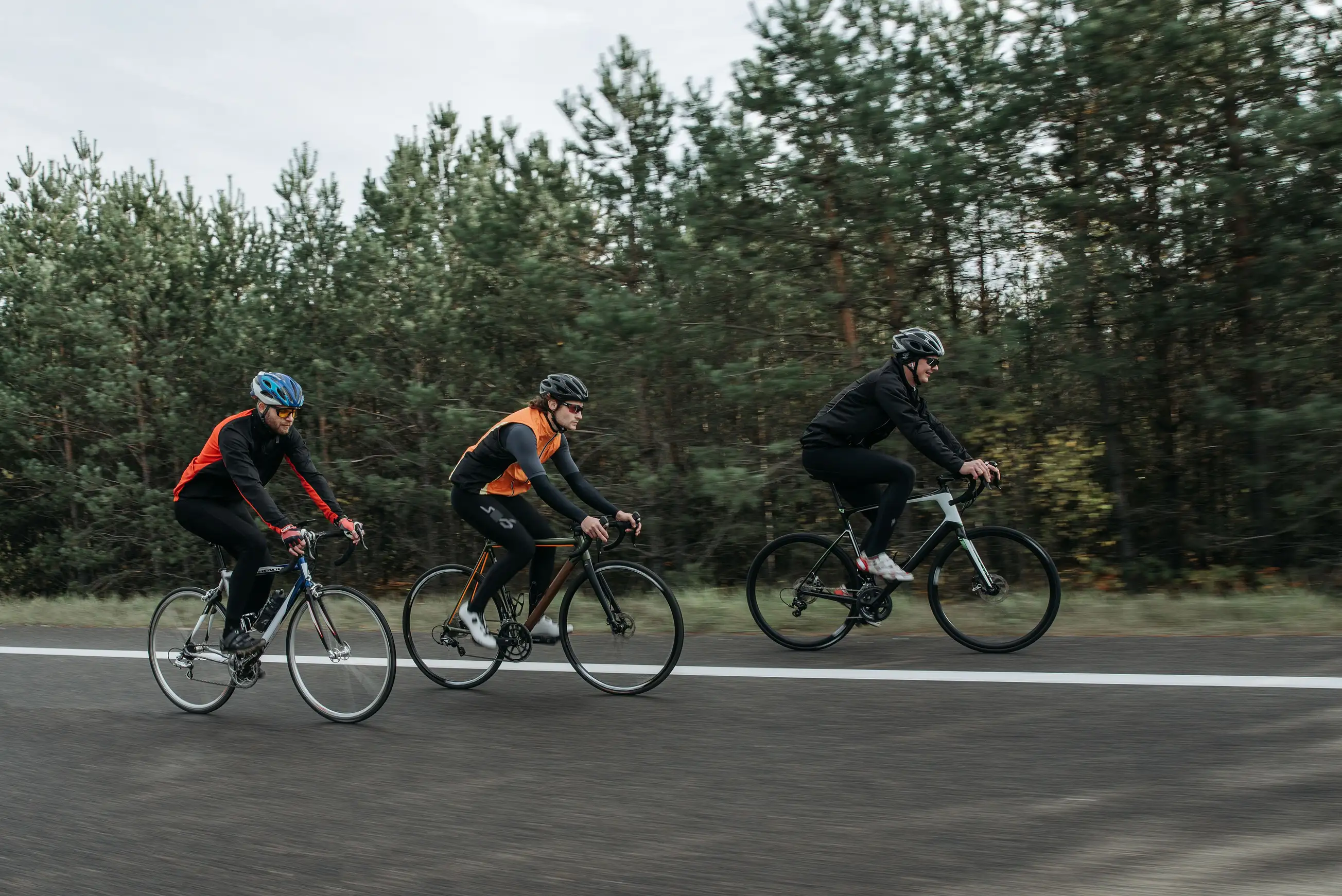
Hybrid and comfort bikes are often a good fit for riders who want to use their bicycle for everyday recreation rather than racing.
Common features include:
- Upright or semi-upright riding position
- Flat handlebars
- Medium-width tires
- Multiple gears
- Comfortable geometry
- Stable handling
They can work well for:
- Neighborhood streets
- Paved trails
- Parks
- Short errands
- Recreational rides
For many older adults, this type of bicycle offers a useful balance between comfort and efficiency.
E-Bikes: When Hills or Distance Become the Problem
An e-bike provides electric assistance while you pedal.
That does not mean the bicycle does all the work. Instead, the motor reduces some of the effort required to keep moving.
This can be useful when:
- Your local area has hills
- Wind makes riding difficult
- You want to ride farther
- You are riding with someone who is fitter
- You want some assistance on days when your energy is lower
One practical advantage of an e-bike is that it can remove the fear of getting stranded several miles from home because the return trip feels too difficult.
For older adults, that can make the difference between rarely riding and riding several times a week.
Recumbent Bikes: More Back Support
A recumbent bicycle places the rider in a more reclined position, with the legs positioned in front of the body.
The seat generally provides more back support than a conventional bicycle.
Some riders find this more comfortable when a traditional forward-leaning riding position causes discomfort.
Recumbents can also be useful for riders who simply prefer a different riding position.
They are not automatically the right choice for everyone, however. Their size, handling, and low position can make them less convenient in some environments.
Tricycles: When Stability Is the Priority
Adult tricycles provide three wheels rather than two.
That can make standing still and moving at low speed easier for some riders who are uncomfortable balancing a conventional bicycle.
However, a tricycle still requires attention to turning, road conditions, and safe handling.
For riders with significant balance concerns, a stationary bike or other exercise option may sometimes be more appropriate than an outdoor bicycle.
Which Bike Should You Choose?
A simple way to think about the decision is:
| Your main priority | Bike type to consider |
|---|---|
| Easy mounting and dismounting | Step-through bike |
| Upright, comfortable recreational riding | Hybrid or comfort bike |
| Hills and longer distances | E-bike |
| Additional back support | Recumbent bike |
| More stability at low speeds | Adult tricycle |
| Faster riding on paved roads | Road bike |
| Controlled indoor exercise | Stationary bike |
There is no rule saying you have to stay with one type forever.
Your needs can change.
The bicycle that works perfectly at 55 may not be the bicycle you want at 70. Changing bikes is not giving up. It is adapting the activity so you can continue doing it.
What to Look for When Buying a Bike After 50
A bicycle that looks impressive in a shop is not necessarily the right bicycle for you.
Comfort and control should come before speed.
1. Easy mounting and dismounting
If getting onto the bike feels awkward in the store, it is unlikely to become easier after you buy it.
Try stopping and getting off several times.
2. A comfortable riding position
A very aggressive forward-leaning position may not suit someone who wants relaxed recreational riding.
An upright or moderately upright position can reduce the amount of weight placed through the hands and may feel more natural for casual rides.
3. Correct frame size
A bike that is too large or too small can affect your posture, control, and comfort.
If possible, try the bicycle before purchasing it and have the size checked by a knowledgeable bike shop.
4. Manageable weight
Remember that you may need to move the bicycle when you are not riding it.
Consider:
- Carrying it up a step
- Putting it on a bike rack
- Moving it around a garage
- Turning it around in a tight space
An e-bike may be heavier because of its motor and battery, so consider handling as well as riding.
5. Brakes you can comfortably operate
You should be able to apply the brakes confidently without excessive hand force.
Test them before buying.
Do not choose a bicycle solely because it has a particular brake technology. What matters is whether you can operate the brakes effectively and confidently.
6. Tires appropriate for your routes
Very narrow tires can feel less forgiving on rough surfaces.
Moderately wider tires can provide more cushioning and may be a better choice for riders who regularly encounter cracked pavement, gravel, or uneven paths.
7. A saddle you can tolerate
A comfortable saddle is important, but a very soft saddle is not automatically better.
If your sitting bones become painful after several rides, the saddle shape, position, and riding time may all need to be considered.
8. Gearing that matches your terrain
If you live somewhere flat, you may not need a huge range of gears.
If you regularly encounter hills, having easier gears can make a substantial difference.
The goal is to avoid grinding against heavy resistance.
9. Visibility equipment
If you may ride near traffic or in lower light, lights and reflective equipment should be part of the plan rather than an afterthought.
How to Start Cycling After 50
The first ride should feel almost too easy.
That may sound disappointing if you are used to measuring exercise by how tired you feel.
But the goal during the first few weeks is not to prove your fitness.
It is to teach your body that cycling is something you can do regularly.
Start on a simple route
Choose somewhere:
- Flat
- Familiar
- Quiet
- Free from complicated intersections
- Easy to leave if you become tired
A short loop close to home is often better than an ambitious route that leaves you several miles away.
Start with 10 to 15 minutes
For someone who has not exercised regularly, 10 to 15 minutes of easy cycling can be enough for a first ride.
If that feels like too much, start with less.
There is no benefit in turning the first week into a test of endurance.
Increase one thing at a time
You can gradually increase:
- Riding time
- Number of rides
- Distance
- Terrain
Do not increase everything at once.
If you ride twice as far and add several steep hills during the same week, you will not know which change caused a problem if your knees or back start hurting.
A Gentle 4-Week Starting Plan
The following is a general example rather than a prescription. If you are very inactive, have significant health concerns, or are returning after surgery or illness, you may need to start more slowly.
| Week | Duration | Frequency | Terrain | Intensity |
|---|---|---|---|---|
| 1 | 10–15 minutes | 3 days | Flat and quiet | Easy |
| 2 | 15–20 minutes | 3–4 days | Mostly flat | Easy |
| 3 | 20–25 minutes | 3–4 days | Mostly flat | Easy to moderate |
| 4 | 25–30 minutes | 3–5 days | Small hills if comfortable | Moderate |
If you feel good, you can continue increasing your riding gradually after the fourth week.
There is no requirement to reach a particular mileage.
A 25-minute ride that you enjoy and repeat four times a week may be far more valuable than one exhausting 60-minute ride followed by several days of inactivity.
How Hard Should You Ride?
You do not need a cycling computer or heart-rate monitor to keep an easy recreational ride under control.
One simple method is the talk test.
At a comfortable moderate intensity, you should generally be able to speak in sentences while riding, although your breathing will be faster than it is at rest.
If you can barely get out a few words because you are breathing heavily, the intensity is probably too high for an easy endurance ride.
For most recreational cycling, there is little reason to chase maximum effort.
Think about:
Could I keep doing this for another ten minutes if I needed to?
If the answer is yes, you are probably closer to the right intensity than if you are counting the seconds until you can stop.
Common Cycling Pain in Older Adults
Cycling should not be painful simply because you are getting older.
A little unfamiliar muscle soreness after your first few rides can happen. Sharp, persistent, or worsening pain deserves more attention.
Knee Pain
Knee discomfort can be related to:
- Saddle position
- Resistance that is too high
- Incorrect bike fit
- Sudden increases in riding time
- Pedaling with too much force
Do not automatically assume that cycling itself is damaging your knees.
Sometimes a small change in bike setup or riding intensity makes a substantial difference.
If knee pain continues, stop trying to push through it and seek appropriate medical advice.
Our Knee Pain Exercises for Seniors guide covers other joint-friendly movement options.
Lower Back Pain
A forward-leaning position can place more demand on the lower back.
Other factors include:
- Handlebars that are too low
- Excessive reach
- Poor bike fit
- Riding for too long without changing position
A more upright bike may be a better choice if comfort is a priority.
Do not keep lowering the handlebars simply because that is what experienced cyclists do. Your riding goals are different if your priority is comfortable recreational exercise.
Hip or Sitting Discomfort
Some discomfort can occur when your body is not accustomed to spending time on a bicycle.
Possible contributors include:
- An unsuitable saddle
- Incorrect saddle position
- Too much riding too soon
- Poor bike fit
- Existing hip stiffness
Give your body time to adapt, but do not use discomfort as a reason to ignore a poor setup.
Hand or Wrist Numbness
If your hands become numb during a ride, you may be putting too much weight through them or gripping the handlebars too tightly.
Possible adjustments include:
- Raising the handlebars
- Changing hand position
- Relaxing your grip
- Using suitable grips or gloves
- Taking short breaks
Persistent numbness should not simply be accepted as part of cycling.
Cycling Safety for Older Adults
A safe ride starts before you leave the driveway.
The biggest risks are not usually about riding slowly or quickly. They are about the environment, equipment, visibility, and what happens when something unexpected occurs.
Before Every Ride
Take a quick look at:
- Brakes
- Tires
- Wheels
- Chain
- Lights
- Battery level if using an e-bike
You do not need a complete mechanical inspection before every short ride, but obvious problems should never be ignored.
Wear a Properly Fitted Helmet
Your helmet should fit securely and be appropriate for bicycle use.
It should sit level on your head rather than tilted backward.
Replace a helmet after a significant impact, even if it does not appear badly damaged.
Choose the Route Before You Ride
For newer or less confident riders, a quiet paved trail may be much better than a busy road.
Look for:
- Lower traffic
- Good pavement
- Clear sightlines
- Fewer complicated intersections
- Places where you can safely stop
A familiar route can also reduce mental workload.
Be Careful With Wet or Uneven Surfaces
Painted road markings, wet leaves, gravel, metal covers, and potholes can all reduce traction.
Slow down before the difficult surface rather than braking sharply while crossing it.
Make Yourself Visible
Lights and reflective elements can help other road users see you.
Even if you do not normally ride after dark, carrying a light can be useful if a ride takes longer than expected.
Keep Your Phone Accessible
A phone can be useful for navigation and emergencies.
Keep it secure rather than holding it while riding.
What About Balance and Falling?
Balance deserves special attention because cycling combines movement with a need to control a two-wheeled vehicle.
If you already feel unsteady while walking, turning, or standing, do not assume that riding a bicycle will automatically improve your balance.
Instead, consider starting with:
- A stationary bike
- A recumbent bike
- An adult tricycle
- Balance exercises
- A quiet, controlled environment
You can also practice basic cycling skills away from traffic:
- Starting
- Stopping
- Turning
- Looking over your shoulder
- Putting a foot down
- Braking smoothly
Confidence should come from practice, not from taking bigger risks.
For more balance-focused exercises, see our Balance Exercises for Seniors guide.
Cycling Gear: What Do You Actually Need?
You do not need a garage full of cycling equipment to start.
Essentials
Helmet
Choose a properly fitting bicycle helmet.
Lights
Front and rear lights are useful when visibility is limited and can improve your visibility to others.
Water
Bring water, particularly on longer rides or warm days.
Comfortable clothing
You do not need expensive cycling clothing for short recreational rides.
Basic repair equipment
A pump, spare tube, tire levers, and a small multitool can become valuable if you ride farther from home.
Useful Extras
Cycling gloves
These can improve comfort and reduce pressure on the hands.
Phone holder
Useful for navigation, provided the phone can be viewed safely without distracting you.
Rear-view mirror
Some riders appreciate the additional awareness of traffic behind them.
Rear rack
Helpful if you use the bicycle for errands.
Padded cycling shorts
These can make longer rides more comfortable, but they should not be used to compensate for a poorly fitted bicycle.
Cycling in Hot, Cold, or Windy Weather
Weather matters more as you get older because heat, cold, and dehydration can affect how comfortable and safe a ride feels.
Hot weather
Consider:
- Riding earlier in the day
- Drinking regularly
- Choosing shaded routes
- Shortening the ride
- Taking breaks
Do not wait until you feel extremely thirsty or exhausted before stopping.
Cold weather
Cold can make your hands and joints feel stiff and can affect comfort.
Dress in layers and pay particular attention to your hands.
Wind
Strong crosswinds can make a bicycle harder to control.
If the wind is strong enough that you feel unstable, an indoor cycling session may be a better choice.
Rain
Wet roads reduce traction and can make braking less predictable.
If conditions are poor, there is nothing wrong with skipping the outdoor ride.
Consistency does not mean forcing yourself to ride in unsafe conditions.
Cycling vs. Walking for Seniors
Cycling and walking are both useful forms of physical activity, but they offer different experiences.
| Feature | Cycling | Walking |
|---|---|---|
| Joint impact | Relatively low | Low to moderate |
| Leg exercise | Good | Good |
| Aerobic intensity | Easy to adjust | Easy to adjust |
| Weight-bearing | Limited | Higher |
| Balance demand | Moderate to high | Low to moderate |
| Equipment needed | Bicycle and safety gear | Comfortable shoes |
| Travel distance | Higher | Lower |
| Weather dependence | Higher outdoors | Moderate |
| Social potential | Good | Excellent |
Walking has one major advantage: simplicity.
You can put on your shoes and walk almost anywhere.
Cycling has a different advantage: you can cover more ground while getting sustained aerobic activity without repeatedly loading the joints with body weight.
For many older adults, there is no reason to choose only one.
Walking and cycling can complement each other nicely.
Our Complete Walking Guide for Older Adults covers the walking side in more detail.
How to Make Cycling a Habit
The easiest way to stop cycling is to turn every ride into a test.
You do not have to beat last week's distance.
You do not have to ride faster than your friends.
And you do not have to finish exhausted.
Try making the activity part of your normal week.
Give yourself somewhere to go
Ride to the park.
Ride to get coffee.
Ride to a friend's house.
Take a familiar scenic route.
A destination can make the activity feel less like exercise.
Find your comfortable distance
Suppose five miles feels easy, while ten miles leaves you exhausted for the rest of the day.
For now, five miles may be your better distance.
That is not a failure.
It is useful information about where your body is today.
Ride with someone
A friend or partner can make cycling more enjoyable and can also provide another layer of safety.
If you ride together, agree on a pace that works for the slower rider rather than treating the outing as a race.
Leave room for recovery
You may feel fine immediately after a ride and notice soreness the next morning.
That is why increasing riding gradually matters.
If a new level of activity leaves you unusually tired for several days, step back rather than forcing the same workload again.
When Should You Talk to a Healthcare Professional Before Cycling?
Most healthy adults can gradually increase physical activity, but certain symptoms and medical situations deserve individual advice.
Talk with a healthcare professional before starting or significantly increasing exercise if you have concerns such as:
- Unexplained chest pain
- Significant shortness of breath with mild activity
- Fainting or unexplained episodes of near-fainting
- Serious balance problems
- New or severe joint pain
- A recent major surgery
- A recent cardiac event
- A serious illness that has significantly reduced your activity level
This does not mean that everyone over a certain age needs medical clearance before riding.
Age alone is not the deciding factor. Your health, symptoms, fitness, and the type of activity you plan to do are much more useful considerations.
If you have a medical condition and are unsure whether cycling is appropriate, ask your healthcare professional what level of activity is reasonable for you.
For more general guidance, see our Exercise Safety Tips for Seniors guide.
Frequently Asked Questions About Cycling for Seniors
Is cycling good for seniors?
For many older adults, cycling is a practical low-impact way to build aerobic fitness and keep the legs active. The best approach depends on fitness, balance, mobility, terrain, and the type of bicycle.
Is cycling safe for people over 60?
Cycling can be safe for many healthy adults over 60 when they choose an appropriate bike and route, use proper safety equipment, and increase activity gradually. People with significant balance problems, unexplained symptoms, recent major surgery, or certain medical conditions should seek individual medical advice.
How long should a senior ride a bike?
If you are new to cycling, 10 to 15 minutes at an easy pace can be a reasonable starting point. Gradually increase the duration as your body adapts rather than starting with a long-distance goal.
Is cycling good for arthritic knees?
Cycling is relatively low impact and may be comfortable for some people with knee arthritis. However, bike fit, resistance, and riding volume all matter. Persistent or worsening pain should be evaluated rather than ignored.
What is the best type of bike for seniors?
There is no single best option. Step-through bikes can make mounting easier, hybrid and comfort bikes provide an upright riding position, e-bikes can help with hills and distance, and recumbent bikes or tricycles may provide additional support for some riders.
Are electric bikes good for older adults?
They can be. E-bikes can reduce the effort required on hills, against the wind, or over longer distances while still requiring the rider to pedal. Some people find that the assistance allows them to ride more consistently.
Can seniors cycle every day?
Some people can comfortably ride every day, particularly when rides are short and easy. Others need more recovery time. Start with several rides per week and pay attention to how you feel later that day and the following morning.
Should seniors wear a helmet when cycling?
Yes. A properly fitted bicycle helmet is an important part of cycling safety. Helmets should be combined with appropriate lighting, visibility equipment, safe routes, and responsible riding.
Final Thoughts: Cycling Does Not Have to Be a Race
For many older adults, the best thing about cycling is not the bicycle itself.
It is what the bicycle makes possible.
A ride to the park.
A conversation with a friend.
A familiar road that looks slightly different in the afternoon light.
A reason to get outside when you might otherwise stay home.
You do not have to ride 20 miles.
You do not have to climb a mountain.
You do not have to keep up with younger cyclists.
You just need a bike that feels manageable, a route that feels safe, and a pace that leaves you wanting to ride again.
Start small. Ride comfortably. Give your body time to adapt.
If cycling becomes something you look forward to rather than something you force yourself to do, you may find that it becomes one of the easiest forms of exercise to keep for years.
Related Articles
Senior Exercise Guides
-
Ultimate Senior Exercise Guide — A broader framework for cardio, strength, balance, and flexibility.
-
Low Impact Exercises for Seniors — Joint-friendly ways to stay active.
-
Zone 2 Cardio for Seniors — How to understand comfortable, sustainable cardio intensity.
-
Exercise After 60 — Practical ways to remain active as you get older.
-
Exercise Safety Tips for Seniors — How to approach exercise more safely.
Mobility, Balance, and Joint Health
-
Knee Pain Exercises for Seniors — Gentle movement options for people with knee discomfort.
-
Exercise After Knee Replacement — Guidance on returning to movement after knee surgery.
-
Exercise After Hip Replacement — Considerations for activity after hip surgery.
-
Balance Exercises for Seniors — Exercises designed to support stability.
-
Fall Prevention Master Guide — A broader approach to reducing fall risk.
-
Exercise for Arthritis Seniors — Exercise options for people managing arthritis.
Walking and Cardio
-
Complete Walking Guide for Older Adults — Another practical low-impact activity to combine with cycling.
-
Exercise for Heart Health — Cardiovascular activity considerations for older adults.
References
-
National Institute on Aging. Exercise and Physical Activity. https://www.nia.nih.gov/
-
Centers for Disease Control and Prevention. Physical Activity Basics for Older Adults. https://www.cdc.gov/physical-activity/
-
American Heart Association. Recommendations for Physical Activity in Adults and Kids. https://www.heart.org/
-
American College of Sports Medicine. Physical Activity and Exercise Guidelines for Older Adults. https://www.acsm.org/
-
Centers for Disease Control and Prevention. Bicycle Safety. https://www.cdc.gov/transportation-safety/
Disclaimer: This article provides general educational information and is not medical advice. If you have a medical condition, significant balance problems, persistent pain, recent surgery, or other health concerns, consult a qualified healthcare professional before starting or significantly changing an exercise program.