📌Key Takeaways
- Sleep apnea affects up to 30% of adults over 65, yet many cases remain undiagnosed
- Obstructive sleep apnea (OSA) is the most common type, caused by throat muscles relaxing and blocking the airway
- Warning signs include loud snoring with breathing pauses, gasping, morning headaches, and excessive daytime sleepiness
- Untreated sleep apnea is associated with higher risks of high blood pressure, heart disease, stroke, and cognitive decline
- CPAP therapy is the gold standard for moderate to severe cases, while lifestyle changes may help mild cases
What is sleep apnea in seniors? Sleep apnea is a serious sleep disorder in which breathing repeatedly stops and restarts during sleep, often for 10 seconds or longer. In older adults, it is most commonly caused by throat muscles relaxing and blocking the airway (obstructive sleep apnea, or OSA). Up to 30% of adults over 65 may have sleep apnea, and the American Academy of Sleep Medicine (AASM) estimates that 80-90% of moderate to severe cases remain undiagnosed.
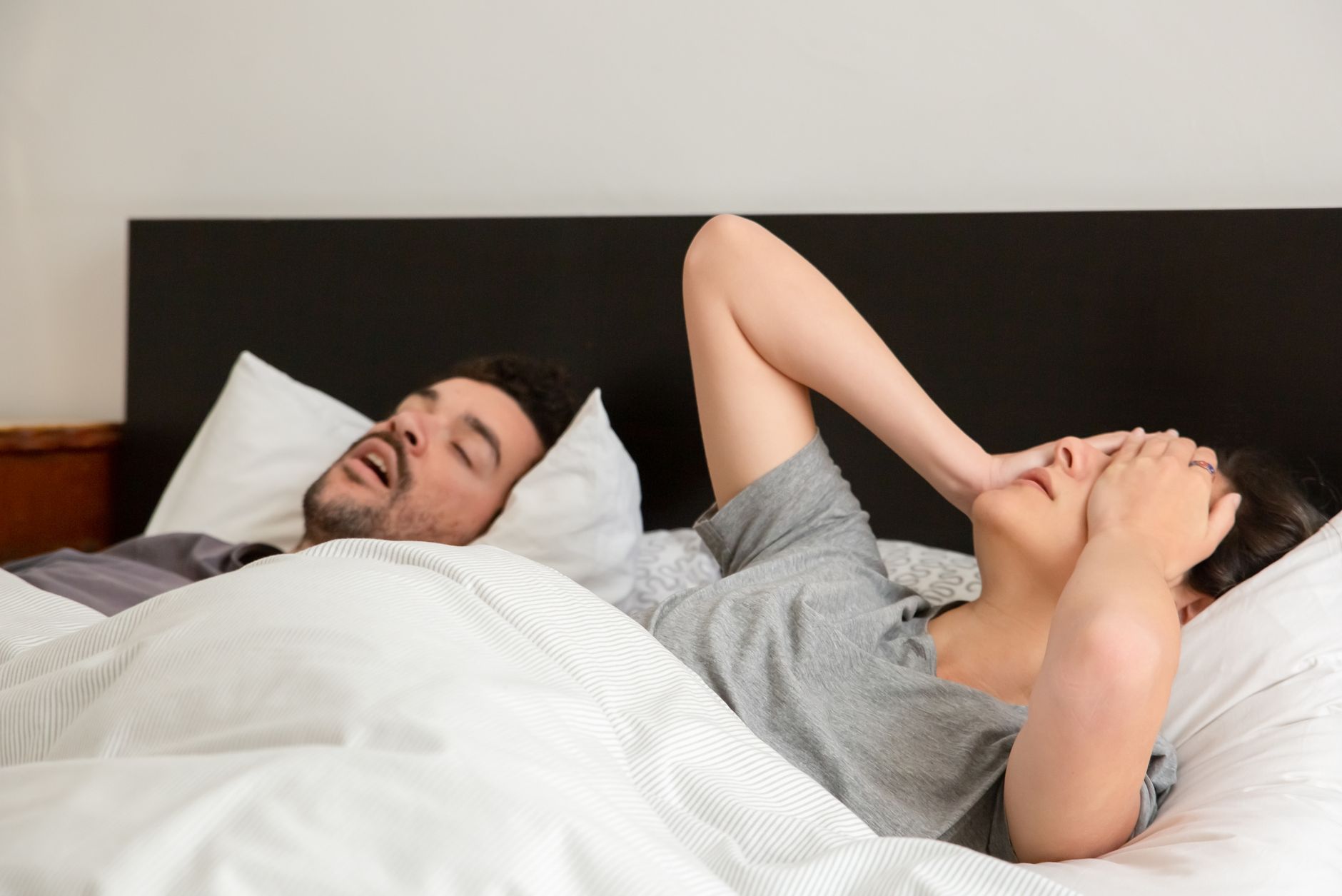
When to seek help: Usually the person in the bed isn't the first to know — the partner is. The sound people describe follows a pattern: freight-train-loud snoring, then a stretch of dead silence where no breath moves, then a gasp or snort as breathing restarts. If you or a bed partner notice loud snoring with breathing pauses, gasping or choking sounds, morning headaches, or excessive daytime sleepiness, schedule a medical evaluation. A sleep study can confirm the diagnosis, and treatments like CPAP therapy hold the airway open with room air instead of leaving the body to survive repeated oxygen drops overnight.
What Is Sleep Apnea?
Sleep apnea is a sleep disorder in which breathing collapses or pauses during sleep, over and over through the night. In the common obstructive form, the throat closes, the chest keeps trying for a breath or two that can't get through, and nothing moves until the brain jolts half-awake enough to reopen the airway — often with a gasp the sleeper never remembers. Hundreds of these cycles can occur in one night, each briefly starving the brain — and the rest of the body — of oxygen.
According to the National Heart, Lung, and Blood Institute (NHLBI), sleep apnea affects millions of Americans, but it is particularly common among older adults. Research suggests that up to 30% of adults over 65 may have sleep apnea, though many cases remain undiagnosed. The National Sleep Foundation notes that prevalence increases with age, making awareness especially important for seniors and their caregivers.
Types of Sleep Apnea
| Type | Cause | Airway Status | Prevalence | Key Features |
|---|---|---|---|---|
| Obstructive Sleep Apnea (OSA) | Throat muscles relax and block the airway | Narrowed or blocked | 80-90% of cases | Loud, irregular snoring with breathing pauses of 10 seconds or longer, then loud gasping or snorting as breathing restarts; most common in middle-aged and older adults, especially with excess weight or a wider neck |
| Central Sleep Apnea (CSA) | Brain fails to send proper signals to breathing muscles | Remains open | 10-20% of cases | Often little or no snoring; waking with a feeling of shortness of breath, restless nights, or trouble staying asleep; seen more often in men, older adults, and people with heart failure or a history of stroke |
| Complex Sleep Apnea Syndrome | Obstructive events plus central events that emerge once the obstruction is relieved during treatment | Starts narrowed or blocked; airway remains open during the central events | Uncommon — usually identified when central events appear during CPAP initiation | Begins as OSA, then develops central features during treatment; frequent awakenings with shortness of breath may stand out more than snoring |
OSA is by far the most common form, occurring when soft tissue in the back of the throat collapses during sleep. CSA is less common and is often associated with other medical conditions such as heart failure or stroke. Complex sleep apnea syndrome is more challenging to diagnose and typically requires specialized medical management.
The practical difference often shows up in what a bed partner notices. With OSA, the night usually sounds loud — heavy snoring cut short by silences, then a gasp or snort. With CSA, the room may be much quieter, but the sleeper may wake often with a feeling of shortness of breath or describe nights of broken sleep. These patterns can overlap and sometimes coexist, so a sleep study is needed to reliably tell the types apart.
How Sleep Apnea Affects the Body
| Effect | What Happens | Potential Consequence |
|---|---|---|
| Oxygen deprivation | Blood oxygen levels drop repeatedly during pauses | Heart works harder; vital organs experience stress |
| Sleep fragmentation | Brain briefly awakens to restart breathing (often unnoticed) | Prevents deep, restorative sleep; causes daytime fatigue |
| Cardiovascular stress | Blood pressure spikes during each episode | May increase risk of heart disease, arrhythmias, and stroke |
From the partner's side of the bed, one episode looks like this: loud snoring, a silent ten seconds or longer with the chest barely moving, then a choke or gasp when breathing restarts. Inside the body, blood oxygen falls and blood pressure spikes before the brain forces a restart. These episodes happen hundreds of times a night in moderate to severe cases, usually without the sleeper remembering them. Research links that repeated nightly cycle — oxygen drops, pressure surges, fragmented sleep — with cardiovascular strain over time, especially in older adults who already have heart or metabolic conditions. The links described in this guide are associations found in studies, not a prediction for any one person, which is why diagnosis and treatment matter.
Risk Factors for Sleep Apnea
| Category | Risk Factors |
|---|---|
| Age-related | Loss of muscle tone in throat and airway; changes in sleep architecture; higher likelihood of being overweight; greater use of medications affecting breathing |
| Physical characteristics | Excess weight around the neck; neck circumference over 17 inches for men or 16 inches for women; narrowed airway or enlarged tonsils; small jaw bone or overbite; deviated septum |
| Lifestyle factors | Smoking (increases inflammation and fluid retention); alcohol use (relaxes throat muscles); sedative medications; lack of regular exercise; irregular sleep schedules |
| Medical conditions | High blood pressure; heart disease and heart failure; type 2 diabetes; stroke or TIAs; COPD; hypothyroidism; acromegaly |
Older adults face increased risk due to natural loss of muscle tone in the throat, changes in sleep patterns, and a higher likelihood of taking medications that relax airway muscles. Learn more about how sleep changes with age in our guide to sleep after 60 and how much sleep older adults need.
Signs of Sleep Apnea in Seniors
In most households the diagnosis story starts the same way: from someone else's side of the bed. The snorer sleeps through the pauses; a spouse or partner lies awake counting them, or finally says something over breakfast. That matters because many cases in older adults go undiagnosed — symptoms get attributed to normal aging, and the warning signs can look subtler than they do in younger people. Recognizing them early may lead to effective management and significantly improve quality of life.
Atypical Presentations in Older Adults
Older adults may show different symptoms than younger adults. According to the National Institute on Aging, seniors with sleep apnea often present with:
| Symptom in Seniors | How It Differs from Younger Adults |
|---|---|
| Snoring | Often less prominent than in younger adults |
| Daytime fatigue | More noticeable than overt sleepiness |
| Cognitive impact | Greater confusion, memory problems, or disorientation |
| Nighttime urination (nocturia) | More frequent trips to the bathroom |
| Existing conditions | Worsening of heart disease, diabetes, or hypertension |
Red Flags Requiring Prompt Evaluation
Seek medical evaluation if you notice any of the following:
- Loud snoring with observed breathing pauses lasting 10 seconds or longer
- Gasping, choking, or snorting sounds when breathing resumes
- Waking up gasping or feeling like you are "fighting for air"
- Morning headaches that improve throughout the day
- Excessive daytime sleepiness despite adequate time in bed
- High blood pressure that is difficult to control with medication
- Frequent nighttime urination (nocturia) disrupting sleep
- Mood changes, memory problems, or cognitive decline
- A bed partner reports concerning sleep behaviors
When to Seek Emergency Care
Some symptoms require immediate medical attention:
- Waking up gasping or unable to breathe repeatedly
- Chest pain or pressure during sleep
- Severe shortness of breath when lying down
- Observing someone stop breathing repeatedly during sleep
- Falling asleep unexpectedly during dangerous activities such as driving
Symptoms of Sleep Apnea
Nighttime Symptoms
| Symptom | Description |
|---|---|
| Loud, chronic snoring | Especially with pauses; may be heard through closed doors |
| Gasping or choking | Sounds that follow breathing pauses |
| Observed breathing pauses | Lasting 10 seconds or longer, noticed by a bed partner |
| Restless sleep | Frequent tossing, turning, and position changes |
| Frequent awakenings | Often without remembering them |
| Excessive sweating | Night sweats unrelated to room temperature |
| Dry mouth or sore throat | Upon waking, from mouth breathing |
If you regularly wake up multiple times per night, sleep apnea is one possible cause—see our article on why seniors wake up at night for other common contributors.
Daytime Symptoms
| Symptom | Description |
|---|---|
| Excessive daytime sleepiness | Falling asleep during quiet activities |
| Morning headaches | Dull, aching pain that improves during the day |
| Difficulty concentrating | Trouble focusing or learning new information |
| Memory problems | Forgetfulness and slowed thinking |
| Irritability and mood changes | Reduced patience, anxiety, or depression |
| Fatigue and low energy | Persistent tiredness despite rest |
| Decreased libido | Reduced interest in sexual activity |
Chronic sleep disruption from apnea can mimic or worsen insomnia in older adults, and persistent daytime sleepiness may also be linked to napping after 60.
Snoring and Aging: When to Worry
Snoring becomes increasingly common as we age. According to the American Academy of Otolaryngology, approximately 40% of adult men and 24% of adult women are habitual snorers, with rates increasing significantly after age 50. Understanding why snoring increases with age — and when it signals a problem — helps protect your health.
Why Snoring Increases with Age
| Age-Related Change | How It Contributes to Snoring |
|---|---|
| Decreased muscle tone in throat and tongue | Muscles that keep the airway open lose strength |
| Throat tissue laxity | Increased relaxation allows more vibration during breathing |
| Soft palate elongation | Tissue at the back of the throat may lengthen with age |
| Weight gain around the neck | Fat deposits compress the airway |
| Decreased lung function | Reduced respiratory muscle strength affects breathing |
| Nasal structure changes | Cartilage weakening affects nasal passages |
Simple Snoring vs. Concerning Snoring
Not all snoring indicates a serious problem. Use this comparison to distinguish harmless snoring from patterns that warrant evaluation:
| Feature | Simple (Harmless) Snoring | Concerning Snoring (Possible OSA) |
|---|---|---|
| Pattern | Regular, rhythmic | Irregular, with pauses |
| Breathing | Continuous | Pauses of 10 seconds or longer |
| Sounds | Steady | Gasping, choking, or snorting |
| Sleep quality | Wake feeling rested | Wake unrefreshed, morning headaches |
| Daytime effects | No excessive sleepiness | Significant daytime fatigue |
| Volume | Low to moderate | Very loud, heard through walls |
| Frequency | Occasional | Every night, persistent |
If your snoring matches the "concerning" column, consider scheduling a sleep evaluation. Even simple snoring is worth mentioning to your doctor, as sleep apnea can exist without obvious daytime effects initially.
Is Snoring Dangerous?
Most snoring is "primary snoring" — the partner loses more sleep than the snorer, and the airway stays open all night. The snoring worth taking seriously sounds structurally different: loud, then silent, then gasping. When that pattern means obstructive sleep apnea, it is potentially dangerous and requires medical attention. The AASM estimates that 80-90% of people with moderate to severe sleep apnea remain undiagnosed, which is why knowing the warning signs matters — particularly for seniors, whose evaluation often starts only after a bed partner speaks up.
Risk Indicators for Dangerous Snoring
The likelihood that snoring indicates sleep apnea rises with certain risk factors:
- Being overweight, particularly with a neck circumference over 17 inches for men or 16 inches for women
- Age over 65
- Male gender (though risk increases for women after menopause)
- Family history of sleep apnea
- Use of alcohol or sedatives before bed
- Smoking
- Nasal congestion or anatomical abnormalities such as a deviated septum
- Medical conditions such as hypothyroidism or acromegaly
Healthcare providers often use screening tools such as the STOP-BANG questionnaire to assess risk. If risk factors are present, a sleep study can confirm whether snoring is associated with sleep apnea.
Health Risks Linked to Dangerous Snoring
When snoring signals sleep apnea, it is associated with serious health risks that extend beyond disrupted sleep. The Mayo Clinic and other authoritative sources note that untreated sleep apnea is linked to:
- High blood pressure (30-50% of people with hypertension also have sleep apnea)
- Heart disease, heart attacks, and arrhythmias such as atrial fibrillation
- Stroke (2-3 times higher risk compared to those without apnea)
- Type 2 diabetes and metabolic syndrome
- Cognitive decline and increased dementia risk
- Depression and mood changes
For more on the connection between sleep and cognition, see our articles on how sleep affects memory and whether poor sleep can increase dementia risk.
Diagnosis of Sleep Apnea
A healthcare provider will typically take a detailed medical and sleep history, perform a physical examination of the throat, neck, and nasal passages, screen for cardiovascular and metabolic conditions, and review current medications. Definitive diagnosis requires a sleep study.
| Sleep Study Type | What It Monitors | Best For |
|---|---|---|
| Polysomnography (PSG) | Brain waves, oxygen, heart rate, breathing, eye movements, muscle activity | Comprehensive in-lab diagnosis; gold standard |
| Home Sleep Apnea Testing | Breathing patterns, oxygen levels, heart rate | Suspected moderate to severe OSA; more convenient |
The Apnea-Hypopnea Index (AHI) measures sleep apnea severity:
| Severity | AHI (events per hour) |
|---|---|
| Normal | Fewer than 5 |
| Mild | 5 to 15 |
| Moderate | 15 to 30 |
| Severe | 30 or more |
Treatment Options
Treatment is tailored to apnea severity, the type of sleep apnea, and individual health factors. Common options are summarized below:
| Treatment | How It Works | Best For |
|---|---|---|
| Lifestyle changes | Weight loss, side sleeping, avoiding alcohol and sedatives, quitting smoking | Mild cases; first-line approach |
| CPAP therapy | Delivers constant air pressure through a mask to keep the airway open | Moderate to severe OSA; gold standard |
| Oral appliances | Custom dental devices reposition the jaw and tongue | Mild to moderate OSA; CPAP intolerance |
| Positional therapy | Devices or pillows that prevent back sleeping | Position-dependent apnea |
| Surgery | UPPP, jaw advancement, nasal surgery, hypoglossal nerve stimulation | Specific anatomical issues; other options unsuccessful |
Lifestyle Changes That May Help
First-line approaches for mild cases include:
- Weight loss if overweight — even modest weight loss (5 to 10% of body weight) may reduce severity
- Regular exercise, which may improve sleep quality (see exercise and sleep quality)
- Avoiding alcohol and sedatives before bed
- Sleeping on your side instead of your back
- Quitting smoking
- Establishing a regular sleep schedule (see our sleep hygiene checklist for seniors)
- Building generally healthy sleep habits, as outlined in our guide to the best sleep habits for seniors
CPAP Therapy
Continuous Positive Airway Pressure (CPAP) is the gold standard for moderate to severe sleep apnea. In plain terms, a small, quiet pump pushes room air through a fitted mask at steady pressure, splinting the throat open so it can't collapse — it isn't a drug and it isn't surgery, just air breathed normally. People facing CPAP sometimes picture a lifetime imprisonment of straps and machine noise. The reality is less dramatic: modern machines are far quieter than older models, masks come in several styles including small nasal pillows, and the common payoff is unbroken sleep, the return of vivid dreams, and waking without a morning headache. Adapting takes a few nights, and providers often start with lower pressures and adjust gradually for comfort, especially for seniors — so if the first mask feels wrong, the answer is usually a refit, not giving up.
Some seniors ask whether melatonin for seniors or other sleep aids can replace CPAP — these may help with falling asleep but do not keep the airway open, so they are not a substitute for CPAP in moderate to severe cases.
Special Considerations for Seniors
| Challenge | Adaptation |
|---|---|
| Multiple chronic conditions | Coordinate care across providers; review medication interactions |
| Cognitive difficulties | Simplify treatment; involve caregivers in adherence |
| Physical limitations | Choose comfortable mask options; consider oral appliances |
| Medication interactions | Review sedating prescriptions that may worsen apnea |
| Social isolation | Engage family or caregivers for support and follow-up |
Complications of Untreated Sleep Apnea
| Area | Potential Complications |
|---|---|
| Cardiovascular | High blood pressure, heart disease, heart attacks, arrhythmias, heart failure, stroke |
| Metabolic | Insulin resistance, type 2 diabetes, weight gain, metabolic syndrome, abnormal cholesterol |
| Cognitive and mental health | Memory problems, cognitive decline, increased dementia risk, depression, anxiety |
| Safety | Increased fall risk, dangerous driving, workplace errors, poor self-care |
Prevention and Risk Reduction
| Strategy | What You Can Do |
|---|---|
| Lifestyle | Maintain a healthy weight, exercise regularly, avoid alcohol and sedatives before bed, quit smoking |
| Medical management | Control blood pressure, manage diabetes, treat heart conditions, address nasal or sinus problems, review medications with your provider |
| Sleep environment | Keep the bedroom cool, dark, and quiet; use a humidifier if air is dry; elevate the head of the bed slightly; remove allergens |
If you also experience uncomfortable leg sensations at night, sleep apnea can coexist with other conditions — see our guide to restless legs syndrome in seniors for guidance on when to seek evaluation.
Key Takeaways
- Sleep apnea is a serious sleep disorder where breathing repeatedly stops during sleep, affecting up to 30% of adults over 65.
- The most common type is obstructive sleep apnea (OSA), caused by throat muscle relaxation that blocks the airway.
- Symptoms include loud snoring with pauses, gasping, excessive daytime sleepiness, and morning headaches — though seniors may show atypical signs such as fatigue and cognitive changes.
- Untreated sleep apnea is associated with higher risks of high blood pressure, heart disease, stroke, diabetes, and cognitive decline.
- Effective options exist, from lifestyle changes to CPAP therapy, and may significantly improve quality of life.
Disclaimer: This information is for educational purposes only and should not replace professional medical advice. If you suspect you have sleep apnea, consult a healthcare provider for proper evaluation and management.
Related Articles
- Sleep Hygiene Checklist for Seniors
- Why Seniors Wake Up at Night
- Insomnia in Older Adults
- Napping After 60
- Melatonin for Seniors
- Sleep After 60
- How Much Sleep Do Older Adults Need
- Exercise and Sleep Quality
- Restless Legs Syndrome in Seniors
- How Sleep Affects Memory
- Can Poor Sleep Increase Dementia Risk
References
-
National Heart, Lung, and Blood Institute (NHLBI). (2024). Sleep Apnea. Retrieved from https://www.nhlbi.nih.gov/health/sleep-apnea
-
National Sleep Foundation. (2024). Sleep Apnea. Retrieved from https://www.sleepfoundation.org/sleep-apnea
-
Mayo Clinic. (2024). Sleep Apnea: Symptoms and Causes. Retrieved from https://www.mayoclinic.org/diseases-conditions/sleep-apnea/symptoms-causes/syc-20377631
-
American Academy of Sleep Medicine (AASM). (2024). Obstructive Sleep Apnea. Retrieved from https://aasm.org/resources/factsheets/osa.pdf
-
National Institute on Aging (NIA). (2024). Sleep and Aging: Getting a Good Night's Sleep. Retrieved from https://www.nia.nih.gov/health/sleep/good-nights-sleep
-
Centers for Disease Control and Prevention. (2024). Sleep Apnea: Symptoms and Causes. Retrieved from https://www.cdc.gov/sleep/about_sleep/sleep_apnea.html
-
Yeghiazarians, Y., et al. (2021). Obstructive Sleep Apnea and Cardiovascular Disease. Circulation, 142(9), e19-e31.
-
Bixler, E. O., et al. (2009). Sleep disordered breathing in old adults: Prevalence, risk factors, and association with cognitive impairment. American Journal of Respiratory and Critical Care Medicine, 180(1), 63-71.
-
Peppard, P. E., et al. (2013). Increased prevalence of sleep-disordered breathing in adults. American Journal of Epidemiology, 177(9), 1006-1014.