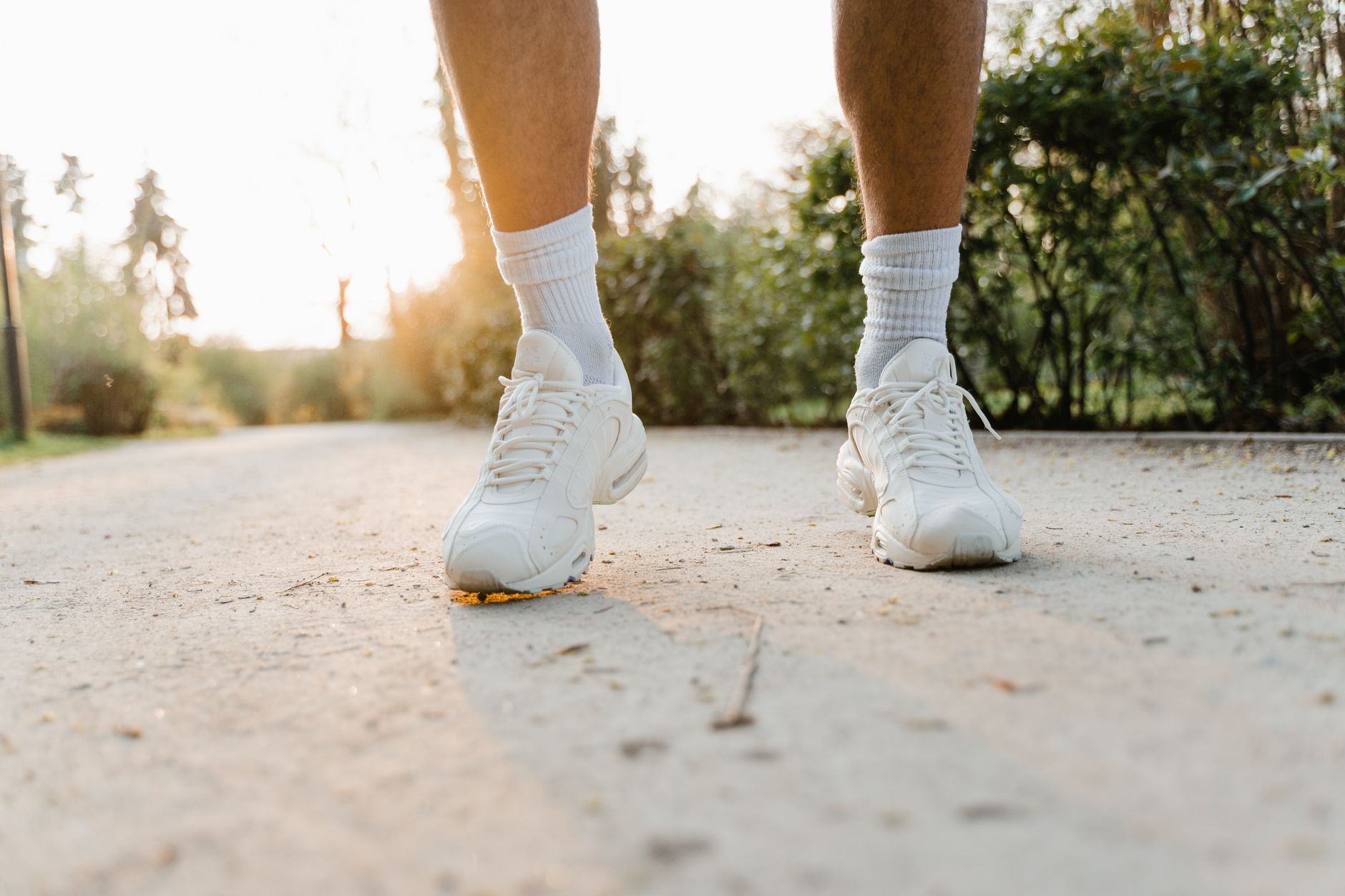
The first unassisted laps of a physical therapy hallway ask a lot of a shoe you probably never thought twice about before surgery.
Your knee is swollen and stiff, your gait still looks unfamiliar, and a walker or cane may still be doing part of the work. Shoes that felt perfectly normal a week before surgery can suddenly pinch, or be hard to lace up without bending a knee that does not want to bend.
The good news is that you usually do not need a special "knee replacement shoe."
For most people, an ordinary walking or running shoe that gives you:
- Reliable traction
- A secure fit
- Enough room for your toes
- Comfortable cushioning
- A stable feel
- Easy on/off when needed
We compared five current models, each aimed at a different problem you are likely to run into during those first weeks and months.
Important: Shoes are only one part of recovery. Your surgeon and physical therapist should guide your walking, exercise, and use of assistive devices after knee replacement.
Quick Answer: Which Shoe Is Best for You?
| If you need... | Our pick | Why |
|---|---|---|
| Best overall | Brooks Ghost Max 3 | Cushioned, broad-based design with smooth transitions |
| Best for stability and wide feet | New Balance 928v3 | Strong walking-shoe stability and many width options |
| Best modern stability shoe | New Balance Fresh Foam X 860v15 | Stability Plane, cushioning, and wide-width options |
| Best maximum cushioning | HOKA Bondi 9 | Plush cushioning for people who prefer a softer ride |
| Best easy on/off | Skechers GO WALK Arch Fit 2.0 Slip-ins | Hands-free entry with a secure heel design |
Brooks Ghost Max 3
A highly cushioned everyday option with a broad base and rocker-assisted transitions.
Check Price on Amazon
New Balance 928v3
A structured walking shoe with strong stability features and extensive width choices.
Check Price on Amazon
Skechers GO WALK Arch Fit 2.0 Slip-ins
A hands-free walking option for people who have trouble bending down to put on shoes.
Check Price on Amazon
What Matters Most in a Walking Shoe After Knee Replacement?
The brand matters less than the way the shoe fits and feels.
1. Traction
A good outsole grips the surfaces of your actual day—kitchen tile, the clinic hallway, the driveway, sidewalk seams.
That grip earns its keep while every step is still deliberate and your walker or cane is sharing the load.
Look for:
- A rubber outsole
- Visible tread
- A secure heel
- A shoe that does not slide around
Avoid relying on socks or loose slippers for longer walks.
2. A Secure Fit
Your foot should stay comfortably inside the shoe while you walk.
Look for:
- Adjustable laces
- Secure heel fit
- Enough toe room
- A comfortable midfoot
- Width options when needed
When your gait is still a work in progress, a foot sliding around inside the shoe only gives you one more thing to correct with every step.
3. Comfortable Cushioning
Cushioning takes the sting out of those short, frequent walks.
But stack height is not a contest. Some people like a soft ride; others only feel sure of themselves on a firmer platform.
You are not shopping for the softest shoe on the wall. You want one that feels comfortable and stable at the same time.
4. Width
Width is where post-knee-replacement fit most often goes wrong.
Your feet may feel different after surgery because of temporary swelling.
If your normal shoes feel tight, don't immediately buy a much longer shoe.
Try:
- Wide sizing
- Extra-wide sizing
- A roomier toe box
- Adjustable uppers
New Balance is particularly useful here because the 928v3 and 860v15 are available in multiple width options. :contentReference[oaicite:3]3
5. Easy On and Off
Putting on shoes can be difficult when bending your knee is uncomfortable.
This is where hands-free shoes can make a real difference.
Look for:
- Hands-free entry
- Stretch materials
- Adjustable closures
- Elastic laces
- A secure heel
But don't sacrifice security simply to make the shoe easier to put on.
6. Weight
A shoe does not need to be extremely light.
A little extra structure can be worthwhile if it makes the shoe feel more secure.
What matters is whether the shoe feels manageable during your normal walking.
5 Best Walking Shoes We Recommended
1. Brooks Ghost Max 3 — Best Overall
🏆 BEST OVERALL · CUSHIONED & STABLE
Best for: Everyday walking when you want substantial cushioning without moving into a traditional orthopedic walking shoe.
If your first month is mostly hallway laps, parking-lot crossings, and trips around the kitchen, the Brooks Ghost Max 3 is the shoe we would hand you first. It pairs generous cushioning with a broad base and a rocker-assisted transition.
Brooks currently describes the Ghost Max 3 as suitable for walking and everyday use, with DNA LOFT v3 cushioning, a broad base, and GlideRoll Rocker geometry. :contentReference[oaicite:4]4
Why we like it
- Substantial cushioning
- Broad platform
- Smooth heel-to-toe transitions
- Designed for walking as well as running
- Modern athletic-shoe appearance
- Available in wide options
Why it makes sense after knee replacement
Plenty of people want something protective without the look of a medical shoe, and the Ghost Max 3 lands in that middle ground.
It gives you more cushioning than a basic walking shoe while keeping the look of an ordinary athletic sneaker.
Who should choose it?
Choose the Ghost Max 3 if you:
- Want a cushioned everyday shoe
- Prefer athletic shoes
- Want a broad platform
- Walk regularly
- Don't specifically need an orthopedic-style walking shoe
One thing to watch
The shoe has a substantial sole.
If you're not used to highly cushioned shoes, walk around indoors first and make sure the platform feels natural to you.
Check Price & Availability on Amazon
Tip: Try both shoes with the socks you normally wear for walking.
2. New Balance 928v3 — Best for Stability and Wide Feet
👣 BEST FOR STABILITY · WIDE FEET
Best for: People who want a traditional walking shoe with strong stability features and many width choices.
The 928v3 is not the newest shoe on this list.
It has aged fine without being new.
New Balance still sells the 928v3, and the current model includes ROLLBAR stability technology, ABZORB cushioning, a removable footbed, and multiple width options. :contentReference[oaicite:5]5
Why we like it
- Designed specifically as a walking shoe
- ROLLBAR stability technology
- ABZORB cushioning
- Removable footbed
- Wide and extra-wide options
- Traditional secure fit
Why width matters
If swelling makes your feet feel cramped, having more width choices can be more useful than simply buying a longer shoe.
The 928v3 is available in widths ranging from standard to very wide depending on the men's or women's version. :contentReference[oaicite:6]6
Who should choose it?
Consider the 928v3 if you:
- Have wide or extra-wide feet
- Prefer structured walking shoes
- Want strong stability features
- Use orthotics or removable insoles
- Prefer a traditional walking-shoe design
One downside
This is a more structured shoe than the athletic models on this list.
If you want a soft, lightweight running-shoe feel, the Ghost Max 3 or Bondi 9 may feel more natural.
Check Price & Availability on Amazon
Tip: Check width before increasing the shoe length.
3. New Balance Fresh Foam X 860v15 — Best Modern Stability Shoe
🛡️ BEST STABILITY RUNNING SHOE
Best for: People who want a modern athletic shoe with additional stability.
As the walker gives way to longer, cane-free walks, some people want stability in a modern sneaker rather than a traditional walking shoe. The Fresh Foam X 860v15 is the newer alternative to older stability shoes that fills that slot.
New Balance uses a Stability Plane together with Fresh Foam X cushioning. The shoe is also available in wide and extra-wide versions. :contentReference[oaicite:7]7
Why we like it
- Fresh Foam X cushioning
- Stability Plane
- Rocker profile
- Wide and extra-wide options
- Modern athletic design
- Suitable for walking and everyday use
Why choose this instead of the 928v3?
Think of the difference this way:
928v3 = traditional structured walking shoe
860v15 = modern stability running shoe
If you prefer the feel of a modern sneaker, the 860v15 is the more natural choice.
Who should choose it?
The 860v15 may make sense if you:
- Prefer running-shoe designs
- Want additional stability
- Like cushioned midsoles
- Need wider sizing
- Plan to return to longer walks as recovery progresses
One thing to consider
A stability shoe is not automatically better for everyone.
If your physical therapist has recommended a specific type of footwear or orthotic, follow that advice.
Check Price & Availability on Amazon
Tip: Walk indoors first and make sure the stability features feel natural.
4. HOKA Bondi 9 — Best for Maximum Cushioning
☁️ BEST MAXIMUM CUSHIONING
Best for: People who prefer a very cushioned walking shoe.
The HOKA Bondi 9 is built around a highly cushioned platform.
HOKA describes the Bondi 9 as a max-cushioned shoe for everyday miles, with an updated foam midsole and increased stack height.
Why we like it
- Plush cushioning
- Designed for everyday walking and running
- Smooth rolling feel
- Modern athletic design
- Available in multiple sizes and widths
Why it may feel good during recovery
Those walks grow longer week by week—around the block, then a second block—and tired legs may welcome a softer platform underneath them.
The tradeoff is worth naming.
More cushioning isn't always better
Some people feel more sure-footed in moderate cushioning; others take to the Bondi's softness immediately.
If tall, soft shoes have always felt wobbly to you, wear this one around the house for a few days before making it your primary recovery shoe.
Who should choose it?
Choose the Bondi 9 if you strongly prefer soft cushioning, walk frequently, have always disliked firm shoes, and want a premium everyday walking sneaker.
Check Price & Availability on Amazon
Tip: Pay attention to how stable the shoe feels when turning, not just how soft it feels while standing.
5. Skechers GO WALK Arch Fit 2.0 Slip-ins — Best Easy On/Off
🩹 BEST EASY ON/OFF
Best for: People who have difficulty bending down to put on shoes.
Sometimes the biggest footwear problem after knee replacement isn't walking.
It's getting dressed.
The Skechers GO WALK Arch Fit 2.0 Slip-ins is designed for hands-free entry. It uses a Heel Pillow to help hold the foot in place and combines that with Arch Fit support and ULTRA GO cushioning. Skechers also lists the shoe as having the APMA Seal of Acceptance. :contentReference[oaicite:9]9
Why we like it
- Hands-free entry
- Heel Pillow
- Arch Fit insole
- Removable insole
- ULTRA GO cushioning
- Lightweight design
- Walking-focused construction
Why it can be useful after surgery
If bending your knee is uncomfortable, putting on a traditional lace-up shoe may require more effort than you expect.
A hands-free shoe skips that negotiation.
Convenience cannot come at the cost of security, though.
The shoe should still feel snug enough around your heel and midfoot when walking.
Who should choose it?
Consider this shoe if you:
- Have difficulty bending down
- Want a hands-free shoe
- Prefer a lightweight walking shoe
- Want removable insoles
- Prefer a more casual everyday style
One important caution
Do not assume every slip-on is appropriate for recovery.
A loose slipper and a secure hands-free walking shoe are very different.
Check Price & Availability on Amazon
Tip: Walk around indoors first to make sure the heel stays secure.
How These 5 Shoes Compare
| Shoe | Best for | Cushioning | Stability | Width options | Easy on/off |
|---|---|---|---|---|---|
| Brooks Ghost Max 3 | Best overall | High | Good | Yes | No |
| New Balance 928v3 | Stability & wide feet | Moderate | High | Excellent | Some versions |
| New Balance 860v15 | Modern stability | High | High | Yes | No |
| HOKA Bondi 9 | Maximum cushioning | Very high | Moderate | Yes | No |
| Skechers GO WALK Arch Fit 2.0 Slip-ins | Easy on/off | Moderate | Good | Some options | Yes |
Still unsure? You can use this simple guide.
-
Choose Brooks Ghost Max 3 if you want the best all-around combination of cushioning, comfort, and a broad stable platform.
-
Choose New Balance 928v3 if your biggest priorities are stability, width, and a traditional walking-shoe feel.
-
Choose New Balance 860v15 if you want a modern stability running shoe rather than a traditional walking shoe.
-
Choose HOKA Bondi 9 if you want maximum cushioning and prefer a softer feel underfoot.
-
Choose Skechers GO WALK Arch Fit 2.0 Slip-ins if your biggest challenge is putting your shoes on without bending down.
What Shoes Should You Avoid During Early Recovery?
You don't need to avoid every fashionable shoe.
But some styles are less practical when strength and balance are still returning.
Be cautious with:
- Flip-flops
- Loose slippers
- High heels
- Worn-out shoes
- Very narrow shoes
- Shoes with poor traction
- Shoes that slide off your heel
- Shoes that are difficult to put on
- Shoes that feel unstable when you turn
The question is not:
"Is this shoe marketed for seniors?"
The better question is:
"Can I walk safely and comfortably in this shoe?"
How Should Walking Shoes Fit After Knee Replacement?
Fit beats brand every time.
When trying on a new pair, check these five things.
1. Your toes
Your toes should have room to move.
They should not feel squeezed together.
2. Your heel
Your heel should remain reasonably secure.
Some natural movement is normal.
Excessive slipping is not.
3. The width
If the sides of your foot feel compressed, try a wider width.
Don't automatically buy a longer shoe.
4. Both feet
Try both shoes.
Your feet may not be exactly the same size.
Swelling may also affect one side more than the other.
5. Walk around
Don't judge a walking shoe while sitting down.
Walk for several minutes and pay attention to:
- Heel movement
- Toe pressure
- Stability
- Cushioning
- Rubbing
- Hot spots
- How the shoe feels when turning
Should You Buy Shoes Before Knee Replacement?
You can have a pair ready before surgery, but don't assume your feet will feel exactly the same afterward.
Swelling can temporarily change how your normal shoes fit.
If you're buying before surgery:
- Choose a shoe with some adjustability.
- Keep the receipt.
- Try it with your normal walking socks.
- Avoid buying several pairs immediately.
- Make sure the shoe feels secure before using it outside.
A shoe that can accommodate small changes in fit is usually more practical than one that fits very tightly.
What About Slip-On Shoes?
Slip-on shoes deserve special attention after knee replacement.
They can be convenient, but not all slip-ons are equally secure.
A good slip-on should:
- Stay on your heel
- Have adequate traction
- Fit securely
- Not slide around
- Not require you to grip with your toes
Be cautious with:
- Loose slippers
- Backless shoes
- Smooth soles
- Shoes that twist around your foot
- Shoes that come off when turning
For another option, see our guide to Best Slip-On Shoes for Seniors.
What About Wide Feet or Swelling?
This is one of the most common reasons a previously comfortable shoe may stop feeling comfortable.
Instead of simply buying a larger shoe, consider changing the width.
For example:
Standard → Wide or Wide → Extra Wide
A longer shoe can create too much movement at the heel.
A wider shoe can provide more room around the forefoot while keeping the length appropriate.
The New Balance 928v3 is particularly useful for this because the current model is offered in several widths, including very wide options.
The New Balance 860v15 also comes in wide and extra-wide versions.
For another option, see our guide to Best Wide-Toe-Box Shoes for Seniors and Wide-Toe-Box vs. Regular Shoes.
Walking Tips After Knee Replacement
Shoes can make walking more comfortable, but they do not replace rehabilitation.
1. Follow Your Physical Therapist's Plan
Your walking program should match your recovery.
Don't compare your progress with another person's.
2. Use Your Walking Aid
If your physical therapist recommends a walker or cane, continue using it.
A good shoe does not replace an assistive device.
3. Increase Walking Gradually
Several shorter walks may be easier than one long walk.
Increase activity according to the plan given by your healthcare team.
4. Choose Predictable Surfaces
During early recovery, familiar surfaces may be easier to manage.
Start with:
- Flat floors
- Clear hallways
- Smooth sidewalks
- Familiar routes
As your mobility improves, your activity can expand.
5. Pay Attention to Your Feet
Your knee may get most of the attention, but your feet still matter.
Check for:
- Blisters
- Red areas
- Pressure points
- Numbness
- Rubbing
- New foot pain
A shoe that irritates your foot can make walking less comfortable.
For more information, see our guide to exercise for knee replacement recovery.
Knee Replacement Recovery and Your Shoes
Your footwear needs can change as your mobility improves.
First few days
Your priorities are usually:
- Safe movement
- Assistance when needed
- Good traction
- Easy-to-wear shoes
- Following your medical team's instructions
You may need someone to help you put your shoes on.
Weeks 1–4
You may gradually spend more time walking.
Swelling may still affect shoe fit.
At this stage, comfort and security are more important than appearance.
Weeks 4–12
As strength and mobility improve, you may begin taking longer walks.
Your shoe choice can become more focused on your normal daily activities.
After several months
Many people gradually return to more of their normal activities.
Continue choosing footwear that feels secure and comfortable for what you are doing.
When Should You Replace Your Walking Shoes?
Don't replace shoes simply because they have reached a certain age.
Look at their condition.
Consider replacing them when:
- The outsole is visibly worn
- Traction has decreased
- The midsole feels compressed
- The shoe has lost its shape
- Your foot moves around more than before
- New pressure points appear
- Walking feels different in the worn pair
Your actual walking habits matter more than an arbitrary replacement date.
Common Mistakes When Buying Shoes After Knee Replacement
Mistake 1: Buying the Softest Shoe
More cushioning isn't automatically better.
The shoe should also feel stable.
Mistake 2: Buying Longer Instead of Wider
If your foot feels squeezed, check width first.
Extra length can make the heel less secure.
Mistake 3: Wearing Loose Slippers
Loose slippers may feel comfortable but can move around while walking.
During active recovery, a secure walking shoe may be a better choice.
Mistake 4: Ignoring Ease of Use
A shoe can be excellent on paper and still be a poor choice if you cannot put it on comfortably.
If bending is difficult, hands-free or adjustable shoes deserve consideration.
Mistake 5: Choosing Based Only on Price
A more expensive shoe is not automatically better.
Fit comes first.
A cheaper shoe that fits well can be a better choice than an expensive shoe that doesn't.
Mistake 6: Choosing Based Only on Cushioning
The softest shoe is not necessarily the most comfortable shoe for you.
Pay attention to how stable it feels while walking and turning.
Our Final Picks
The Short Version
🏆 Best overall: Brooks Ghost Max 3 — substantial cushioning, a broad base, and smooth transitions for everyday walking.
👣 Best for stability and wide feet: New Balance 928v3 — a structured walking shoe with strong stability features and many width options.
🛡️ Best modern stability shoe: New Balance Fresh Foam X 860v15 — cushioning combined with Stability Plane technology and wide sizing.
☁️ Best for maximum cushioning: HOKA Bondi 9 — a plush option for people who prefer a softer walking experience.
🩹 Best easy on/off: Skechers GO WALK Arch Fit 2.0 Slip-ins — hands-free entry for people who have difficulty bending down.
The best walking shoes after knee replacement rarely carry the highest price tag or the thickest sole on the shelf.
The right pair should:
- Fit your foot correctly
- Feel stable when you walk
- Have reliable traction
- Give your toes enough room
- Be comfortable enough for your normal walking
- Be practical for your current mobility
If you're buying for a parent, ease of use and fit may matter more than the brand name.
And if your feet are swollen, don't assume you need a longer shoe.
Check the width first.
FAQ: Walking Shoes After Knee Replacement
When can I start walking after knee replacement?
Many people begin walking with assistance very soon after knee replacement, often on the day of surgery or the following day.
Your surgeon and physical therapist will determine how much walking is appropriate for you.
What type of shoes are best after knee replacement?
Look for shoes with:
- Good traction
- A secure fit
- Comfortable cushioning
- Enough toe room
- A secure heel
- A design you can put on safely
There is no single shoe that works best for everyone.
Are running shoes good after knee replacement?
Yes.
Many running shoes can work well for walking because they offer cushioning and traction.
Choose based on how the shoe feels on your feet rather than simply choosing the shoe with the thickest sole.
Do I need wide shoes after knee replacement?
Not necessarily.
However, swelling can temporarily make your usual shoes feel tight.
If your foot feels cramped, try a wider width before simply buying a much longer shoe.
Are slip-on shoes safe after knee replacement?
They can be, provided they fit securely.
Avoid loose slippers or shoes that slide around while walking.
A secure hands-free walking shoe may be useful when bending down is difficult.
How often should I walk after knee replacement?
There is no single walking schedule for everyone.
Your physical therapist should determine how often and how far you should walk.
Activity is generally increased gradually as your recovery progresses.
What if my knee swells after walking?
Some swelling can occur during recovery, especially after increasing activity.
Follow the swelling-management instructions given by your healthcare team.
If swelling is severe, suddenly worse, or accompanied by other concerning symptoms, contact your surgeon or healthcare provider.
Can I walk upstairs after knee replacement?
Most people eventually return to using stairs, but the timing and technique depend on their recovery.
Use the technique taught by your physical therapist and use a handrail when recommended.
How long until I can walk normally?
Recovery varies considerably.
Walking ability usually improves as strength, balance, swelling, and gait improve.
There is no single timeline that applies to everyone.
Your own rehabilitation plan matters more than a generic recovery schedule.
Can I wear sandals after knee replacement?
During early recovery, sandals may not provide the secure fit and traction you need.
Later, a supportive sandal may be appropriate for some activities.
Choose footwear that stays securely on your foot.
Related Articles
- Best Shoes for Seniors: Complete Guide
- Best Walking Shoes for Seniors
- Best Walking Shoes for Seniors with Arthritis
- Best Walking Shoes After Hip Surgery
- Best Slip-On Shoes for Seniors
- Balance Exercises for Seniors
- Exercises to Improve Walking Speed After 70
- Chair Exercises for Elderly