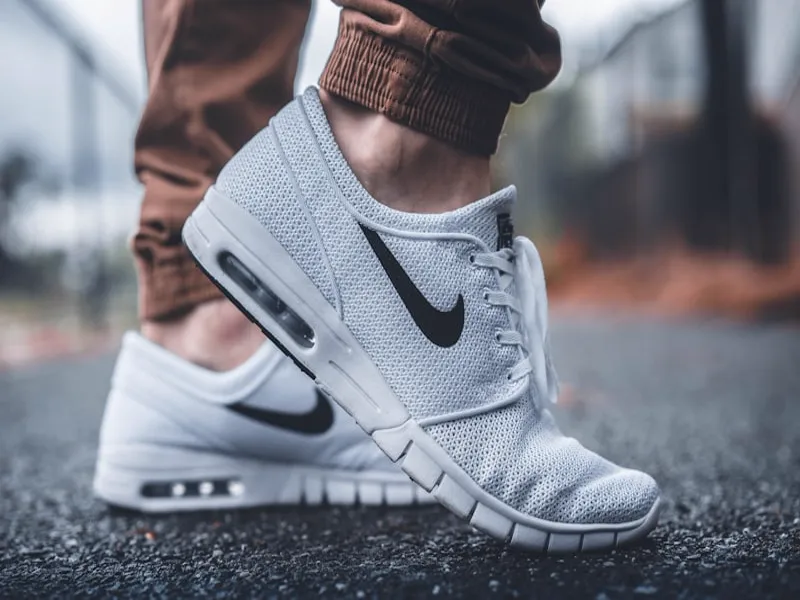
Getting dressed takes on a whole new geometry after hip replacement. In the early weeks, leaning forward to reach a shoe can run straight into the movement precautions your surgeon gave you—often described as not bending the hip past 90 degrees.
A walker or cane may be part of every trip, the feet swell, and your balance is still finding itself. A loose backless slipper that was fine around the house before surgery is no longer up to the job.
That changes what counts as a good recovery shoe.
The best walking shoe after hip replacement is not necessarily the softest or most expensive option. For recovery, we look for four things first:
A stable base. A secure fit. Good traction. And a practical way to get the shoe on.
We compared five current walking shoes against those four needs—stability, wide widths, hands-free entry, and a budget option.
Medical note: A shoe can improve comfort and convenience, but it does not replace physical therapy, a prescribed walker or cane, or your surgeon's weight-bearing and movement instructions.
Quick Answer: Which Shoe Is Best After Hip Replacement?
If you only want the short version:
| If you need... | Our pick | Why |
|---|---|---|
| Best overall balance | Brooks Addiction Walker 2 | Walking-focused design with structured support |
| Wide or extra-wide fit | New Balance 928v3 | Available in widths up to 6E on current models |
| Hands-free / no bending | Orthofeet Kita Hands-Free | Designed specifically for hands-free entry |
| Support with easy on/off | Brooks Addiction Walker V-Strap 2 | Structured support with hook-and-loop straps |
| Budget-friendly athletic option | ASICS GEL-CONTEND 9 | Current model with cushioning and Wide/Extra Wide options |
If stability is your biggest concern, start with the Brooks Addiction Walker 2 or New Balance 928v3.
If bending down to put on your shoes is the biggest problem, look first at the Orthofeet Kita Hands-Free.
Affiliate disclosure: Vitals Page may earn a commission if you purchase through links on this page, at no additional cost to you. Our recommendations are based on product features, fit considerations, and practical use rather than the commission we may earn.
How We Chose These Shoes
These five were not pulled from a bestseller list. Each one addresses a concrete problem from the hip-replacement weeks—width during swelling, laces you cannot safely reach, or a base that feels steady while a walker is still doing some of the work.
Our comparison focused on:
- Stability
- Heel security
- Traction
- Width availability
- Cushioning
- Ease of entry
- Adjustability
- Walking-specific design
- Current product availability
We also checked current manufacturer information for product features, widths, closures, and construction.
That matters because shoe models change. A recommendation that made sense several years ago may no longer be the best choice in 2026.
For example, the current Brooks Addiction Walker 2 is positioned by Brooks as a maximum-support walking shoe and uses an Extended Progressive Diagonal Rollbar for structured support. The current New Balance 928v3 remains available in widths ranging from Narrow through XX-Wide, depending on the version.
Our Top 5 Walking Shoes After Hip Replacement
1. Brooks Addiction Walker 2 — Best Overall
Brooks Addiction Walker 2
A structured walking shoe for people who want support and a stable, walking-focused design.
Check Current Price & SizesBest for: Everyday walking when stability and structured support are the main priorities.
If your days currently revolve around walker-supported hallway walks and short, careful outings, the Brooks Addiction Walker 2 is the shoe we would lead with. It is built around walking from the ground up rather than being a running shoe repurposed for the job.
Brooks lists the shoe as a maximum-support walking model. It uses an Extended Progressive Diagonal Rollbar, balanced cushioning, and a leather upper. The current model also carries the APMA Seal of Acceptance.
What stands out
- Walking-specific design
- Structured support
- Broad, stable feel
- Balanced cushioning
- Durable leather upper
- Available in multiple widths
- Current 2026 model
What could be better
This is not a lightweight, flexible running shoe.
It is also a traditional lace-up design, so putting it on may be difficult if bending is restricted or uncomfortable.
The leather construction may also feel firmer than a lightweight mesh athletic shoe.
Who should skip it
Skip this shoe if your main priority is hands-free entry.
If you cannot safely bend down to manage laces, the Orthofeet Kita or Brooks V-Strap 2 may be more practical.
Bottom line
If you want one structured walking shoe to start with, the Addiction Walker 2 is the most balanced choice in this guide.
2. New Balance 928v3 — Best for Wide or Extra-Wide Feet
New Balance 928v3
A strong option when width, motion control, and structured walking support matter.
Check Current Price & SizesBest for: People who need a wide or extra-wide shoe or prefer a more structured walking shoe.
Post-surgery swelling does not care about your old shoe size, and that is the 928v3's strongest argument: few shoes on the market come in this many widths.
Current New Balance listings show widths including Narrow (B), Standard (D), Wide (2E), X-Wide (4E), and XX-Wide (6E) for applicable versions. The shoe also uses ROLLBAR stability technology, Walking Strike Path technology, and ABZORB cushioning.
What stands out
- Very broad width selection
- Motion-control design
- ROLLBAR stability technology
- ABZORB cushioning
- Removable footbed
- Walking-focused construction
- Leather upper
What could be better
The 928v3 is a substantial shoe.
It can feel heavier and less flexible than a lightweight running shoe. Current listings show a men's version at about 15.5 ounces per shoe in one configuration.
It is also normally a lace-up shoe, although some versions use hook-and-loop closures.
Who should skip it
If you want a very lightweight, flexible shoe, this probably is not your best option.
It may also be more shoe than you need if you already walk comfortably and simply want an inexpensive everyday sneaker.
Bottom line
If pinching across the forefoot is the thing that keeps ruling out every shoe you try, the 928v3 is the easiest place to start looking.
3. Orthofeet Kita Hands-Free — Best for Easy Entry
Orthofeet Kita Hands-Free
A hands-free walking shoe designed for people who want to avoid bending down to put on their shoes.
Check Current Price & SizesBest for: People who have difficulty bending, reaching their feet, or managing traditional laces.
This is the most recovery-specific shoe on the list.
Orthofeet currently describes the Kita as a hands-free shoe with slip-on ease and "no bending required." It uses a stretchable upper, slip-resistant construction, adjustable interior space, and the company's Ortho-Cushion system. The current Canadian model is offered in two widths.
That directly addresses one of the most practical problems after joint replacement: getting dressed without repeatedly bending over.
What stands out
- Hands-free entry
- No need to tie laces every time
- Stretchable upper
- Slip-resistant construction
- Adjustable interior fit
- Two width options
- Designed specifically around easy entry
What could be better
This is not the shoe I would automatically choose for someone who wants the firmest possible walking platform.
It is also considerably more expensive than a basic athletic shoe.
And although hands-free entry is convenient, the shoe still needs to feel secure on your foot.
Who should skip it
Skip it if you have no problem bending and prefer a traditional structured walking shoe.
The Brooks Addiction Walker 2 or New Balance 928v3 may offer a more conventional walking-shoe feel.
Bottom line
If your biggest problem is:
"I cannot comfortably bend down to put on my shoes."
this is the option I would investigate first.
4. Brooks Addiction Walker V-Strap 2 — Best for Support With Easy On/Off
Brooks Addiction Walker V-Strap 2
A practical alternative to traditional laces when you want structured walking support with easier entry.
Check Current Price & SizesBest for: People who want a supportive walking shoe but do not want to deal with traditional laces.
The V-Strap 2 answers a specific frustration: you want the Addiction Walker's structured platform, but its laces ask for more bending than your precautions allow. It keeps that platform and swaps the laces for hook-and-loop straps.
Brooks lists the current V-Strap 2 as a maximum-support walking shoe and specifically identifies easy on/off as a feature. It also uses the same general structured-support approach associated with the Addiction Walker family.
What stands out
- Easy on/off
- Hook-and-loop closure
- Structured support
- Walking-specific design
- Balanced cushioning
- Leather upper
- Current model
What could be better
The straps may not feel as familiar as traditional laces.
And like the standard Addiction Walker 2, this is not a lightweight athletic shoe.
Who should skip it
Skip it if you prefer a soft, flexible running-shoe feel.
You may also prefer the Orthofeet Kita if avoiding bending entirely is your highest priority.
Bottom line
The V-Strap 2 sits in an interesting middle ground:
more structured than a casual slip-on, but easier to manage than traditional laces.
5. ASICS GEL-CONTEND 9 — Best Budget Athletic Option
ASICS GEL-CONTEND 9
A more affordable athletic-shoe option for people who want cushioning without buying a premium walking shoe.
Check Current Price & SizesBest for: Budget-conscious shoppers who prefer a lighter athletic shoe.
Unlike the older Gel-Contend 7 previously listed here, the GEL-CONTEND 9 is a current model.
ASICS describes it as a neutral running shoe with GEL and AMPLIFOAM+ cushioning, an engineered mesh upper, TRUSSTIC support, and a wrap-up outsole designed to improve stability. Current versions are available in Wide and Extra Wide options as well.
What stands out
- Lower price than several premium walking shoes
- Lightweight athletic-shoe design
- GEL cushioning
- AMPLIFOAM+ cushioning
- Mesh upper
- Current model
- Wide and Extra Wide versions available
What could be better
This is still a neutral running shoe, not a maximum-support walking shoe.
If you feel particularly unstable after surgery, I would start with the Brooks Addiction Walker 2 or New Balance 928v3 instead.
The standard model also does not provide the same width range as the 928v3.
Who should skip it
Skip it if your main priority is maximum stability or motion control.
Bottom line
If you already know you prefer lightweight athletic shoes and want to keep the cost down, the GEL-CONTEND 9 is a reasonable option.
It should not be confused with a specialized post-surgery shoe, though.
Which Walking Shoe Should You Choose?
Forget price for a minute and name the problem you are actually trying to solve.
The right shoe follows from that.
-
If you feel unsteady, start with: Brooks Addiction Walker 2 or New Balance 928v3. These are the most structured options in this guide.
-
If your feet are wide or extra-wide, start with: New Balance 928v3. The current 928v3 has an unusually broad range of width options, including 2E, 4E, and 6E versions.
-
If bending is difficult, start with: Orthofeet Kita Hands-Free or Brooks Addiction Walker V-Strap 2. The Kita is the stronger choice if avoiding bending is the main goal. And the V-Strap 2 makes sense if you want a more traditional walking-shoe construction with easier closure.
-
If you want a lightweight athletic shoe, start with: ASICS GEL-CONTEND 9. Just remember that lightweight and maximum stability are not the same thing.
-
If you want one dependable everyday walking shoe, start with: Brooks Addiction Walker 2. It is the most balanced option in this guide for people who prioritize walking support over lightweight flexibility.
What Makes a Good Shoe After Hip Replacement?
There is no single "hip replacement shoe". Instead, look for a few practical features.
1. A Stable Base
The shoe should feel stable when you stand and walk. Look for:
- A reasonably broad sole
- A secure heel
- A midsole that does not feel excessively soft or unstable
- A shoe that feels predictable when you change direction
If you are still using a walker or cane, your physical therapist can help you decide what type of footwear works best with your current walking pattern.
2. Good Traction
Traction matters because a slip can be especially problematic while your strength and balance are returning.
Look for a rubber outsole with a useful tread pattern.
Also inspect the soles of shoes you already own.
A supportive shoe with a badly worn outsole may be less useful than a newer, better-fitting shoe.
3. A Secure Heel
Your heel should stay reasonably secure when you walk.
A shoe that repeatedly slips at the heel can make you feel less stable.
This is one reason I would not automatically recommend loose slippers after hip replacement.
4. Enough Width
Do not automatically buy your old shoe size.
Your feet may fit differently than before, and swelling can temporarily change how comfortable a shoe feels.
When trying shoes:
- Your toes should have room to move
- Your heel should stay reasonably secure
- Your foot should not feel squeezed
- The shoe should not create painful pressure points
- Do not assume a painful shoe will become comfortable after "breaking in"
If you need more room, look for a wider shoe rather than simply buying a longer size.
5. Easy Entry
Easy to overlook until the first time you try it.
After hip surgery, reaching down to your feet may cross the very bending or twisting limits your care team set, depending on your recovery instructions.
Options include:
- Hands-free shoes
- Hook-and-loop closures
- Elastic laces
- Stretchable uppers
- A long-handled shoehorn
The American Academy of Orthopaedic Surgeons specifically includes a long-handled shoehorn among useful items for joint-replacement recovery.
How to Test a Walking Shoe After Hip Replacement
Before wearing a new shoe outside, test it carefully at home.
Step 1: Put it on while seated
Use a stable chair.
Do not stand on one leg while trying to force a shoe onto your foot.
Step 2: Wear your normal socks
A shoe that fits without socks may feel completely different with the socks you normally wear.
Step 3: Check your heel
Walk a few steps and see whether your heel stays reasonably secure.
Step 4: Check your toes
Your toes should not feel cramped or pushed against the front of the shoe.
Step 5: Walk indoors
Take 10 to 20 comfortable steps on a safe, clear surface.
Pay attention to whether the shoe feels stable when you turn.
Step 6: Check how you put it on
A shoe is not a good recovery choice if putting it on requires you to bend or twist in a way your care team has told you to avoid.
Step 7: Do not ignore pain
You do not need to "break in" a shoe that creates obvious pressure or pain.
Can You Wear Running Shoes After Hip Replacement?
Often, a supportive athletic shoe can be reasonable for walking after hip replacement.
The label "running shoe" is less important than how the shoe fits and feels.
For walking during recovery, look for:
- Stable footing
- Secure heel
- Comfortable cushioning
- Good traction
- A manageable weight
- Enough room for your foot
- A closure you can manage safely
The ASICS GEL-CONTEND 9, for example, is a current neutral running shoe rather than a stability walking shoe. ASICS lists cushioning, support features, and a TRUSSTIC unit, but that does not make it the best option for someone who needs maximum stability.
Your surgeon or physical therapist should determine when and how much you should walk.
What Shoes Should You Avoid After Hip Replacement?
You do not necessarily need to permanently avoid an entire category of shoes.
During early recovery, however, some styles are less practical.
Avoid loose slippers
Loose slippers can move around on your foot and may not provide the stability you want while your walking pattern is changing.
Avoid worn-out athletic shoes
Inspect the outsole.
If the tread is heavily worn or the shoe feels uneven or unstable, replace it.
Be careful with high heels
High heels are not a sensible choice for early recovery walking because they can change how your weight is distributed and make balance more difficult.
Be careful with flip-flops
Flip-flops can be difficult to keep securely on your feet and generally provide little structure.
Avoid shoes that are too tight
If your feet are swollen or sensitive, a wider or adjustable shoe may be more comfortable.
Do You Need Special Shoes After Hip Replacement?
Usually, there is no single type of shoe that every person needs.
Many people can use a regular walking or athletic shoe.
The more important question is:
Does the shoe fit your foot, feel stable, provide useful traction, and allow you to put it on safely?
Your recovery instructions matter more than a shoe manufacturer's marketing.
A supportive shoe also cannot replace:
- A properly fitted walker
- A cane when prescribed
- Physical therapy
- Weight-bearing instructions
- Movement precautions
AAOS notes that people recovering from joint replacement commonly use crutches or a walker initially, with their doctor or therapist determining how much weight they can put on the leg and when the walking aid can be stopped.
How to Make Shoes Easier to Put On
Use a long-handled shoehorn
This is one of the simplest solutions.
AAOS specifically recommends a long-handled shoehorn as a useful recovery item.
Choose an easy-entry shoe
A hands-free shoe or hook-and-loop closure can be much easier than traditional laces.
Sit down first
Put your shoes on while seated on a stable chair.
Do not balance on one leg while trying to put on a shoe.
Ask for help
There is no benefit to forcing yourself to put your shoes on independently if doing so means ignoring your recovery restrictions.
If you have been given specific movement precautions, ask your surgeon or physical therapist how you should handle dressing.
What Should You Wear Home From the Hospital?
If you are preparing for hip replacement surgery, choose your shoes before surgery day.
A practical pair should be:
- Comfortable
- Secure around the heel
- Stable when standing
- Easy to put on
- Appropriate for the weather
- Large enough to accommodate normal swelling without becoming loose
You may also want to have a long-handled shoehorn available.
AAOS recommends preparing the home before joint replacement and using items such as a long-handled shoehorn and reacher to reduce unnecessary bending and reaching.
Your hospital or surgical team may have additional instructions, so follow those first.
When Can You Start Walking After Hip Replacement?
Walking often begins soon after surgery, but walking does not necessarily mean walking independently.
AAOS says people who have had hip or knee replacement will most likely use crutches or a walker when first leaving the hospital. Their doctor or therapist determines how much weight they can put on the leg and when they can stop using those aids. AAOS also recommends starting with indoor walking and gradually building mobility and endurance.
A common progression may look like:
Walker → Cane → Independent walking
But this is not a universal schedule.
Your care team should determine:
- How much weight you can place on the leg
- When to reduce use of your walker
- When a cane is appropriate
- How far you should walk
- Which movements or positions you should avoid
Do not use a generic timeline from an article as a substitute for your rehabilitation plan.
What If Your Feet Swell After Surgery?
Some swelling can occur during recovery.
AAOS notes that swelling can occur for weeks after joint replacement, with some people experiencing milder swelling for several months. New or severe swelling should be discussed with your medical team because swelling can sometimes signal a complication.
From a footwear standpoint:
Do not force a swollen foot into a tight shoe.
Instead, ask your care team what is appropriate and consider a shoe with:
- More width
- Adjustable closure
- Stretchable upper
- Removable insole
- Enough room for your normal socks
The goal is a secure fit, not a loose shoe.
Our Final Verdict
Among people searching for the best walking shoes after hip replacement, no single shoe wins every situation.
Instead:
Best overall: Brooks Addiction Walker 2
Best for wide or extra-wide feet: New Balance 928v3
Best hands-free option: Orthofeet Kita Hands-Free
Best easy-on supportive shoe: Brooks Addiction Walker V-Strap 2
Best budget athletic option: ASICS GEL-CONTEND 9
If I were narrowing the list to just three, I would start with:
Brooks Addiction Walker 2
New Balance 928v3
Orthofeet Kita Hands-Free
They solve three different problems:
- Structured walking support
- Wide-foot fit
- Easy, hands-free entry
The deciding factor is not the shoe with the longest feature list.
Choose the shoe that:
fits your foot, feels stable, has useful traction, and allows you to put it on without working around your recovery restrictions.
🏆 Our Overall Pick
The Brooks Addiction Walker 2 is our overall choice for people who want a structured walking shoe with strong support. If bending is difficult, consider the Orthofeet Kita Hands-Free instead.
Check Brooks Addiction Walker 2 →Frequently Asked Questions
What are the best walking shoes after hip replacement?
There is no single shoe that works best for everyone.
For a structured everyday walking shoe, we like the Brooks Addiction Walker 2. For wide or extra-wide feet, the New Balance 928v3 is especially useful. If bending down to put on shoes is difficult, the Orthofeet Kita Hands-Free is the most recovery-specific option on this list.
Can I wear running shoes after hip replacement?
Many people can use supportive athletic shoes for walking.
Focus on stability, traction, fit, comfort, and ease of entry rather than whether the label says "running" or "walking."
Your surgeon or physical therapist should determine when and how much you should walk.
What should I look for in shoes after hip replacement?
Prioritize:
- A stable base
- Secure heel
- Good traction
- Comfortable cushioning
- Adequate toe room
- Appropriate width
- Easy entry
If bending is difficult, hands-free or adjustable shoes may be especially useful.
Are hands-free shoes good after hip replacement?
They can be.
Hands-free shoes can make dressing easier when bending or reaching the feet is difficult. The important thing is that the shoe still holds your foot securely and feels stable while walking.
Avoid confusing a hands-free shoe with a loose slipper.
When can I start walking after hip replacement?
Walking often begins soon after surgery with assistance.
AAOS notes that patients commonly use a walker or crutches initially, with their doctor or therapist determining weight-bearing instructions and when those aids can be discontinued.
Your recovery timeline may be different from someone else's.
What shoes should I wear home from the hospital after hip replacement?
Choose a comfortable, secure shoe that is easy to put on.
Avoid loose slippers, unstable footwear, and shoes that require difficult bending.
A long-handled shoehorn may also make dressing easier during early recovery.
The best walking shoes after hip replacement are rarely the most expensive pair or the one with the thickest wedge of foam.
For early recovery, focus on the basics:
- Stable footing
- Good traction
- Secure heel
- Comfortable cushioning
- Enough room for your feet
- Appropriate width
- Easy entry
If stability is your main concern, start with the Brooks Addiction Walker 2 or New Balance 928v3.
If bending is difficult, consider the Orthofeet Kita Hands-Free.
If you want an easier-to-manage structured shoe, the Brooks Addiction Walker V-Strap 2 is worth considering.
And if you simply want an affordable athletic shoe, the ASICS GEL-CONTEND 9 is a current alternative to the older Gel-Contend 7.
Above all, your surgeon and physical therapist know your surgical approach, weight-bearing instructions, movement precautions, and rehabilitation plan. Their instructions take priority over any general shoe recommendation, including the ones on this page.
Related Articles
- Best Walking Shoes After Knee Replacement
- Best House Shoes for Seniors
- Best Slip-On Shoes for Seniors
- Best Shoes for Seniors: Complete Guide
- Best Shoes for Arthritis
- Best Wide Toe Box Shoes for Seniors
- Balance Exercises for Seniors
- Complete Walking Guide for Older Adults
Medical Sources
- American Academy of Orthopaedic Surgeons (AAOS), After Your Joint Replacement Surgery
- American Academy of Orthopaedic Surgeons (AAOS), Getting Ready for Joint Replacement
- American Academy of Orthopaedic Surgeons (AAOS), Preparing Your Home for Joint Replacement Surgery
- American Academy of Orthopaedic Surgeons (AAOS), Total Joint Replacement
AAOS notes that recovery and rehabilitation vary by person and that the treating doctor or physical therapist should provide specific instructions for activity and limitations.
Product Information Sources
- Brooks — Addiction Walker 2
- Brooks — Addiction Walker V-Strap 2
- New Balance — 928v3
- Orthofeet — Kita Hands-Free
- ASICS — GEL-CONTEND 9
Product specifications, available widths, colors, sizes, and prices can change. Check the current product listing before purchasing.
Medical disclaimer: This article is for general educational purposes and is not a substitute for medical advice. Your surgeon or physical therapist should determine your activity level, weight-bearing instructions, footwear restrictions, movement precautions, and rehabilitation plan.