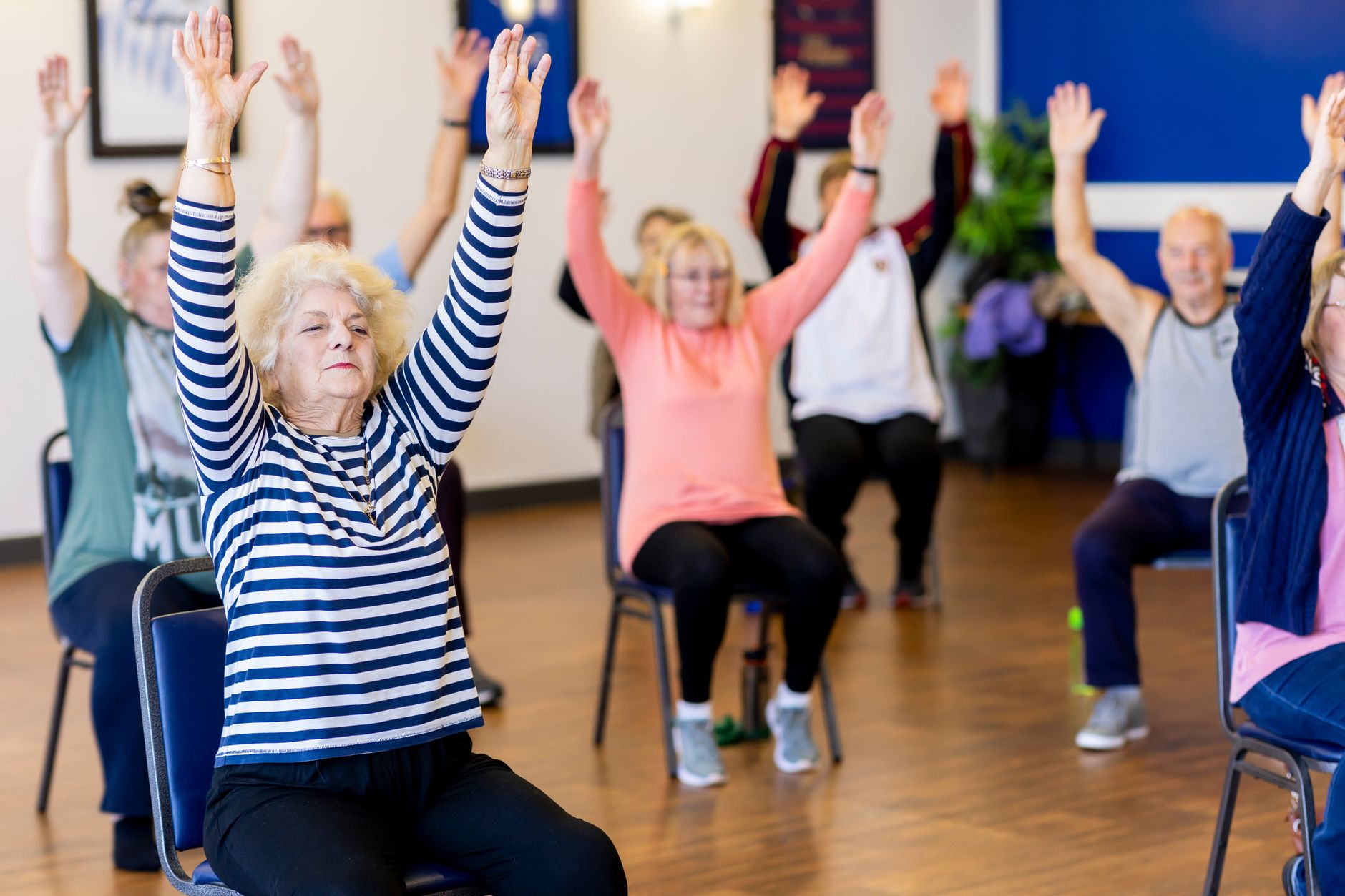
What Exercises Help Seniors Get Up From a Chair More Easily?
When rising from the dining chair becomes a two-attempt event—the first rock forward, the pause, then the shove with both hands—you're looking at lost leg strength, not an age you simply have to accept. Standing up from a seat is a skill the body can relearn. A short set of targeted movements, practiced most days, makes the motion smoother and steadier from chairs, sofas, and the toilet.
According to the Centers for Disease Control and Prevention, the ability to rise from a chair without using hands is a key indicator of functional independence and lower body strength in older adults.
Why Is Getting Up From a Chair Difficult?
Physical Factors
Muscle weakness:
- Quadriceps (front thigh)
- Glutes (buttocks)
- Hamstrings (back thigh)
- Core muscles
- Calves
Joint issues:
- Knee arthritis
- Hip problems
- Ankle stiffness
- Back pain
- Reduced range of motion
Balance concerns:
- Fear of falling
- Poor balance
- Dizziness
- Medication side effects
- Vision problems
Why It Matters
Daily activities affected:
- Getting out of bed
- Rising from dining chair
- Standing from toilet
- Getting off sofa
- Exiting car
- Rising from recliner
Independence impact:
- Needing assistance
- Using arms to push
- Feeling embarrassed
- Limiting activities
- Reduced confidence
Essential Exercises
Chair Squats
If you practice only one move in this article, practice this one. A slow, controlled sit-to-stand is the exact problem you're trying to solve, done as exercise:
Why it works:
- Mimics exact movement
- Strengthens all necessary muscles
- Improves coordination
- Builds confidence
- Easy to progress
How to do it:
- Sit in sturdy chair
- Feet flat, shoulder-width apart
- Cross arms over chest
- Lean forward slightly
- Push through heels
- Stand up straight
- Slowly sit back down
- Repeat 8-12 times
Progressions:
- Use hands for support initially
- Reduce hand support over time
- Hold weights
- Stand up more slowly
- Hold at top position
- Use lower chair
Seated Leg Extensions
Strengthens quadriceps:
Benefits:
- Targets front thigh muscles
- Easy to do
- Can be done anywhere
- Low impact
- Builds knee stability
How to do it:
- Sit in chair
- Back straight, feet flat
- Extend one leg straight out
- Hold for 2-3 seconds
- Lower slowly
- Repeat 8-12 times per leg
Progressions:
- Add ankle weights
- Hold longer
- Extend higher
- Do more repetitions
- Alternate legs
Seated Marching
Builds hip strength:
Why helpful:
- Strengthens hip flexors
- Improves coordination
- Easy to modify
- Good for balance
- Can be done daily
How to do it:
- Sit in chair
- Back straight, feet flat
- Lift one knee toward chest
- Hold for 1-2 seconds
- Lower slowly
- Repeat 8-12 times per leg
Progressions:
- Lift higher
- Hold longer
- Add ankle weights
- Alternate faster
- Do more repetitions
Glute Squeezes
Strengthens buttocks:
Importance:
- Essential for standing
- Supports lower back
- Improves posture
- Easy to do anywhere
- No equipment needed
How to do it:
- Sit in chair
- Feet flat on floor
- Squeeze buttocks together
- Hold for 3-5 seconds
- Relax
- Repeat 10-15 times
Progressions:
- Hold longer
- Squeeze harder
- Add repetitions
- Do while standing
- Combine with other exercises
Ankle Pumps
Strengthens calves:
Why important:
- Helps push off when standing
- Improves circulation
- Reduces swelling
- Easy to do
- Prevents blood clots
How to do it:
- Sit in chair
- Extend legs
- Point toes away
- Pull toes back
- Repeat 15-20 times
Progressions:
- Add ankle weights
- Do one leg at a time
- Hold each position
- Increase repetitions
- Do throughout day
Balance and Stability
Single-Leg Balance (Seated)
Builds stability:
Benefits:
- Improves balance
- Strengthens stabilizing muscles
- Reduces fall risk
- Easy to progress
- Can be done anywhere
How to do it:
- Sit in chair
- Hold onto sides for support
- Lift one foot off ground
- Hold for 5-10 seconds
- Lower and repeat
- Do 5-8 times per leg
Progressions:
- Hold longer
- Reduce hand support
- Close eyes (advanced)
- Add gentle movement
- Do while standing
Seated Torso Rotations
Improves core strength:
Why helpful:
- Strengthens core muscles
- Improves balance
- Helps with coordination
- Easy to do
- Reduces back strain
How to do it:
- Sit in chair
- Feet flat, back straight
- Place hands on shoulders
- Rotate torso to right
- Return to center
- Rotate to left
- Repeat 10-15 times each side
Progressions:
- Rotate farther
- Hold at end position
- Add light weights
- Do more repetitions
- Combine with other exercises
Technique Tips
Proper Form
The rise has a geometry to it. Your weight has to travel forward before it can go up, so let your nose move past your toes as you hinge from the hips, eyes on the wall ahead rather than the floor. Early on the hands can rest lightly on the armrests; over time, let them hover, then fold across your chest so the legs do the work. Pushing hard off your thighs is a fine temporary crutch, but it hides how much help the legs still need.
Key principles:
- Feet flat on floor
- Shoulder-width apart
- Weight in heels
- Lean forward slightly
- Push through heels
- Keep back straight
- Look forward
Common mistakes:
- Weight on toes
- Leaning too far forward
- Using arms too much
- Rushing the movement
- Not using legs enough
Breathing
Proper breathing:
- Exhale when standing up
- Inhale when sitting down
- Don't hold breath
- Breathe naturally
- Rhythmic breathing
Safety
Stay safe:
- Use sturdy chair
- Clear area around you
- Have support nearby
- Wear non-slip shoes
- Start slowly
- Stop if pain
Building Your Routine
Frequency
How often:
- Start 3-4 times per week
- Can do daily once comfortable
- Consistency is key
- Quality over quantity
- Listen to your body
Sample schedule:
- Monday: Chair squats, leg extensions
- Tuesday: Rest or light walking
- Wednesday: Glute squeezes, ankle pumps
- Thursday: Rest or light walking
- Friday: Chair squats, marching
- Weekend: Active rest
Sets and Reps
Starting point:
- 1-2 sets per exercise
- 8-12 repetitions per set
- Rest 60 seconds between sets
- Focus on form
- Stop before fatigue
Progression:
- Add sets gradually
- Increase repetitions
- Add resistance
- Reduce rest time
- Increase difficulty
Warm-Up
Before exercising:
- 5-10 minutes warm-up
- Gentle marching
- Arm circles
- Light stretching
- Joint rotations
- Walking in place
Practical Tips
Chair Selection
The chair itself is part of the training. A firm seat that leaves your hips level with or slightly above your knees teaches the pattern well; a deep, soft sofa that swallows you trains nothing except how trapped you can feel. Drill the move on the good chair first, and treat the low cushioned seat as the eventual exam.
Best chairs for practice:
- Sturdy and stable
- Appropriate height
- No wheels
- Firm seat
- Good back support
- Armrests (initially)
Chair height:
- Knees at 90-degree angle
- Feet flat on floor
- Hips slightly higher than knees
- Easy to stand from
- Can adjust with cushions
Daily Practice
Incorporate into daily life:
- Practice every time you sit/stand
- Use proper technique
- Be mindful of movement
- Count repetitions
- Track progress
- Make it habit
Environmental Setup
Create safe environment:
- Remove obstacles
- Ensure good lighting
- Use non-slip rug
- Have support nearby
- Keep phone accessible
- Clear pathways
Progressing Over Time
Measuring Progress
Track improvements:
- How many times you can stand
- How easily you stand
- How much hand support needed
- How you feel after
- Daily function improvements
Celebrate milestones:
- Standing without hands
- Doing more repetitions
- Using less support
- Feeling stronger
- Increased confidence
When to Progress
Signs you're ready:
- Exercises feel easy
- Can do all reps with good form
- No pain during or after
- Feeling stronger
- Ready for challenge
How to progress:
- Add repetitions first
- Then add sets
- Add light resistance
- Reduce support
- Increase difficulty
Common Challenges
Knee Pain
If you have knee pain:
- Start gently
- Use smaller range of motion
- Don't lock knees
- Use ice or heat after
- Consult doctor if persistent
Modifications:
- Shallower squats
- More repetitions, less depth
- Seated alternatives
- Water exercises
- Physical therapy
Fear of Falling
Overcome fear:
- Start with support
- Use sturdy chair
- Have someone nearby
- Practice in safe environment
- Build confidence gradually
Build confidence:
- Start easy
- Progress slowly
- Celebrate small wins
- Practice regularly
- Focus on success
Lack of Motivation
Stay motivated:
- Set realistic goals
- Track progress
- Make it routine
- Find enjoyable activities
- Exercise with others
Overcome barriers:
- Plan ahead
- Prepare environment
- Schedule workouts
- Have backup plans
- Focus on benefits
When to Seek Help
Professional Guidance
Consider working with:
- Physical therapist
- Occupational therapist
- Personal trainer (senior specialist)
- Exercise physiologist
- Your healthcare team
Benefits:
- Personalized program
- Proper technique
- Safe progression
- Motivation
- Problem-solving
Medical Concerns
See doctor if:
- Sudden difficulty standing
- Pain with movement
- Dizziness or lightheadedness
- Recent falls
- Significant weakness
- New symptoms
Frequently Asked Questions
How long until I see improvement?
Most people notice improvements within 2-4 weeks of consistent practice. Significant improvements typically occur within 8-12 weeks. However, everyone progresses differently, and consistency is key.
What if I can't stand up at all?
Start with seated exercises to build strength. Practice the movement pattern while sitting. Use arm support initially. Consider working with a physical therapist for personalized guidance.
Should I use armrests?
Initially, yes. Armrests provide support and help you learn the movement. Gradually reduce reliance on them as you get stronger. The goal is to eventually stand without using arms.
Can these exercises help with toilet transfers?
Absolutely! These exercises strengthen the exact muscles needed for toilet transfers. Practice with a toilet seat riser if needed. The movement is very similar to chair squats.
What if my chair is too low?
Use cushions to raise the seat height temporarily. As you get stronger, gradually reduce the cushion height. The goal is to eventually use standard-height chairs.
How many times a day should I practice?
Aim for 2-3 practice sessions per day, with each session including 8-12 repetitions. You can also practice every time you naturally sit and stand throughout the day.
Key Takeaways
- Chair squats are the most effective exercise
- Practice consistently for best results
- Start with support and progress gradually
- Focus on proper form over speed
- Strengthen all leg muscles, not just quads
- Include balance and stability exercises
- Track your progress
- Make it part of daily routine
- Seek professional help if needed
- A sturdy chair and a countertop within reach are the only equipment required
Related Articles
- How Can Seniors Rebuild Leg Strength Safely?
- Why Are My Legs Getting Weaker as I Age?
- Leg Strengthening Exercises
- Balance Exercises for Seniors
- Strength Training Safety Tips
References
- Centers for Disease Control and Prevention. (2024). Physical Activity for Older Adults. CDC.gov
- National Institute on Aging. (2024). Exercise and Physical Activity. NIA.nih.gov
- American College of Sports Medicine. (2024). Exercise for Older Adults. ACSM.org