Leakproof Underwear vs Pads: Which Is Better for Bladder Leaks?
If you've ever felt a small leak when you coughed—or woken up weighing a much bigger overnight accident—you already know the decision starts with volume. The rest of it is logistics: a pad you peel off and throw away versus underwear you rinse, wash, and wear again; something picked from a packet by absorbency level versus something you buy by hip and waist measurement, like any other pair in your drawer. Bladder leaks affect millions of women over 50, and neither product wins every situation. What follows works through the actual tradeoffs—cost per year, feel under clothes, skin, laundry—so you can choose by your own routine instead of the loudest package.
Quick Answer
Leakproof underwear wins for everyday comfort, long-term savings, and the environment, while pads win for maximum absorbency on very heavy days and grab-and-go convenience. Many women over 50 end up happiest using both — underwear as their daily base and a pad for backup when leaks are heavier or they're away from home. In practice, a split wardrobe usually beats trying to crown a single winner.
📌Key Takeaways
- Leakproof underwear saves 40-60% over a year vs pads
- Pads offer higher maximum absorbency for very heavy leaks
- Underwear is more breathable and better for sensitive skin
- Many women benefit from using both for different situations
How the Two Options Compare at a Glance
Before we get into the details, here's a side-by-side look at how leakproof underwear and pads stack up across the categories that matter most.
📊Leakproof Underwear vs Pads: At a Glance
| Feature | Leakproof Underwear | Pads |
|---|---|---|
| Upfront Cost | $15-35 per pair | $8-15 per pack |
| Long-term Cost | Lower (reusable) | Higher (ongoing) |
| Absorbency | Light to Heavy | Light to Very Heavy |
| Comfort | High (cotton-blend) | Medium (can bunch) |
| Discretion | Very discreet | Can show under thin clothing |
| Environmental Impact | Low (reusable) | High (disposable) |
| Skin Friendliness | Excellent (breathable) | Can cause irritation |
| Convenience | Requires washing | Use and dispose |
Click on any product to view full details and reviews
If you want the short version: underwear is the better all-around investment for most everyday situations, and pads are the better specialist tool for heavy or unpredictable days. The sections below explain where that line actually falls.
Cost Comparison: The Real Math Over One Year
Cost is usually the first thing women ask about, and it's where the two options diverge most dramatically. The catch is that the cheaper option at the register is rarely the cheaper option over time.
Pads — Ongoing, Recurring Spending
A typical pack of incontinence pads costs $8 to $15 and contains roughly 20 to 30 pads. If you have light to moderate leaks and use about 3 pads a day, you'll go through around 1,095 pads in a year.
At an average of about $0.40 per pad (a mid-range price), that works out to:
- 3 pads/day × 365 days = 1,095 pads per year
- 1,095 × $0.40 = roughly $438 per year
Women with heavier leaks who change more often can easily spend $500 to $650 a year, and premium brands push that even higher. The spending never stops — when the pack is empty, you buy another.
Leakproof Underwear — One-Time Investment
Leakproof underwear costs $15 to $35 per pair. Most women need 3 to 5 pairs to allow for washing and drying between uses. Let's assume you buy 4 pairs at $25 each:
- 4 pairs × $25 = $100 upfront
- Laundry costs (detergent, water, electricity): ~$40 per year
- Year-one total: roughly $140
That's about a third of what you'd spend on pads. And here's the kicker: a good pair of leakproof underwear lasts 1 to 2 years (sometimes longer with gentle care). In year two, your only cost is laundry, so the savings compound.
Pro Tip
Buy your first pair or two at full absorbency and wear them for a few weeks before committing to a full set. Fit and feel vary between brands, and a small trial run saves you from investing in four pairs that don't quite work for your body.
The Bottom Line on Cost
Over a single year, leakproof underwear typically saves 40-60% versus pads. Over two years, the gap widens further. Pads only win on cost if your leaks are so infrequent that you only use a handful per month.
Comfort and Fit: How Each Actually Feels
If protection feels bad, you won't wear it—and a product in the drawer protects no one. Here's how the two actually wear through a normal day.
Leakproof Underwear Feels Like Regular Underwear
The biggest surprise for most first-time buyers is how normal leakproof underwear feels. Modern versions are made from soft cotton blends with a hidden multi-layer gusset that absorbs and locks in moisture. From the outside, and largely from the inside too, they feel like a slightly thicker pair of regular panties. Fit follows ordinary underwear logic: brands size by hip and waist, so measure rather than translating from a dress size—the absorbent gusset, not extra overall bulk, is supposed to handle the leak.
They don't shift around, they don't make noise when you walk, and there's no adhesive pulling at your skin. For women who've spent years adjusting pads that bunch or curl, the stability of underwear is a quiet relief.
Pads Can Bunch and Shift
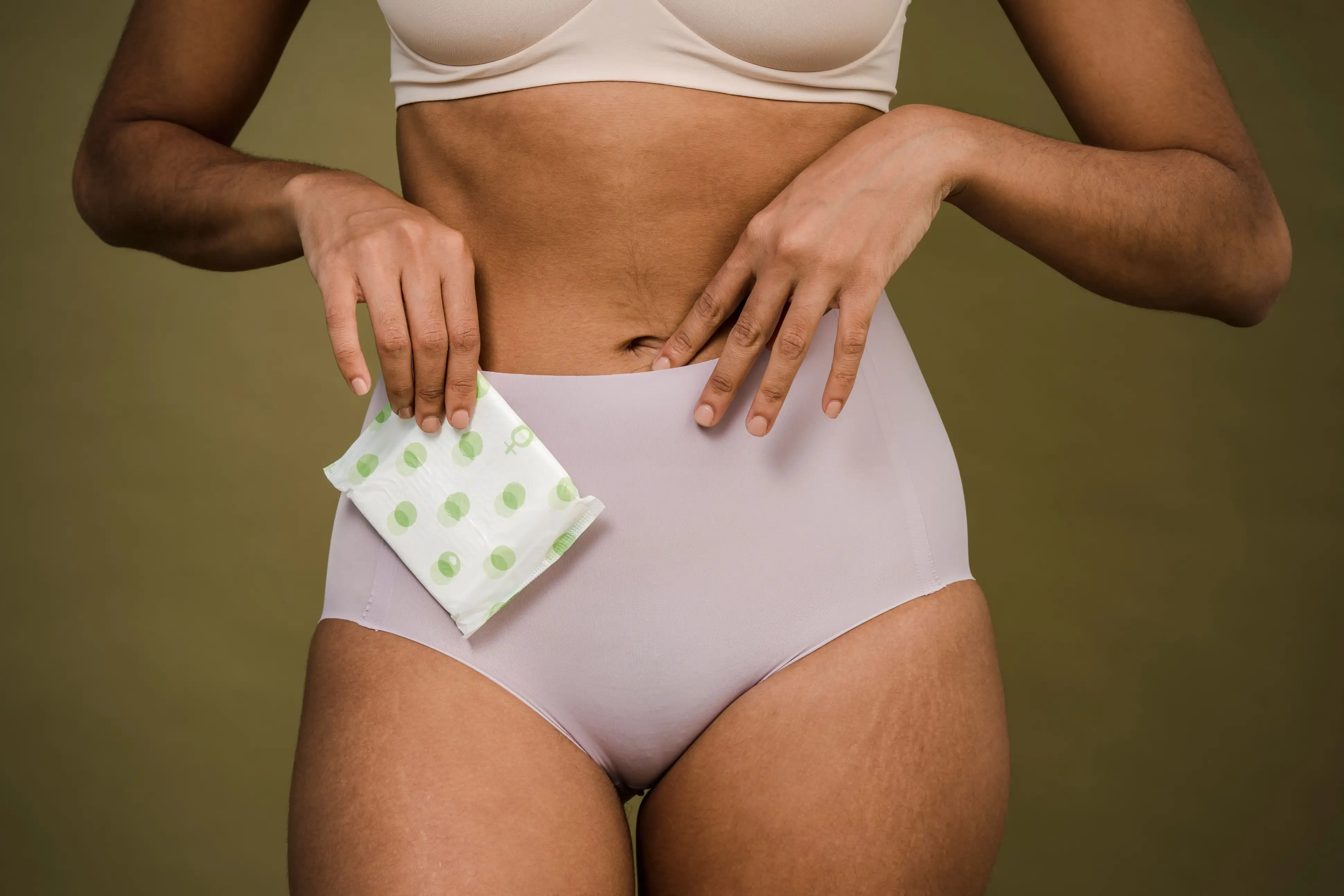
Pads have improved enormously, but they're still a separate piece held in place by adhesive. When you walk, sit, stand, or exercise, a pad can shift, bunch up at the edges, or peel away from your underwear. Many women describe a faint "rustling" sensation or the awareness that something is there.
That said, pads are lighter and cooler than they used to be, and a well-fitted pad in snug-fitting underwear can feel barely noticeable. The comfort gap is real but smaller than it once was.
Edge: underwear. For an ordinary day, it is the closest thing to putting on regular underwear and forgetting about it.
Absorbency: Which Handles Your Level of Leakage?
Absorbency is where pads still hold a genuine advantage, and it's the main reason pads aren't going away.
Pads Reach Higher Maximum Absorbency
For very heavy leaks — a sudden full-bladder release, post-surgery surges, or overnight protection — high-capacity pads and booster pads can absorb more than almost any underwear. If you sometimes feel a larger gush rather than a small trickle, a heavy-absorbency pad may give you the confidence underwear can't fully match.
Leakproof Underwear Covers Light to Heavy
Modern leakproof underwear is rated by absorbency, typically from "light" (about 1-2 teaspoons) up to "heavy" (roughly 4-6 teaspoons, sometimes more). For the majority of women over 50 — whose leaks are stress-related (a cough, a sneeze, a laugh) or urge-related (a sudden need to go) — heavy-absorbency underwear handles a typical day comfortably.
The honest truth: if your leaks are small to moderate, underwear is more than enough. If your leaks are large and frequent, pads (or a hybrid setup) may be safer.
Know Your Leak Pattern
Spend a few days noting when and how much you leak. Stress leaks during a sneeze are usually small and predictable — underwear handles these well. Large urge leaks or continuous dribbling may call for a pad's higher capacity.
Discretion: Which Is More Visible Under Clothing?
Nobody wants their bladder protection to announce itself. Discretion is about confidence as much as appearance.
Underwear Disappears Under Clothes
Because leakproof underwear is shaped like regular underwear, it lies flat against your body and doesn't add noticeable bulk. Under slacks, a skirt, a dress, or workout pants, it's virtually invisible. There are no visible lines from a pad's edges and no telltale thickness in the crotch area.
Pads Can Show Through Thin Fabrics
A pad adds a layer of thickness exactly where you don't want it noticed. Under thin leggings, clingy dresses, or light-colored slacks, the outline of a pad can sometimes be visible, especially with longer or higher-absorbency pads. The adhesive backing can also create a faint rectangular shape under tight clothing.
Edge: underwear — under thin or close-fitting clothes, it isn't close.
Environmental Impact: Waste and Sustainability
This is a category where the difference isn't subtle. Pads are single-use, and that adds up fast.
Pads Create Ongoing Landfill Waste
Using 3 pads a day means over 1,000 pads going into the trash every year — per person. Most incontinence pads contain plastic and superabsorbent polymers that take decades to break down. Multiply that by the millions of women managing bladder leaks, and the environmental footprint is enormous.
Underwear Is Reusable for Years
A single pair of leakproof underwear can replace dozens of pads over its lifespan. Even accounting for the water and energy used in washing, reusable underwear has a dramatically lower environmental impact than disposables. If sustainability matters to you, this is one of the easiest swaps you can make.
Edge: underwear — by a wide margin.
Skin Health: Breathability and Irritation
Skin health is easy to overlook until you have a problem — and women over 50, whose skin thins and becomes more delicate with age, are especially vulnerable.
Underwear Breathes Better
Leakproof underwear is typically made from cotton or bamboo blends that allow air to circulate. This keeps the skin drier and cooler, which helps prevent the chafing, redness, and irritation that trapped moisture can cause. Many women report that switching to underwear clears up chronic irritation they'd blamed on other things.
Pads Can Trap Moisture and Cause Irritation
Pads sit against the skin and hold moisture in place, often with a plastic backing that blocks airflow. Prolonged use — especially wearing the same pad for hours — can lead to chafing, heat rash, and even minor yeast or bacterial overgrowth in warm, damp conditions. Changing pads frequently helps, but the underlying issue remains.
Change Pads Regularly
If you use pads, change them every 3-4 hours (or sooner if wet) to reduce irritation and odor. Even the best pad becomes a skin problem when left in place too long.
Edge: underwear — breathable fabric makes a genuine difference for thinner, mature skin.
Convenience: Washing vs. Disposal, Travel, and Daily Life
Convenience is where pads fight back hard. There's a reason disposables have dominated for so long.
Pads Are Grab-and-Go
Pads require zero maintenance. Use one, toss it, grab another. There's nothing to wash, dry, or remember to bring home. For travel, long days out, or visits to family, the simplicity of "use and dispose" is genuinely liberating. Pads also let you switch absorbency on the fly — a light pad in the morning, a heavy one for a long afternoon.
Underwear Requires a Laundry Routine
Leakproof underwear needs to be rinsed and washed, which means a small change to your routine. Most brands recommend a cold rinse followed by a gentle machine wash, and air-drying extends the lifespan significantly. When you travel, you have to pack dirty pairs and bring them home.
That said, the routine is minor — most women fold it into their normal laundry within a week or two and never think about it again.
Edge: pads — nothing to rinse, wash, dry, or pack. This is their one category win.
Who Should Choose Leakproof Underwear
Underwear is the default for the situations that make up most ordinary days. It's probably your answer if a few of the points below describe you.
Choose Leakproof Underwear If...
- •You have light to moderate leakage
- •You want a discreet, comfortable option
- •You want to save money long-term
- •You are environmentally conscious
- •You have sensitive skin
If most of those fit, start with underwear and keep a box of pads in the closet for the days covered in the next section.
Who Should Choose Pads
Pads aren't obsolete — far from it. For some situations and some women, they're still the smarter choice.
Choose Pads If...
- •You have very heavy leakage
- •You need to change protection frequently
- •You travel often and cannot wash underwear
- •You want the lowest upfront cost
- •You are trying different absorbency levels
If your leaks are heavy, unpredictable, or you're simply not ready to commit to a laundry routine, pads give you flexibility and reliability that's hard to beat.
The Hybrid Approach: Using Both Together
You don't have to pick just one. Plenty of women run a hybrid setup and wonder why nobody mentioned it sooner.
The idea is simple. Leakproof underwear becomes your everyday base — comfortable, discreet, and always there. On days when you need extra security, you add a pad inside the underwear. This combination gives you the absorbency of a pad plus the leak-backup of underwear, which is especially reassuring for:
- Long travel days when bathroom access is uncertain
- Overnight protection if you leak while sleeping
- Heavy days following certain treatments or during flare-ups
- Special events where a leak would be especially stressful
When the pad is used up, simply remove and replace it — the underwear underneath is still dry and comfortable. This approach costs a bit more than underwear alone but far less than pads alone, and many women find it the most dependable setup they've tried.

EverLeakProof Pure Ease Leakproof Underwear
A comfortable, reusable option that saves money over time. Holds up to 50ml with odor control and OEKO-TEX certified organic cotton — ideal for everyday light to moderate leaks. $59.95.
Looking for a budget-friendly reusable option? Check Priceamazon (~$13-17 on Amazon) is a great entry point. Prefer a disposable backup? Try Check Priceamazon.
Making Your Decision: A Simple Framework
Still unsure? Run through these three questions honestly:
- How heavy are your leaks? Light to moderate points toward underwear. Very heavy points toward pads (or a hybrid).
- How do you feel about laundry? If a small routine change is fine, go with underwear. If "never" is your answer, stick with pads.
- What's your budget timeline? If you can afford a small upfront cost, underwear pays you back within months. If you need the lowest possible cost right now, pads are the lower barrier to entry.
What fits today can shift later—after a surgery, or during a stretch of heavier leaks—and the answer can shift with it.
A Note on Treating the Root Cause
Protection matters, but so does addressing why leaks happen in the first place. Bladder leaks in women over 50 are commonly linked to pelvic floor changes from menopause, childbirth, or aging. Strengthening the pelvic floor can reduce leaks significantly over time, which may lower how much protection you need at all.
If leaks are new, worsening, or accompanied by pain or frequent UTIs, talk to your healthcare provider. Bladder leakage is incredibly common, but it's also something worth investigating rather than simply managing silently.
FAQ
Q: Is leakproof underwear cheaper than pads in the long run? A: Yes. While leakproof underwear costs more upfront ($15-35 per pair), it saves money over time. Over a year, reusable underwear can save 40-60% compared to disposable pads, which must be purchased continuously. The savings grow even larger in year two, when your only cost is laundry.
Q: Which is more absorbent — pads or leakproof underwear? A: For very heavy leakage, pads generally offer higher absorbency. However, modern leakproof underwear with heavy absorbency can handle moderate to heavy leaks and may be sufficient for most women. If you have sudden large gushes, a heavy-absorbency pad (or a hybrid setup) is usually the safer call.
Q: Can I use both pads and leakproof underwear together? A: Yes, and many women do. Using leakproof underwear as your primary protection and adding a pad for extra security during heavy days, travel, or overnight gives you maximum confidence. When the pad is saturated, simply swap it out while the underwear continues to provide backup protection.
Q: Are pads or leakproof underwear better for sensitive skin? A: Leakproof underwear is often better for sensitive skin because it is made from breathable cotton blends that allow air circulation. Pads can trap moisture against the skin and cause irritation, chafing, or heat rash with prolonged use — a particular concern for women over 50 whose skin is thinner and more delicate.
Q: How many pairs of leakproof underwear do I need? A: Most women need 3-5 pairs to allow for washing and drying between uses. This ensures you always have a clean pair ready while others are in the laundry. Starting with 2 pairs to test fit and comfort, then expanding to a full set, is a smart way to begin.
Q: Which option is better for the environment? A: Leakproof underwear is significantly better for the environment. Reusable underwear reduces landfill waste and uses far fewer resources over its lifespan compared to disposable pads, which generate thousands of discarded products per person each year. Even accounting for washing, the environmental footprint of underwear is dramatically lower.
Related Articles
- Complete Guide to Urinary Incontinence — Understand the types and causes of bladder leaks
- Best Leakproof Underwear for Women Over 50 — Top-rated picks tested for comfort and absorbency
- Why Women Leak Urine When Coughing or Laughing — The science behind stress incontinence
- Can Pelvic Floor Exercises Help Bladder Leakage — Strengthening exercises that may reduce your leaks over time
Disclaimer: This article contains affiliate links. When you click on these links and make a purchase, we may earn a small commission at no extra cost to you. We only recommend products we believe in and have researched thoroughly.
This information is for educational purposes only and does not constitute medical advice. If you are experiencing new, worsening, or painful bladder leakage, please consult your healthcare provider for a personalized evaluation.