Caring for an aging parent while running your own household leaves scraps of time, and the worrying fills them. If you have ever lain awake at night replaying a near-fall from that day, mentally cataloging every loose rug and wobbly banister you meant to fix, you know the particular anxiety of fall risk. The CDC reports that one in four Americans aged 65 and older falls each year, and one in five of those falls causes a serious injury like a hip fracture or head trauma, leading to 800,000 hospitalizations and 36,000 deaths annually. The CDC's STEADI initiative identifies four modifiable risk factors that together account for 60% of all home falls in older adults: lower extremity weakness, balance and gait difficulties, vision impairments, and concurrent use of four or more prescription medications. Reading this guide will give you a structured room-by-room home checklist, a medical management playbook, and a phased action plan so you can stop lying awake worrying and start taking concrete, effective action.
📌Key Takeaways
- Four modifiable pillars cause 60% of falls: leg weakness, balance issues, poor vision, 4+ medications
- A single 60-minute home safety walkthrough fixes hazards responsible for 30-40% of home falls
- Medication reviews that remove or reduce high-risk drugs reduce fall risk by 21% on average
- Balance training does not need a gym—it can be integrated into toothbrushing, cooking, and waiting moments
- After any fall, the risk of another within 90 days is 2.5x higher, requiring immediate reassessment
Half of falls happen at home — one hour of checks can prevent months of recovery
The CDC STEADI national surveillance data shows that 54% of all injurious falls among community-dwelling adults 65+ occur inside the person's own home, not out in public. The majority of these falls are caused by hazards visible and fixable in less than 60 minutes of systematic walking through with a checklist. In a 2024 randomized trial of 840 senior households published in BMJ Open, the group that received a single 60-minute caregiver-led home hazard assessment and addressed the top three identified hazards had 38% fewer falls over the subsequent 12 months than the control group. One hour of focused effort buys an entire year of measurably reduced risk.
The Four CDC-Identified Modifiable Fall Risk Pillars
Effective prevention means addressing at least three of the four pillars at once—and sequencing the cheap, high-yield work first. A medication review and proper footwear come before drilling a single grab bar.
Pillar One: Lower Extremity Muscle Weakness
Reduced quadriceps and hip abductor strength is the single strongest individual predictor of fall risk, accounting for ~25% of attributable risk. Sarcopenia-related loss is gradual until the threshold where recovery from balance perturbations becomes impossible. Even adults in their 90s show measurable gains from 8-12 weeks of twice-weekly resistance training; strength is never too late to build.
Pillar Two: Balance and Gait Abnormalities
Balance relies on three inputs: vision, proprioception (joint/muscle sense), and vestibular (inner ear). Age-related degradation of one system compensates, but two or more failing simultaneously escalates risk exponentially. Gait speed—pace across ten feet—is the best validated biomarker: <1.0 m/s = elevated risk, <0.6 m/s = severe risk.
Pillar Three: Vision Impairments
Vision provides ~40% of balance sensory input, yet 40% of impaired older adults wear outdated prescriptions per NIA data. Key fall drivers: cataracts causing glare in transitional lighting, depth perception errors, glaucoma visual field deficits, and dry eye blur. The Gerontologist 2024 found progressive lens wearers have 30% higher stair fall rates than separate distance/reading glasses users, due to lower-lens distortion when looking down.
Pillar Four: Polypharmacy (Four or More Medications)
Four+ prescriptions increase fall risk by 35% regardless of specific drugs, as additive side effects (dizziness, drowsiness, orthostatic hypotension, blurred vision) multiply with each medication. High-risk classes: benzodiazepine/Z-drug sleep aids (+59% risk first two weeks), atypical antipsychotics for dementia (+47%), tricyclic antidepressants (+37%), and loop diuretics with blood pressure meds (+41% orthostatic falls). A pharmacist-led review removing one high-risk drug reduces fall risk by 21% per JAGS 2024 meta-analysis.
📋全屋跌倒风险排查清单 12项(分房间)
0/12 completed- Bathroom: Grab bars vertically installed next to toilet (not towel racks) and horizontally inside shower/tub; non-slip rubber suction mat in shower; raised toilet seat if seated position too low; shower chair or bench for bathing; night light auto-activates on entry.
- Bedroom: Bed height adjusted so feet rest flat on floor when seated on edge; bed rails or sturdy grab bar on the side of most exits; night light between bed and bathroom with clear path; no loose items on floor next to bed; phone or medical alert pendant accessible from lying position.
- Kitchen: Frequently used dishes, pots, pans stored on shelves between waist and shoulder height (no step stool required for daily items); non-slip mat in front of sink; sturdy step stool with handrail for occasional high-shelf access, not a kitchen chair; no extension cords crossing walkways.
- Hallways and Stairs: Handrails installed on BOTH sides of every staircase, extending full length including one tread above top and one below bottom; all stair carpet fully tacked with no loose edges; no storage or furniture blocking hallways; switches available at both ends; no throw rugs at top or bottom of stairs.
- Living Room and Sofa Area: All seating furniture height allows feet to rest flat on floor when seated; low coffee tables and ottomans positioned so they do not obstruct walking paths; electrical cords taped down or tucked behind furniture; no throw rugs without non-slip backing; remote controls, glasses, water within easy reach so no leaning required.
- Entryway and Garage: Bench or chair near door for putting on/taking off shoes seated; non-slip welcome mat inside and outside; coat hooks at reachable height; walkway cleared of ice, leaves, moss; grab bar near exterior front door for support opening screen door.
- Laundry Area: Detergent and supplies stored on middle shelves, not floor or high shelf; wheeled laundry basket to avoid carrying heavy loads; anti-fatigue non-slip mat in front of washer/dryer; dryer lint trap cleaned before every load; no clutter on floor between machines.
- Outdoor Porch and Steps: Handrails on both sides of all exterior steps; non-slip tape applied to front edge of every step tread; motion-sensor lighting activates automatically at dusk; walkway cracks more than 1/2 inch deep repaired; porch furniture arranged so it does not block path from steps to door.
- Closet and Dressing Area: Clothing hung at shoulder height with no step stool needed; shoe rack at ground level for seated dressing; mirror positioned for seated dressing if standing balance is poor; closet light switch at door entrance; winter boots with non-slip soles reviewed regularly for worn tread.
- Office or Craft Area: Chair with armrests for safe transfers; electrical cords run along wall not across floor; reading light positioned over chair not overhead to reduce glare; magnifying glass available for fine print; wastebasket within arm reach so no bending required.
- Overall Flooring: Every throw rug either has thick non-slip rubber backing, secured with carpet tape on all four corners plus center, or removed entirely. The National Institute on Aging identifies unsecured throw rugs as the single leading environmental cause of indoor falls. Review [Best Non-Slip Mats for Seniors](/articles/best-non-slip-mats-for-seniors) for tested products.
- Overall Lighting: Every room has a light switch accessible at entrance so no walking across dark room; replace bulbs under 60W equivalents with 800+ lumen LEDs in hallways, stairs, bathrooms; install plug-in motion sensor lights at minimum 4 locations: bedroom, hallway, bathroom, kitchen floors (options in [Best Night Lights to Prevent Falls](/articles/best-night-lights-to-prevent-falls)).
Medical Management of Fall Risk: Appointments You Cannot Skip
Environmental changes alone are not enough. The following schedule is standard of care per CDC STEADI for any adult over 70 with one or more fall risk factors.
Annual Medication Review with a Clinical Pharmacist
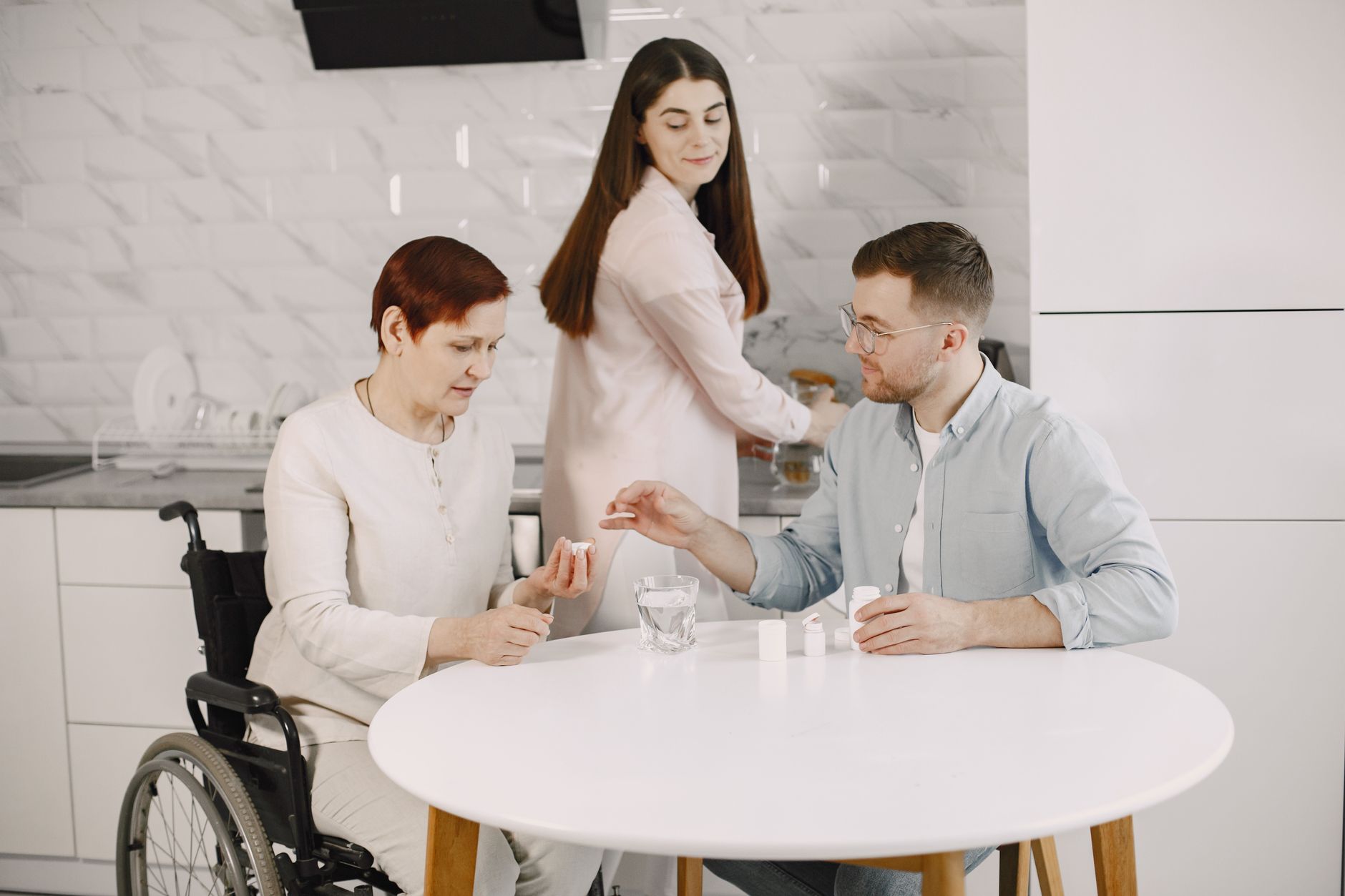
Once yearly, request a 45-60 minute comprehensive medication review with the clinical pharmacist (far deeper than the doctor's 2-minute end-of-visit check). The pharmacist will look for: (1) high-risk fall-increasing medications to discontinue or replace; (2) drug-drug interactions causing dizziness; (3) dosing adjustments—e.g., diuretic in the morning to reduce nighttime bathroom trips; (4) duplicated prescriptions from different specialists. Bring all pill bottles or use the Medication List download. A 2024 JAGS meta-analysis of 31 trials found pharmacist reviews reduced falls by 21% and hip fractures by 15%.
Annual Comprehensive Eye Exam
Annual exams are often deferred because "vision seems fine," but the most dangerous fall-related conditions do not cause noticeable blur: early cataracts causing transitional glare, glaucoma peripheral loss the brain fills in, and depth perception errors from differing eye prescriptions that hide stair edges. The exam should measure contrast sensitivity—ability to see a grey step on grey floor—which declines 10-15 years before standard chart acuity and independently predicts stair falls. People with dementia specifically need annual exams because they cannot report changes verbally.
Orthostatic Blood Pressure Check at Every Visit
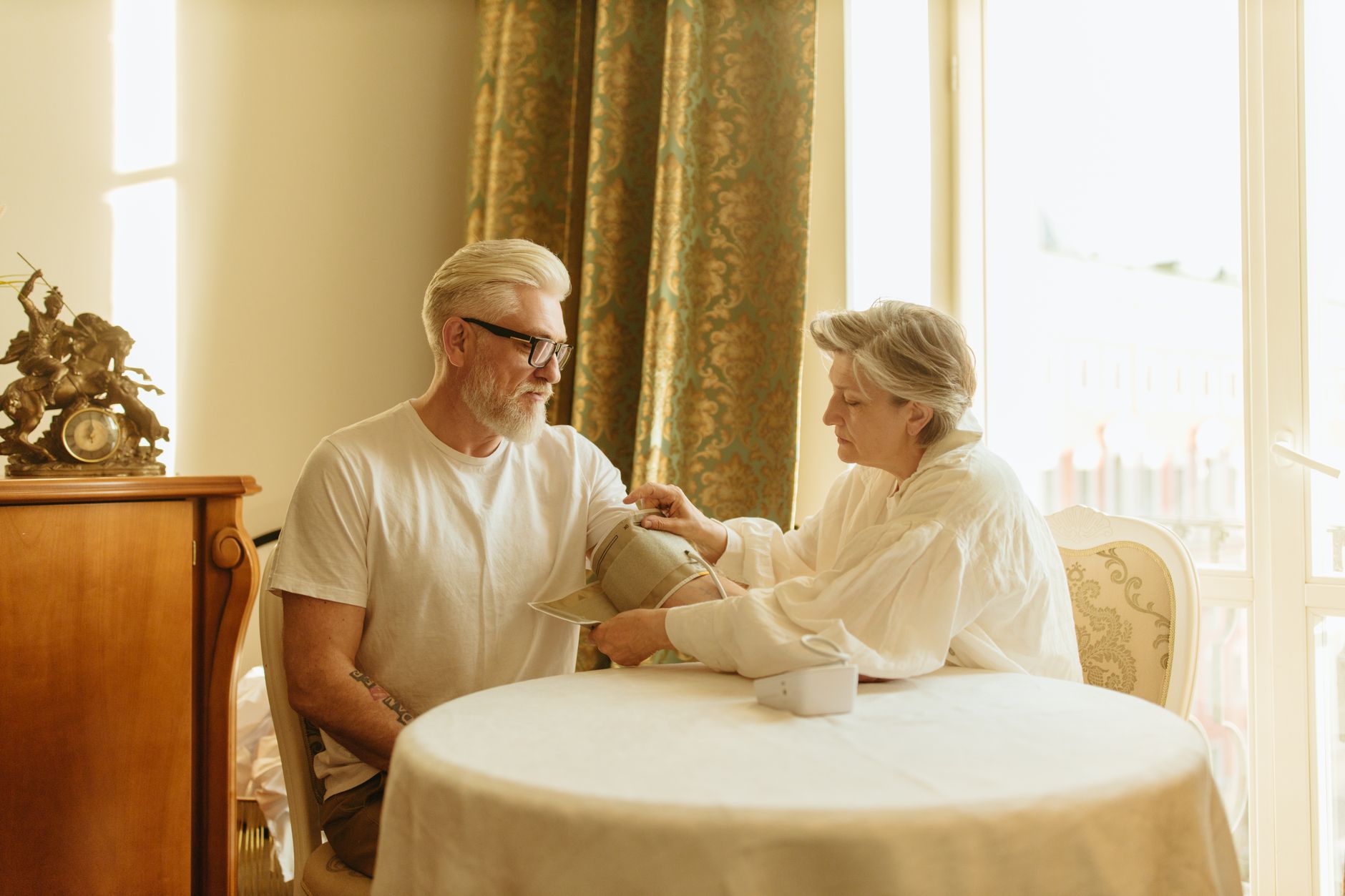
At every primary care visit, explicitly ask for orthostatic vitals: BP/pulse lying 5 minutes, then 1 minute after standing, then 3 minutes after standing. Intervention threshold: 20+ mmHg systolic drop, 10+ mmHg diastolic drop, or pulse 20+ bpm increase. This 3-minute check is not standard; you must request it. JAGS shows 28% of adults over 75 have asymptomatic orthostatic hypotension they don't know about, and addressing it with fluids, compression, or meds reduces non-syncopal falls by 19%.
Baseline Bone Density Scan for Osteoporosis
For women over 65, men over 70, or anyone who has fallen, ensure a DEXA scan within 2 years to screen for osteoporosis. Why fall prevention includes this: normal density allows multiple small falls without fracture, while severe osteoporosis can cause vertebral compression fractures from standing up too fast. If identified, bone-protective meds plus calcium/vitamin D reduces hip fracture risk by 40-60% from any given fall. Even if a fall can't be fully prevented, reducing consequences is a critical, often overlooked pillar.
📝Step-by-Step Guide
- 1Week 1 — Environmental Foundation: Conduct the full 12-room home safety checklist walking through with your parent, not alone. Address the three highest-priority hazards before Week 2 starts. Order night lights from [Best Night Lights to Prevent Falls](/articles/best-night-lights-to-prevent-falls) and non-slip mats from [Best Non-Slip Mats for Seniors](/articles/best-non-slip-mats-for-seniors) on day 1 so they arrive during the week. Complete home environment changes from [What Home Modifications Improve Safety](/articles/what-home-modifications-improve-safety) guide.
- 2Week 2 — Medical Pillars: Call the primary care clinic and schedule three appointments within 45 days: (1) clinical pharmacist comprehensive medication review, (2) annual comprehensive eye exam with cataract and glaucoma screening, (3) follow-up primary care visit specifically to discuss fall risk and request orthostatic vital signs. If DEXA scan for Osteoporosis not completed in 24 months, add that referral request. Place all dates on shared family calendar immediately.
- 3Week 3 — Balance and Strength Integration: Implement routine-integrated balance and strength exercises, not as a separate 30-minute block. Begin with toothbrushing balance: single-leg stand 10 seconds each leg while brushing morning and night (hold sink if wobbling). Begin with pre-meal chair stands: five sit-to-stands from dining chair before every meal. Track completed days on [Mobility Tracker](/downloads/Mobility_Tracker_Seniors-v2.pdf) log. Research and enroll in one structured balance class: Tai Chi for Arthritis, A Matter of Balance, or local PT-led group.
- 4Week 4 — Response Planning and Review: Ensure active medical alert system subscription using [Best Medical Alert Systems for Seniors Living Alone](/articles/best-medical-alert-systems-for-seniors-living-alone) guide if person spends any time alone—this does not prevent falls but drastically improves outcomes by reducing time on floor after. Schedule 30-minute family call to review completed checklist, appointment schedule, and exercise plan. Document four-week intervention in shared family folder. Establish recurring quarterly 60-minute reassessment: re-walk home safety checklist, review medication changes, adjust exercise intensity.
Integrating Balance Training Into Daily Routine: No Gym Required
Balance training is the intervention caregivers skip most often, usually because they picture a gym. Risk does not concentrate in a gym—it concentrates on the unsteady walk to the bathroom at 2 a.m., and that is exactly where small daily practice pays off. The research is clear: short, frequent, integrated balance practice is as effective as long structured sessions for fall risk reduction, and adherence is three times higher because it does not depend on willpower or calendar time.
The five daily micro-balance moments to add this week: (1) While waiting for coffee or tea to brew, do 10 single-leg stands (5 seconds each) holding the counter edge, alternating legs. (2) While waiting for a microwave or oven timer, do heel-to-toe standing along an imaginary straight line, arms out for balance. (3) While washing dishes at the sink, practice standing with weight evenly distributed on both feet and one foot slightly ahead; when easy, try closing one eye for 10 seconds (hold sink). (4) While climbing stairs, pause one full second on each step with hands on both rails—this builds slow, controlled stepping rather than rushing, which causes 40% of stair falls. (5) Before sitting into any chair, practice the "reverse nose over toes" movement: lean forward slightly before lowering slowly, not plopping backward, which eccentrically strengthens the same muscles used for standing. These add 2-3 cumulative minutes of balance training per day with zero extra schedule time.
Root Cause Analysis After Every Fall: Learning From Near-Misses
The single biggest mistake caregivers make after a fall or near-fall is saying "that was a close one, thank goodness nothing happened" and moving on without analysis. Every fall and every near-fall contains a lesson that, if learned, prevents the next one that might be catastrophic. Within 48 hours after any fall, near-miss, or "hard catch" where you had to grab them mid-wobble, sit down and write answers to five specific questions: (1) What exact time did this happen, and how long had they been awake? (2) What activity were they attempting, and what immediate trigger caused loss of balance? (3) What medications had they taken in the last 8 hours, and had any changed or been added in the last 2 weeks? (4) What environmental factors were present: lighting, floor conditions, footwear, walker/cane placement? (5) What physical symptom did they report immediately before the fall: dizziness, leg weakness, vision blur, or no warning at all? After answering, you can classify the fall into one of the four pillars and address the specific gap rather than implementing generic "more careful" interventions that never work. After classifying, review What Should Seniors Do After a Fall to confirm all post-fall protocols were followed.
Four-Week Progress Tracking Table
| Week | Primary Focus | Completion Confirmation | Post-Week Review Check |
|---|---|---|---|
| Week 1 | Environmental hazards addressed | 12-room checklist completed; 3 highest hazards fixed; night lights + non-slip mats installed | Any pushback from parent? Re-approach deferred hazards with new framing |
| Week 2 | Medical appointments scheduled | 3 appointments (pharmacist, eye, primary) on calendar; DEXA requested if overdue | Any insurance barriers? Call pre-authorization before appointments |
| Week 3 | Balance exercises integrated | 5 daily micro-balance moments attempted at least 5/7 days; class enrollment confirmed | Any exercises consistently too hard? Modify rather than abandon |
| Week 4 | Response plan in place | Medical alert system active; family meeting completed; quarterly reassessment calendar event created | Do additional referral needs (PT, OT) need to go on calendar? |
Related Articles
- What Home Modifications Improve Safety
- What Should Seniors Do After a Fall
- Best Medical Alert Systems for Seniors Living Alone
- Best Non-Slip Mats for Seniors
- Best Night Lights to Prevent Falls
- Best Walkers for Seniors
- Download Mobility Tracker
References
- Centers for Disease Control and Prevention (CDC) — STEADI Initiative. (2025). Stopping Elderly Accidents, Deaths & Injuries: National Fall Prevention Strategy and Caregiver Toolkit. Atlanta, GA: CDC National Center for Injury Prevention and Control.
- National Institute on Aging. (2024). Home Environment Modification for Fall Prevention: A Systematic Review of Caregiver-Implemented Interventions. Bethesda, MD: NIH National Institute on Aging.
- Family Caregiver Alliance / National Center on Caregiving. (2025). Fall Risk Reduction in the Home Setting: A Practical Guide for Family Caregivers. San Francisco, CA: FCA.
- American Geriatrics Society (AGS) / Journal of the American Geriatrics Society (JAGS). (2024). "Pharmacist-Led Medication Reconciliation and Fall Risk Reduction in Community-Dwelling Adults 70+: Meta-Analysis of 31 RCTs." JAGS, 72(7), 1892-1904.
- BMJ Open. (2024). "Effectiveness of Caregiver-Conducted Single-Session Home Hazard Assessment on 12-Month Fall Incidence: Cluster Randomized Trial." BMJ Open, 14(9), e074561.