Best Sleeping Position for Seniors
The position that counts is the one you wake in, not the one you chose at lights-out, and after 60 that position is often the story behind a stiff shoulder, a numb arm, or a lower back that takes an hour to loosen. Composite clinical scenario (illustrative). A 72-year-old who used to wake refreshed now spends the first hour moving slowly because of shoulder and hip stiffness, and later realizes that the position they have slept in for 40 years is no longer compatible with the body they have today. According to the National Sleep Foundation, roughly 40% of adults over 65 report pain-related sleep disruption at least three nights per week, and the American Academy of Sleep Medicine (AASM) notes that sleep position is a modifiable factor that can meaningfully reduce those numbers.
This guide is written for older adults who want practical, specific guidance on how to align their sleep position with common age-related changes and conditions. After reading it, you will understand how side, back, and stomach positions affect your spine, joints, and breathing; how to select a position that matches symptoms like acid reflux, osteoarthritis, or obstructive sleep apnea; and how to use pillows and bedding to make your chosen position sustainable throughout the night.
📌Key Takeaways
- Start side-lying on the left side for most adults over 60, using a knee pillow to preserve hip alignment.
- Back sleeping works well for spinal support, but add a thin knee pillow and avoid thick neck pillows that push the chin forward.
- Stomach sleeping is generally discouraged; if unavoidable, use a very thin head pillow and place a pillow under the hips to reduce lumbar strain.
- Adjust position based on the dominant condition: left side for reflux and apnea, back with head elevation for mild neck issues, and brace joints for arthritis.
- Track how you feel each morning for two weeks, not just on the first night, because positional adaptation takes time.
The Three Primary Sleep Positions and How They Affect Older Bodies
Each of the three main sleeping categories — side, back, and stomach — imposes different mechanical stresses on the spine, the airway, the digestive tract, and weight-bearing joints. For older adults, the central question is not which position is universally "best," but which position minimizes strain given a specific person's anatomy, conditions, and comfort level. The Centers for Disease Control and Prevention (CDC) Sleep Guidelines recommend that attention be paid to sleep hygiene as a whole, and position is a foundational part of that hygiene framework.
Side Sleeping: The Default Recommendation for Most Older Adults
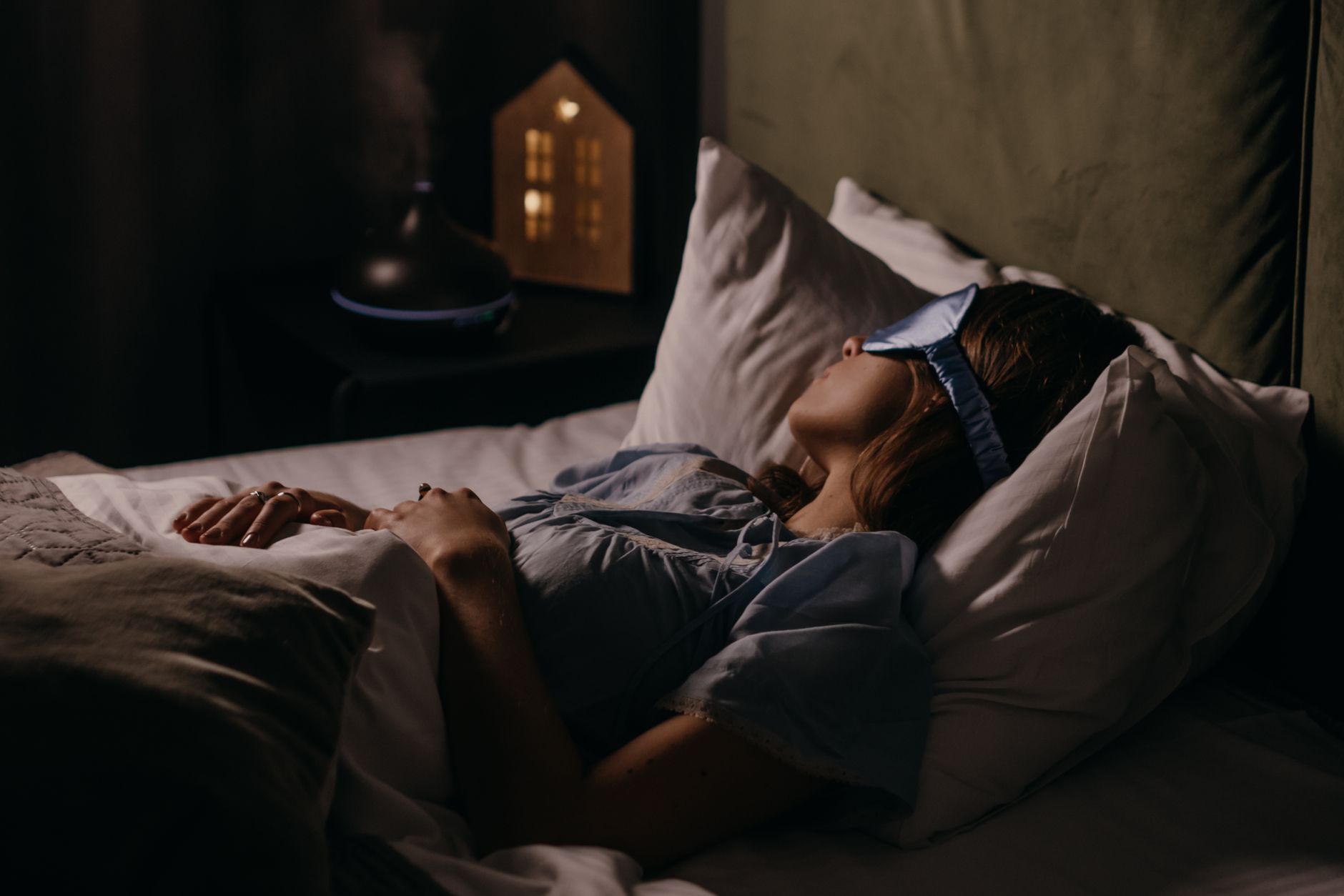
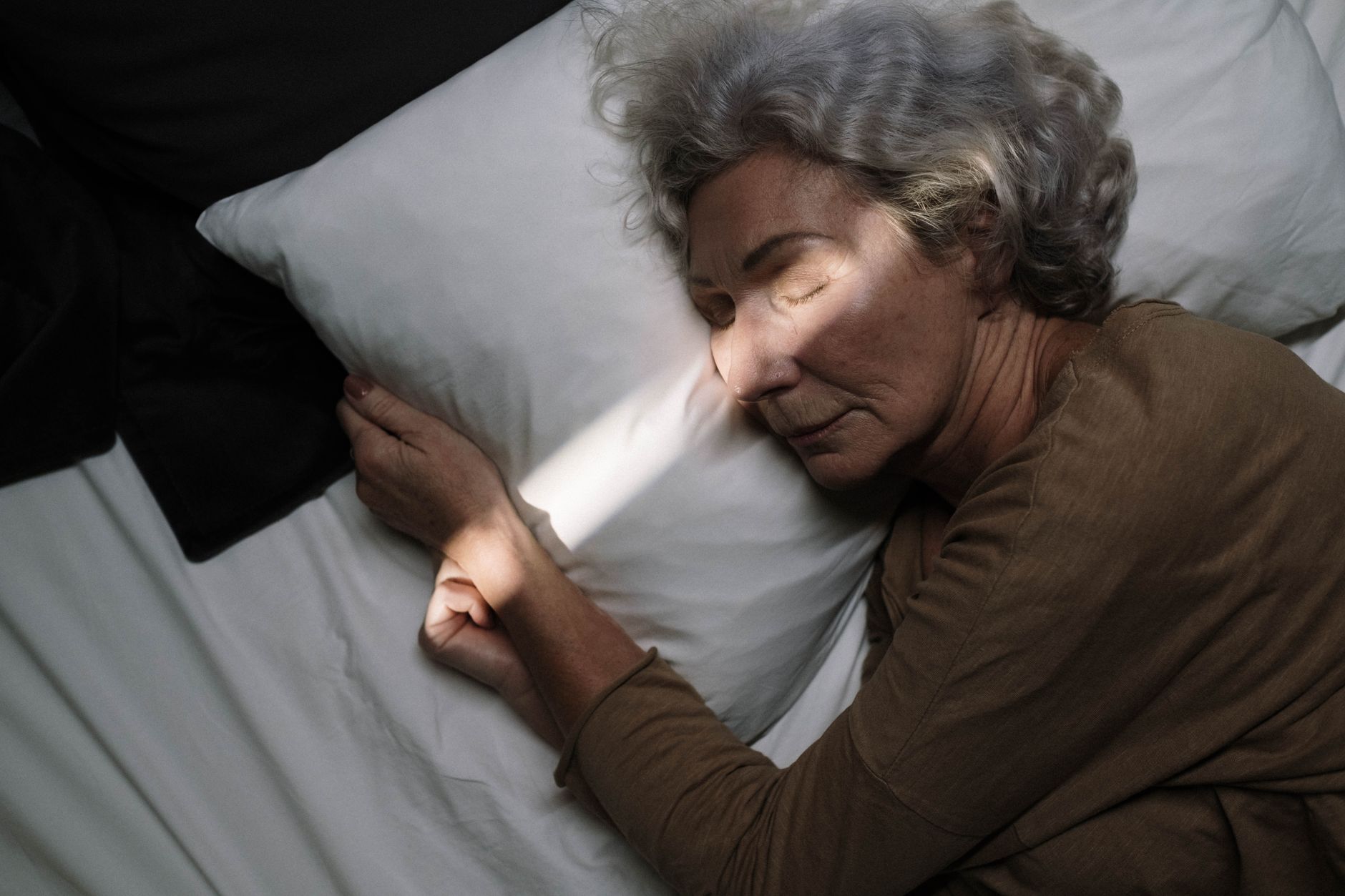
Side sleeping is the most commonly recommended sleep position for adults after 60 because it opens the airway, reduces the likelihood of tongue-based airway obstruction, and tends to place less compressive force on the lumbar spine than prone or unsupportive back positions. Within the side-sleeping family, left and right each have distinct tradeoffs.
Left side sleeping is particularly useful for people who experience gastroesophageal reflux disease (GERD) or nighttime heartburn. Anatomically, the stomach sits below the esophagus on the left side, so this position reduces the chance of stomach acid traveling back up the esophageal sphincter. Many older adults also notice that left side sleeping reduces the sensation of pressure on the heart, though research on this point is mixed and individual comfort matters more than any theoretical advantage.
Right side sleeping is a reasonable alternative for those who cannot tolerate the left. It still offers most of the airway and spinal benefits of side positioning, though it may slightly increase reflux symptoms compared with the left. If you have shoulder pain on one side, sleeping on the opposite shoulder is the straightforward rule. Waking with a tingling, dead-feeling arm usually points to a compressed shoulder or an upper arm hanging forward—traded in for the airway benefits, but one the small arm pillow described below largely resolves.
To execute side sleeping well, place a supportive pillow between your knees or slightly higher, around the lower thighs. This prevents the upper leg from rotating forward, which would otherwise pull the pelvis out of alignment and place strain on the lower back. Some older adults find that a full body pillow running along the front of the torso provides additional support and prevents them from rolling onto their stomach during the night. Keep the arm that is on the upper half of the body resting on a small pillow or folded towel so it does not fall forward and pull the shoulder out of socket.
Back Sleeping: Strong for Spinal Alignment When Done Properly
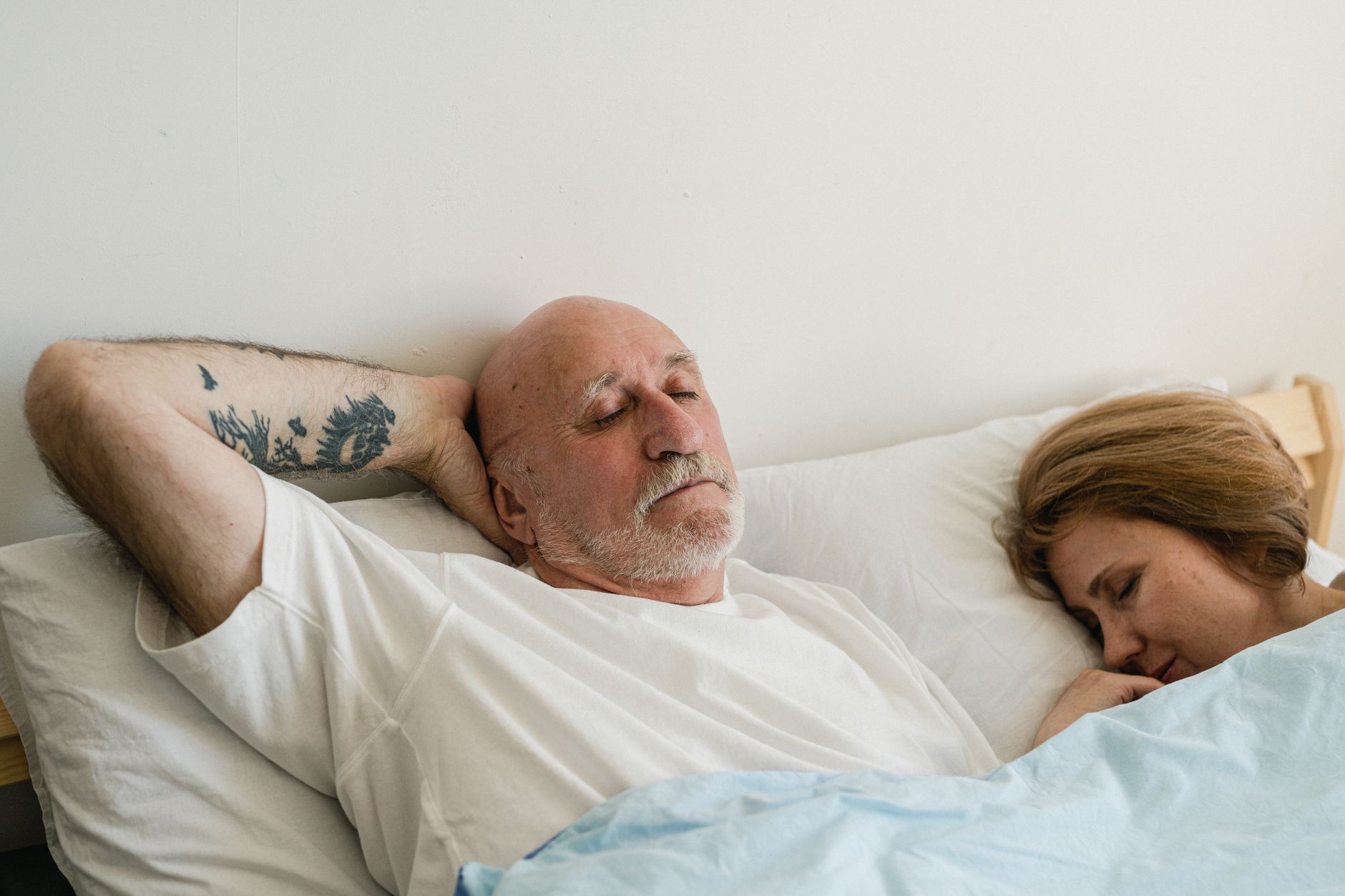
Back sleeping offers the advantage of distributing weight evenly across the posterior surface of the body, reducing pressure points on the heels, sacrum, and shoulder blades when supported by a good mattress. The Mayo Clinic notes that back sleeping is particularly well-suited for people with lumbar spine pain, provided the natural curve of the lower back is properly supported.
The main risks of back sleeping for older adults are airway-related. When a person lies supine, gravity can pull the tongue and soft palate toward the back of the throat, increasing snoring and worsening obstructive sleep apnea (OSA). This is why the AASM advises people with known OSA to avoid pure back sleeping or to use positional therapy devices that prevent them from rolling supine during the night.
If you prefer back sleeping, place a thin pillow under the knees so the hips flex slightly. This simple adjustment flattens the lumbar curve against the mattress and can dramatically reduce morning lower back stiffness. Under the neck, choose a pillow that fills the gap between the ear and the mattress without pushing the chin toward the chest. Some people add a small, rolled hand towel under the natural curve of the neck for additional support. For those with acid reflux who prefer back sleeping, a wedge pillow that elevates the head and upper torso by roughly 15 to 20 degrees is preferable to stacking multiple pillows, which can kink the neck.
Stomach Sleeping: High Risk, Occasionally Unavoidable
Stomach sleeping is the position that most sleep clinicians discourage for older adults because it places the cervical spine in a rotated position for hours at a time and arches the lumbar spine unnaturally. Over time, this can lead to morning neck stiffness, lower back strain, and reduced breathing efficiency because the chest wall cannot expand fully against the mattress.
That said, some people have slept on their stomachs for most of their lives and find any other position intolerable. If that describes your situation, you can mitigate some of the harm with two modifications. First, use an extremely thin pillow under the head, or no pillow at all, to reduce the degree of cervical rotation. Second, place a medium-thickness pillow under the pelvis and lower abdomen so the lumbar spine does not arch as deeply. You should also plan to spend a few minutes each morning performing gentle neck rotations and shoulder rolls to release the accumulated tension.
床垫和枕头是姿势效果的放大器
即使是最佳睡姿,如果床垫太软导致肩膀和髋部下陷,或者枕头过高使颈部倾斜,也会失去效果。作为一般经验法则:侧卧者需要中等偏软的床垫在压力点提供缓冲;仰卧者需要中等硬度的床垫支撑腰椎;枕头高度应恰好填补耳朵与床垫之间的空隙而不造成角度扭曲。如果你早晨醒来感到特定部位持续僵硬超过两周,请同时评估姿势和寝具。
Symptom-Specific Positioning: How to Match Posture to What Ails You
Most older adults do not just have one concern; they face combinations of arthritis, breathing challenges, digestive symptoms, and musculoskeletal aches. The sections below explain how to prioritize positioning based on the dominant complaint.
For Osteoarthritis of the Hip, Knee, or Shoulder
Arthritic joints are particularly sensitive to sustained compression. For people with hip pain, the general rule is to avoid lying directly on the affected joint. If the left hip is painful, sleep on the right side with a pillow between the knees to keep the painful hip in a neutral, non-compressed position. For knee arthritis, the same knee pillow prevents the upper knee from crossing over and compressing the lower one. Shoulder arthritis typically requires sleeping on the opposite side, or on the back with a small pillow under the affected elbow to keep it slightly abducted and prevent the shoulder capsule from being pulled taut.
For Obstructive Sleep Apnea and Loud Snoring
Position alone will not cure OSA, but it can meaningfully reduce severity. The standard recommendation is side sleeping, ideally the left side, because it prevents the tongue from falling backward as frequently as in the supine position. Some people use positional therapy devices — typically a small backpack with a softball or foam wedge sewn in — to prevent rolling onto the back during the night. If you have been prescribed CPAP therapy, continue using it as directed; position is a complement, not a replacement, for prescribed medical devices.
For Acid Reflux and GERD
Left side sleeping is the preferred position because anatomical studies show it keeps the gastric fundus below the gastroesophageal junction, reducing the chance of acid splashing upward. If back sleeping is preferred, the upper body must be elevated by roughly 6 to 8 inches using a wedge designed for this purpose, not by stacking multiple pillows that bend the neck. Avoid right side sleeping if reflux is your primary symptom, as studies summarized by the National Heart, Lung, and Blood Institute (NHLBI) suggest it is associated with more frequent reflux episodes.
For Acute or Chronic Back Pain
If back pain is the dominant symptom, many older adults find the most relief in one of two configurations. The first is side sleeping with a knee pillow, as described earlier. The second is supine sleeping with a pillow under the knees and, if needed, a small lumbar support towel rolled under the natural hollow of the lower back. Avoid positions that twist the spine — that means no curling tightly in a fetal position with knees pulled to the chest, no matter how comforting it may feel in the moment.
📋睡眠姿势适配检查清单
0/8 completed- 检查床垫硬度:侧卧时肩膀和髋部能轻微下陷但不触底;仰卧时腰部不悬空贴床。
- 检查枕头高度:侧卧时枕头填满耳朵到床垫的距离;仰卧时枕头不使下巴贴向胸口。
- 反酸者优先左侧卧或楔形枕上半身抬高15-20度;避免晚餐后3小时内入睡。
- 睡眠呼吸暂停者避免纯仰卧位,可考虑使用侧卧体位辅助枕或防滚枕。
- 关节炎患者避免直接压迫患侧关节;用枕头支撑膝盖之间、手臂下、大腿侧方。
- 肩痛者避免压迫患侧;肘下垫薄枕保持轻度外展;晨起轻柔旋转肩部放松。
- 髋关节痛者在膝盖之间夹枕保持骨盆中立;避免患侧直接接触床垫。
- 每两周评估一次:若早晨特定关节僵硬持续,检查姿势而非单独归咎于老化。
Pillow Bracing and Accessory Placement: The Small Changes That Make Positions Work
The difference between a theoretically "good" position and one that actually holds all night is often the quality of the bracing. Below is a summary of how to deploy pillows and accessories to make each position more sustainable.
For side sleeping, you will typically need three pillows: one for the head, one between the knees, and one small pillow under the upper arm. Some older adults also appreciate a small lumbar roll tucked into the space between the mattress and the lower back to prevent the torso from sagging. If your shoulder sinks too deeply into the mattress, consider placing a thin, folded towel directly under the shoulder to give it a stable base without altering overall side positioning.
For back sleeping, the critical accessories are the knee pillow and the cervical support. Do not stack multiple thick pillows under the head, because this increases neck flexion and can cause morning stiffness. Instead, use one pillow that cradles the natural curve of the neck, and tuck a small roll under the knees. A wedge pillow is an alternative that simultaneously elevates the head and supports the curve of the upper back, making it useful for people with both reflux and mild neck issues.
For people who must stomach-sleep due to habit, the two key accessories are the ultra-thin head pillow and the pillow under the lower abdomen. This combination reduces the exaggerated lumbar arch that otherwise places stress on the facet joints of the spine. Many people find it helpful to stretch the psoas and hip flexors each morning to counteract the hours of hip extension that stomach sleeping imposes.
Transitioning to a New Position: Realistic Expectations and a Four-Week Plan
Changing a sleep position after decades of habit is like learning a new movement pattern in physical therapy: it takes repetition, patience, and a willingness to accept that the first few nights will feel awkward. The American Academy of Sleep Medicine recommends a gradual approach rather than forcing a full switch in a single night.
Start by practicing the new position for 15 to 20 minutes during daytime rest or while reading in bed. Use the pillows exactly as you would at night so your body becomes accustomed to the sensory input. After a few days of this, try falling asleep in the new position. If you wake up in the old position, simply reset yourself once rather than becoming frustrated. Over two to four weeks, the frequency of positional shifts will typically decrease as the new pattern becomes more automatic.
30-Minute Pre-Sleep Bedtime Routine Timeline
Consistency in the 30 minutes before bed reinforces whatever positional choices you make during the night. Below is a sample routine that primes the body for comfortable sleep in any supported position.
| Time Before Bed | Activity | Rationale |
|---|---|---|
| 30 minutes | Lower bedroom temperature to roughly 18-20°C (65-68°F) | Cooler room temperature supports the natural drop in core body temperature needed for sleep onset and reduces nighttime restlessness. |
| 25 minutes | Gentle 5-minute mobility sequence (neck rotations, shoulder rolls, seated spinal twists) | Reduces the baseline stiffness that would otherwise cause positional shifts during the first sleep cycles. |
| 20 minutes | Use the toilet and drink a small sip of water only if needed | Reduces the likelihood of nighttime bathroom trips that disrupt the position you worked to maintain. |
| 15 minutes | Dim overhead lights and switch off all screens with blue light | Supports melatonin production and prepares the visual system for sleep. |
| 10 minutes | Arrange pillows into your chosen configuration (knee, lumbar, arm, wedge as needed) | Creates the physical setup that matches the position you will fall asleep in. |
| 5 minutes | Three cycles of slow diaphragmatic breathing (4-second inhale, 6-second exhale) | Reduces sympathetic arousal so muscles relax into the supported position rather than tensing against it. |
| 0 minutes | Lie down in your chosen position and begin sleep | Starting position matters; it sets the default pattern your body will revert to between sleep cycles. |
What to Do When Position Changes Alone Are Not Enough
If after four weeks of consistent positional adjustments you still wake with pain, stiffness, or unrefreshing sleep, it is reasonable to seek a more targeted evaluation. A primary care provider or physical therapist can assess whether the underlying issue is related to mattress support, undiagnosed sleep apnea, inflammatory conditions, or medication timing. In some cases, a formal sleep study may identify OSA or periodic limb movement disorder, both of which can prevent the deep restorative sleep that makes any position feel tolerable.
Positional therapy aims for incremental progress, not perfection. Cutting painful mornings from five a week to two is the kind of change that lets a person bend to put on shoes without bracing for it first.
Frequently Asked Questions
Does my weight or body shape change which position is best for me?
Body shape can influence the specific pillow heights and mattress firmness that work well. For instance, people with wider hips typically need a slightly thicker knee pillow during side sleeping to maintain neutral pelvic alignment. Heavier individuals may benefit from a firmer mattress base that prevents midsection sag. Your healthcare provider can help you tailor recommendations if you have specific anatomical concerns.
Is fetal position a type of side sleeping, or is it separate?
Fetal position is a variant of side sleeping, but it carries additional risks if the spine is curled too tightly. When the knees are drawn high to the chest and the neck is flexed forward, the lumbar spine loses its neutral curve. This can cause morning stiffness even in people who do not have a pre-existing back condition. If you naturally gravitate toward the fetal curl, try placing a pillow behind your back and another in front so you can recline into a slightly more extended side-lying posture.
Can sleeping position affect cognitive function or dementia risk?
Current research suggests that the quality of sleep overall matters more than any specific position for cognitive outcomes. That said, people with untreated sleep apnea — which worsens in the supine position for many — are at higher risk for cognitive changes over time. Treating OSA, in part through positional adjustments, is therefore a reasonable component of a brain-healthy lifestyle for many older adults.
How can I tell if my neck pain is caused by my pillow height, my position, or something else?
A practical test is to change one variable at a time over a two-week period. First, adjust only your pillow height while keeping position constant. If pain remains, switch to the other common position — for example, from back to side — without changing the pillow. If pain improves dramatically after one of these swaps, the changed variable is likely the culprit. Persistent pain despite these adjustments warrants evaluation by a clinician.
Is it safe for people with certain heart conditions to sleep on the left side?
Many people with stable cardiovascular conditions tolerate left side sleeping well, and some find it more comfortable than the right. However, if you notice increased palpitations, shortness of breath, or chest discomfort in a specific position, discuss it with your cardiologist. For people with advanced heart failure, a provider may recommend sleeping with the upper body elevated regardless of left or right orientation.
Are there any positions people with recent surgical procedures should avoid?
Yes. After spinal surgery, hip replacement, shoulder repair, or abdominal procedures, a surgeon will typically provide specific positioning guidelines that supersede general sleep advice. For example, after a total hip arthroplasty, certain rotational positions are prohibited for weeks, and a specialized pillow or wedge may be prescribed to maintain safe alignment during sleep. Always follow your surgical team's specific instructions.
Related Articles
- Best Mattresses for Seniors
- Best Pillows for Seniors
- Mattress vs Adjustable Bed for Seniors
- Sleep Hygiene Checklist for Seniors
- Best Weighted Blankets for Seniors
- Mobility Tracker PDF Download
References
- American Academy of Sleep Medicine (AASM). (2024). Clinical Practice Guideline for the Evaluation and Management of Chronic Insomnia in Adults. Journal of Clinical Sleep Medicine.
- Centers for Disease Control and Prevention (CDC). (2024). Sleep and Sleep Disorders: Recommended Sleep Needs and Sleep Hygiene Tips.
- National Heart, Lung, and Blood Institute (NHLBI). Sleep Position, Sleep Quality, and Gastroesophageal Reflux: An Evidence Summary.
- Mayo Clinic. (2025). Sleep Positions and Spinal Health: What Older Adults Should Know.
- Sleep Foundation. (2025). Best Sleeping Positions by Age, Condition, and Comfort Preference.