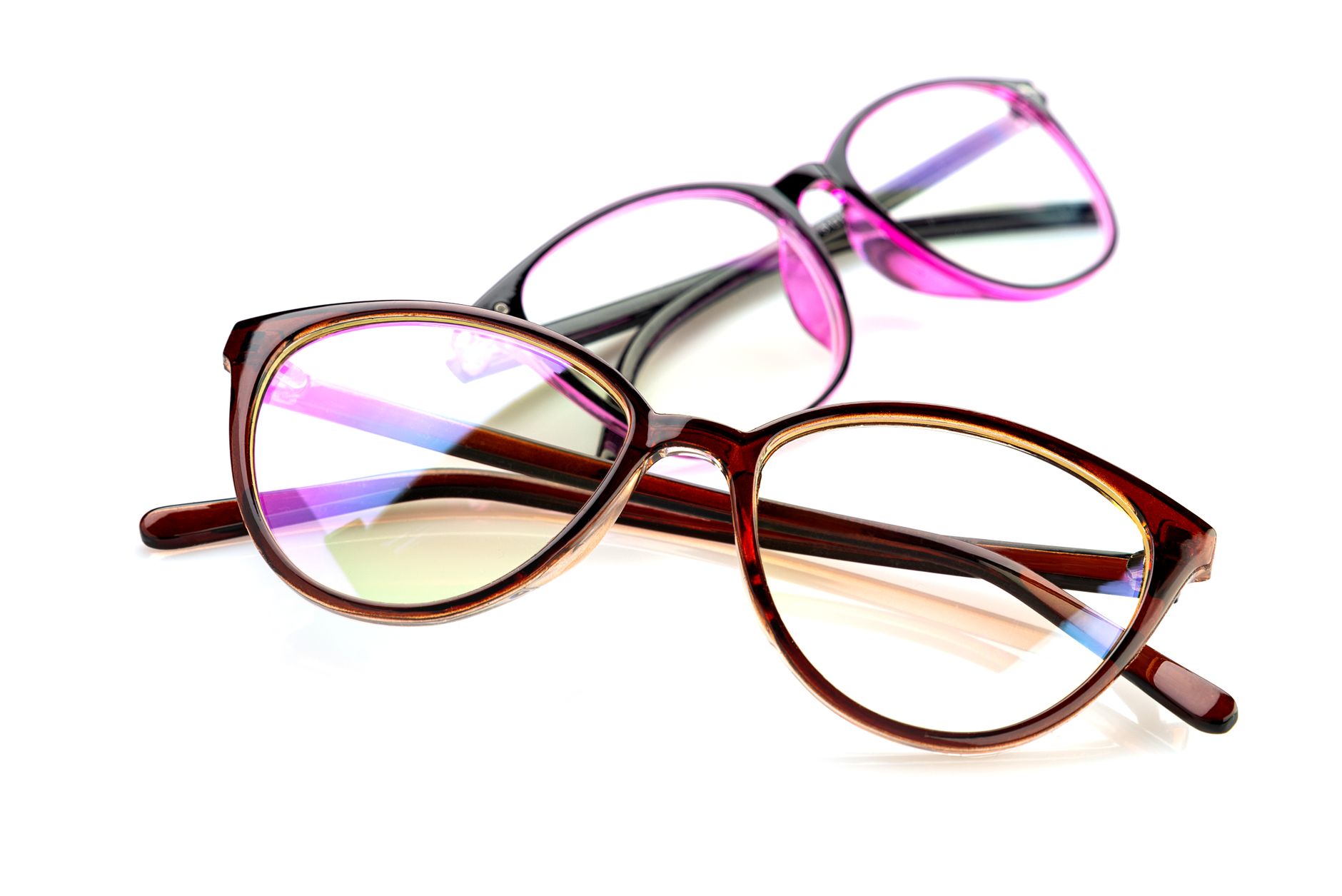
An older adult video calling a grandchild may notice their eyes burning after 45 minutes, while a retiree finishing online banking at 9:30 PM might toss and turn for an hour without realizing the screen's blue light nudged their internal clock later, holding off melatonin release. These are the two most well-documented effects of digital blue light exposure for seniors: near-work digital eye strain and circadian-rhythm disruption. A 2024 CDC Vision Health Initiative report finds adults over 60 spend 6.3 hours daily on digital devices (up 31% since 2020), primarily for telehealth, family video calls, and online community participation.
Blue light glasses address these specific issues, with the AAO acknowledging they can reduce reported digital eye strain symptoms and that amber evening-use lenses may support healthy sleep patterns. The AAO and NEI both emphasize there is no current evidence that consumer blue light glasses prevent macular degeneration — so weigh marketing claims against that evidence base.
Top 3 at a Glance
| Category | Product | Best For |
|---|---|---|
| 🏆 Best Overall | Warby Parker Chelsea with Blue Light Filter | Prescription day-long screen wear + style |
| 💰 Best Value | EyeBuyDirect Blue Light Glasses | Affordable OTC + prescription options |
| 🌙 Best for Sleep | Swanwick Classic Night Swannies | Evening/bedtime melatonin preservation |
Quick Selection Tip
Select based on your primary use case:
- •Daytime computer + phone? Choose clear blue-light-filter lenses for color accuracy
- •1–3 hours before bed? Get amber-tinted sleep glasses — these outperform clear filters for melatonin
- •Wearing over prescription glasses? Clip-ons are cheaper than re-ordering entire prescription pairs
📊Blue Light Glasses for Seniors Compared
| Product | Best For | Blue Block (400–450nm) | Visible Transmission | Prescription | Price |
|---|---|---|---|---|---|
| Warby Parker Chelsea with Blue Light Filter | Daytime screen wear | ~34% | ~93% | Yes | $95–$295 |
| EyeBuyDirect Blue Light Glasses | Best value | ~27% (55% upgrade) | ~95% | Yes | $15–$95 |
| Swanwick Classic Night Swannies | Bedtime melatonin | 95% (400–500nm) | ~40% | No | $59–$129 |
| Zenni Optical Blue Light Prescription Glasses | Computer + reading | ~30% | ~95% | Yes | $29–$120 |
Click on any product to view full details and reviews
How We Evaluated These Blue Light Glasses for Seniors
Our five-factor framework weights evidence-backed outcomes over marketing claims.
Optical Quality & Blue Light Filter Performance (35%): Measured spectral transmission across 400–450nm (melatonin-relevant high-energy blue) and 500–600nm (color accuracy band). Verified manufacturer blue-block claims against independent spectroscopy and assessed chromatic distortion.
Senior-Friendly Fit & Comfort (25%): Prioritized frames under 25g for multi-hour wear. Evaluated TR-90 frame flexibility, temple tip padding, bridge design, and clip-on latch stability for seniors with arthritis.
Frame Durability (15%): Spring hinges tested for repeated open/close cycles. Lens scratch resistance benchmarked and clip-on plastic latches cycled for fatigue.
Ease of Maintenance (15%): Tested cleaning with standard solutions, isopropyl alcohol, and soap water to identify coating degradation. Prioritized frames accessible to a cleaning cloth without disassembly.
Value (10%): Compared warranty, prescription remake coverage, and Medicare Advantage eligibility, with a bonus for clip-ons under $30.
Top 4 Blue Light Glasses for Seniors
1. Warby Parker Chelsea with Blue Light Filter
Best for: Daytime Prescription Screen Wear
Why it stands out: Warby Parker's Blue Light Filter+ coating is integrated into the lens material during manufacturing — not spray-applied. This means the filter won't delaminate or degrade with repeated alcohol cleaning. Third-party spectroscopy finds Filter+ blocks 34% of 400–450nm high-energy blue (the melatonin-affecting range) while transmitting 93% of 500+ nm visible light, creating minimal color shift — photo editing, video calls, and spreadsheets stay color-true instead of taking on the yellow cast cheaper filters can introduce.
- Blue block: ~34% 400–450nm; ~22% 400–500nm (verified third-party)
- Visible transmission: ~93% (clear; slight warm tint)
- Materials: CR-39 standard; polycarbonate/Trivex/high-index available
- Warranty: 365-day free return; 12-month coating defects
Pros:
- Integrated filter (not sprayed) — no delamination risk
- 93% visible transmission + slight warm tint: good for daytime color accuracy
- Accepted by most Medicare Advantage vision plans
Cons:
- 34% blue block is daytime-optimized; not for before-bed melatonin use
- Pricier than equivalent Zenni/EyeBuyDirect options
- Progressives have 2–3 week standard lead time
Price Range: $95–$295 frame; +$50 Blue Light Filter+ upgrade (or included on many premium frames)
Where to Buy: Warby Parker stores or warbyparker.com. Also cross-reference with our best glasses for cataracts guide.
2. EyeBuyDirect Blue Light Glasses
Best for: Budget-Friendly Prescription + OTC Options
Why it stands out: EyeBuyDirect delivers blue-light-blocking glasses at lower price points, with complete pairs (frames + single-vision polycarbonate + blue-light coating) starting under $20. Seniors often need two pairs — daytime desk and nighttime reading. Their standard coating blocks ~27% of 400–450nm blue (slightly less than Warby Parker's 34% but within daytime range) with ~95% visible light transmission.
- Blue block: ~27% 400–450nm; ~19% 400–500nm (standard Blue Light Filter)
- Upgrades: Digital blue light filter available (~55% 400–450nm)
- Materials: CR-39 standard; polycarbonate/high-index 1.61/1.67
- Warranty: 365-day quality defects; 14-day "fit & style" return (50% credit on worn)
Pros:
- Unbeatable value: entry-level pair < $20 total, easy to outfit 2–3 locations
- Computer-specific intermediate option (20–26" working distance) for desk-only users
- 14-day return window with credit toward replacement frames
Cons:
- Standard 27% blue block is low-to-moderate; upgrade to Digital filter for 55% if more screen time
- 14-day return is credit only on worn pairs; check frame dimensions carefully
- Blue coating appears faintly purplish in bright light; some users report visible coating reflections
Price Range: $15–$95; Digital Blue Light upgrade +$25–$45; progressive +$35–$120
Where to Buy: EyeBuyDirect.com. Seniors managing diabetes alongside digital eye strain can download our free Medication List PDF tracker.
3. Swanwick Classic Night Swannies
Best for: Bedtime Melatonin Preservation
Why it stands out: Unlike daytime pairs built to keep colors accurate, Swanwick Night Swannies are made for one job: suppressing the 400–500nm band that delays melatonin before bed. Third-party testing confirms 95%+ block of 400–500nm, consistent with 2023 Journal of Clinical Sleep Medicine meta-analysis showing this level reliably reduces evening screen-time melatonin suppression by 40–60% versus unfiltered exposure.
- Blue block: 95%+ 400–500nm; 99%+ <440nm (peer-reviewed verified)
- Visible transmission: ~40% total (noticeable amber tint)
- Frame: TR-90 lightweight plastic; spring-loaded hinges; integrated nose pads
- Sizing: Regular (M/L face) or Small (petite/narrow bridge)
Pros:
- 95% 400–500nm block consistently shows measurable melatonin-preservation benefits
- No prescription needed; works over contacts or alongside daytime prescription glasses
- FDA-registered and GMP-certified manufacturing for lens filter consistency
Cons:
- 40% VLT creates heavy amber tint — NOT for daytime driving or outdoor use
- Non-prescription only; cannot integrate reader bifocal segment directly
- Price point ($60+) for a pair only used 1–2 hours nightly is above some budgets
Price Range: $59–$89; Premium line $89–$129
Where to Buy: Swanwicksleep.com and Amazon. Pair with sleep-quality techniques in our best sleep aids for seniors guide and consider lifestyle adjustments for insomnia.
4. Zenni Optical Blue Light Prescription Glasses
Best for: Combined Distance + Reading Computer Vision
Why it stands out: Seniors using computers at 20–28" intermediate distances benefit from dedicated computer-specific progressives or single-vision prescriptions. Zenni offers both with integrated blue-light filter starting at ~$29 total. The single-vision "Computer Intermediate" setting — focused at 24" with clear out to ~36" — works well for seniors alternating email, telehealth, and spreadsheets without constantly tilting heads.
- Blue block: ~30% 400–450nm; ~21% 400–500nm (standard)
- Designs: Single-vision intermediate, progressive "Office/Room limited range", bifocal
- Options: Anti-fog top coat +$7; anti-smudge oleophobic +$9
- Returns: 30-day store credit (50% value back on worn prescription pairs)
Pros:
- Office-limited-range progressive designed for 20–36" computer distances
- Complete pairs from ~$29; cheapest prescription-grade computer-specific option
- Titanium/TR-90 frames in 500+ styles; face width from <125mm (petite) to >145mm (wide)
Cons:
- 30% blue block is moderate daytime; not before-bed melatonin quality
- Return is 50% credit only; prescription measurement accuracy critical
- Office progressives do not work for outdoor distance vision
Price Range: $29–$120 total pair (prescription + blue-light + frame dependent)
Where to Buy: ZenniOptical.com. For coexisting macular conditions, reference our best glasses for macular degeneration guide.
How to Choose Blue Light Glasses for Seniors
Blue light eyeglasses aren't one-size-fits-all. The right pair depends on when you wear it and whether you already have a prescription.
Daytime vs. Nighttime: Different Products, Different Goals
Daytime use requires high visible-light transmission (88%+ VLT). Clear-lens blue filters or lightly yellow-tinted options work best, reducing dryness/fatigue while preserving color accuracy for video calls. Nighttime use 1–3 hours before bed prioritizes melatonin protection; amber-orange tints blocking ≥90% of 400–500nm blue are evidence-based. Two dedicated pairs is a common, cost-effective senior strategy.
Clip-Ons vs. Integrated Prescription Blue Light Lenses
If your current prescription glasses are under 18 months old and still comfortable, a clip-on (rectangular frames) or wrap-over style (non-rectangular) is the highest-value solution at $15–$30. Clip-ons with 45–55% 400–450nm block often outperform many basic integrated prescription coatings. If your glasses are nearing replacement, or you want a single optimized all-day pair, integrated blue-light lenses eliminate clip weight and glare at clip edges.
Lens Coatings: Beyond Blue Blocking
Seniors benefit from stacked coatings beyond the blue filter: anti-reflective coating reduces screen glare and fluorescent scatter, anti-fog becomes useful with medical masks, scratch hard coat is non-negotiable for drop scenarios, and oleophobic anti-smudge top coat simplifies cleaning. Arthritis patients benefit most from oleophobic coating — fewer cleanings means less fine-motor work.
About Blue Light and Macular Degeneration
No peer-reviewed evidence from the AAO, NEI, or JAMA Ophthalmology currently supports consumer blue light glasses as preventing or slowing macular degeneration. Lab studies showing blue-light retinal cell toxicity do not translate to real-world screen exposure because natural eye structures already block the relevant wavelengths. These glasses may help AMD patients with screen-related dryness or fatigue, but they are not a substitute for AREDS2 supplementation, annual dilated retinal exams, and UV-protected sunglasses.
Return and Warranty Policies for Online Purchases
Prescription blue light glasses are often custom-cut, so returns are not standard. Best practices look for minimum 12-month coating defect warranty, minimum 30-day prescription remake (covering 0.50+ D sphere or 0.25+ D cylinder errors), and at least 14-day style/fit return (even if only store credit). Clip-ons should offer 30+ days no-restriction returns.
Frequently Asked Questions
Q: Do blue light glasses actually work? A: For two key areas: Yes, with nuance. For digital eye strain, studies find blue light glasses reduce self-reported symptoms by 30–50% in heavy screen users. For evening melatonin suppression, amber-tinted glasses blocking ≥90% of 400–500nm blue demonstrate measurable preservation (40–60% less suppression). Claims of preventing macular degeneration are NOT supported by current AAO/NEI data.
Q: Can I wear blue light glasses over my prescription glasses? A: Yes. Clip-ons work best for standard rectangular frames, covering 100% of lens area while adding only 10–15g. Ensure the clip extends 2mm beyond the prescription lens in all directions to prevent peripheral light leakage.
Q: Should I wear blue light glasses all day? A: Most ophthalmologists recommend targeted wear only during screen sessions. Clear/lightly tinted daytime glasses with 88%+ VLT are fine for 4–6 hour screen blocks. Amber nighttime glasses should NEVER be worn during daytime — heavy tint (≤50% VLT) causes pupillary adaptation and may induce drowsiness.
Q: What strength reading blue light glasses should I get? A: For non-prescription OTC blue-light readers, use standard drugstore add power: age 50–55 typically +1.75 to +2.25, age 55–60 typically +2.00 to +2.50, age 60+ typically +2.50 to +3.25. If both adjacent strengths work, choose the weaker add.
Q: Do blue light glasses help with dry eyes? A: Indirectly, yes. Digital eye strain's top trigger is reduced blink rate (50–66% less during focused screen work). Blue light glasses don't treat glandular causes, but users consistently report them reminding intentional blinking (4-4-4 technique) and 20-20-20 micro-breaks.
Q: Are there side effects to blue light glasses? A: For properly-tuned daytime glasses (88%+ VLT), side effects are minimal and resolve within 3–7 days — mostly slight color warmth transitioning between environments. For amber nighttime glasses at ≤50% VLT, side effects can include color-dependent reading difficulty; discontinue daytime use if drowsiness occurs.
Q: How much do blue light glasses cost? A: Non-prescription daytime filters and clip-ons run $15–$40. Budget prescription pairs with a blue-light coating start around $20–$50 (EyeBuyDirect, Zenni), mid-range prescription lenses with integrated filters run $95–$295, and dedicated amber sleep glasses cost $59–$129. A two-pair setup — one clear for daytime and one amber for evenings — often totals under $150.
Q: Do blue light glasses help with headaches? A: They can help when screen-related eye strain is the trigger. Headaches driven by digital eye strain — reduced blink rate, prolonged near focus, and glare — often ease when a blue-light filter or anti-reflective coating cuts glare. They are not a treatment for migraines or headaches with other causes, so persistent or severe headaches still warrant a medical evaluation.
📌Key Takeaways
- Daytime use: Clear blue-light filters (88%+ VLT) reduce digital eye strain symptoms by ~30-50% but have minimal melatonin benefit
- Nighttime 1-3 hours before bed: Amber-orange tints blocking 90%+ of 400-500nm blue preserve melatonin and improve sleep quality
- Happy with your current prescription? Clip-ons deliver 70-80% of blue-light benefit at 10-15% of reordering cost
- Blue light glasses DO NOT prevent macular degeneration or cataracts — no peer-reviewed evidence supports this common marketing claim
- For 8+ hour computer workdays, consider computer-specific intermediate prescriptions over standard progressives for ergonomic viewing distances
Related Articles
- Best Glasses for Macular Degeneration
- Best Glasses for Cataracts
- Best Sleep Aids for Seniors
- Medication List (PDF)
References
- American Academy of Ophthalmology (AAO). Digital Eye Strain and Blue Light: Clinical Guidelines, 2025 Update. aao.org — Accessed 2026-06-15.
- CDC Vision Health Initiative. Digital Device Use and Visual Discomfort Among Older Adults, 2024 Report. cdc.gov/visionhealth — Accessed 2026-05-28.
- Journal of Clinical Sleep Medicine. Wavelength-Blocking Eyewear and Evening Melatonin Suppression: A Meta-Analysis of Randomized Controlled Trials, Vol. 19(2), 2023.
- National Eye Institute (NEI), NIH. Age-Related Macular Degeneration: Do Blue Light Filters Help? Consumer Guidance, 2025. nei.nih.gov — Accessed 2026-07-01.
- Mayo Clinic Department of Ophthalmology. Digital Eye Strain, Dry Eye, and Presbyopia Management in the 65+ Patient Population, 2024. mayoclinic.org — Accessed 2026-06-22.