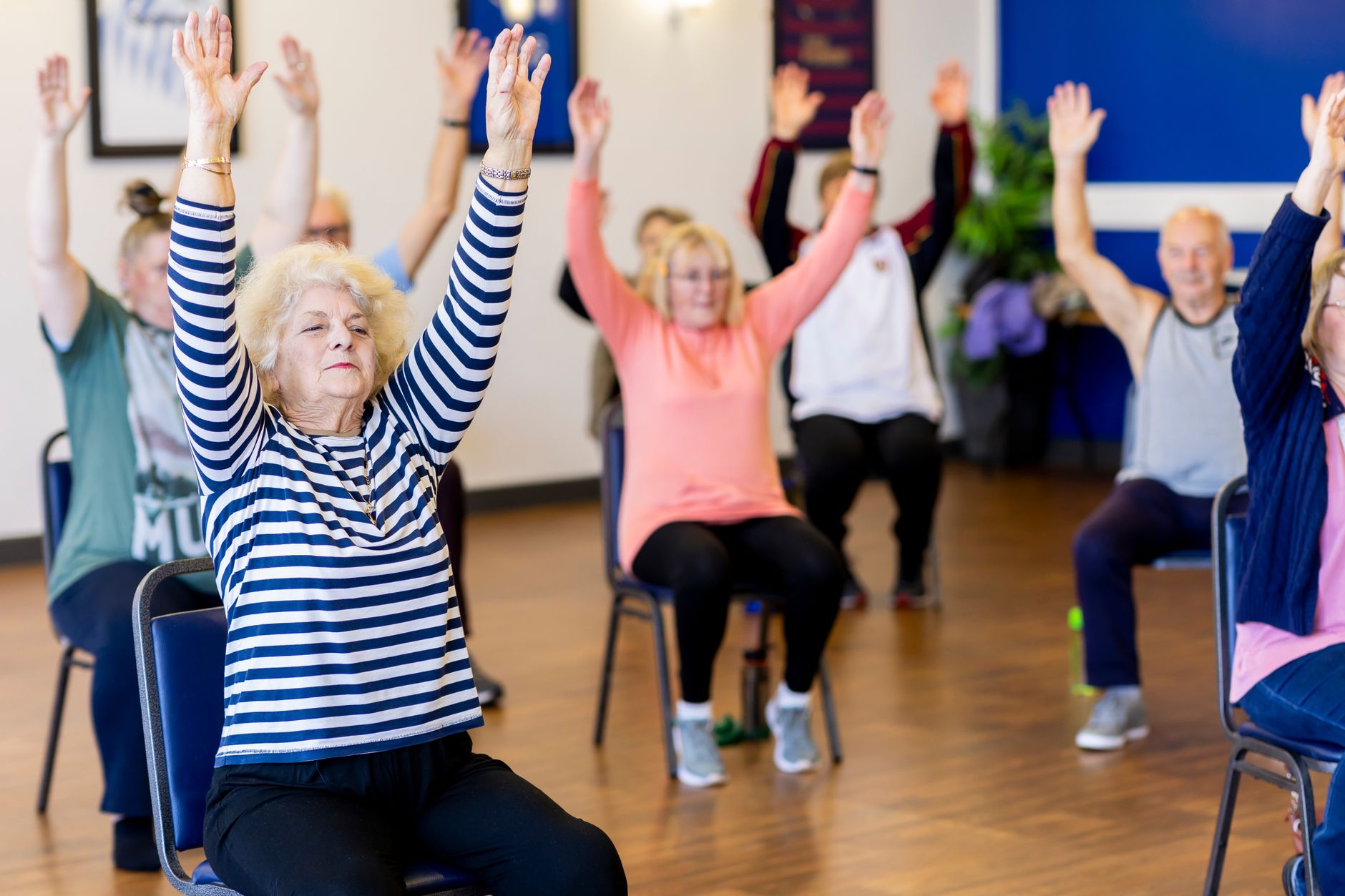
Low-Impact Chair Workouts
Chair workouts are an excellent way for seniors to stay active, improve strength, and maintain mobility without the risk associated with standing exercises. Whether due to balance concerns, joint pain, or simply wanting a safe and effective workout option, chair exercises provide numerous benefits while minimizing fall risk and joint stress.
According to the American Council on Exercise, chair-based exercises can significantly improve strength, flexibility, and cardiovascular health in seniors while providing a safe and accessible option for those with mobility limitations.
Benefits of Chair Workouts
Physical Benefits
Strength improvements:
- Increased muscle tone
- Better functional strength
- Improved posture
- Enhanced core stability
- Greater endurance
Flexibility gains:
- Increased range of motion
- Reduced muscle tension
- Better joint mobility
- Enhanced circulation
- Decreased stiffness
Cardiovascular benefits:
- Improved heart health
- Better circulation
- Increased energy
- Enhanced endurance
- Lower blood pressure
Safety Benefits
Reduced fall risk:
- Stable seated position
- No balance challenges
- Controlled movements
- Safe environment
- Confidence building
Joint protection:
- Reduced joint stress
- Low-impact movements
- Controlled range of motion
- Gentle on joints
- Suitable for arthritis
Accessibility Benefits
Convenience:
- Can be done anywhere
- No special equipment needed
- Weather-independent
- Time-efficient
- Easy to incorporate
Inclusivity:
- Suitable for all fitness levels
- Adaptable for limitations
- Can be modified easily
- Progress at own pace
- No intimidation factor
Getting Started
Preparation
Choose the right chair:
- Stable and sturdy
- No wheels
- Proper height
- Back support
- Comfortable seat
Create your space:
- Clear area around chair
- Good lighting
- Comfortable temperature
- Water nearby
- Minimal distractions
What to wear:
- Comfortable clothing
- Non-slip footwear
- Supportive shoes
- Layers for temperature
- Avoid restrictive clothing
Safety Guidelines
Before starting:
- Consult your doctor
- Warm up gently
- Stay hydrated
- Listen to your body
- Start slowly
During exercise:
- Maintain good posture
- Move deliberately
- Breathe regularly
- Stop if pain occurs
- Use support if needed
After exercise:
- Cool down gently
- Stretch lightly
- Drink water
- Note how you feel
- Rest if needed
Upper Body Exercises
Neck and Shoulders
Neck rotations:
- Sit tall in chair
- Slowly turn head to right
- Hold briefly
- Return to center
- Repeat to left
- 5-10 repetitions each side
Shoulder rolls:
- Lift shoulders toward ears
- Roll shoulders back
- Roll shoulders down
- 10-15 repetitions
- Can be done forward or backward
Arm circles:
- Extend arms to sides
- Make small circles
- Gradually increase size
- 10-15 circles each direction
- Keep movements controlled
Arms and Chest
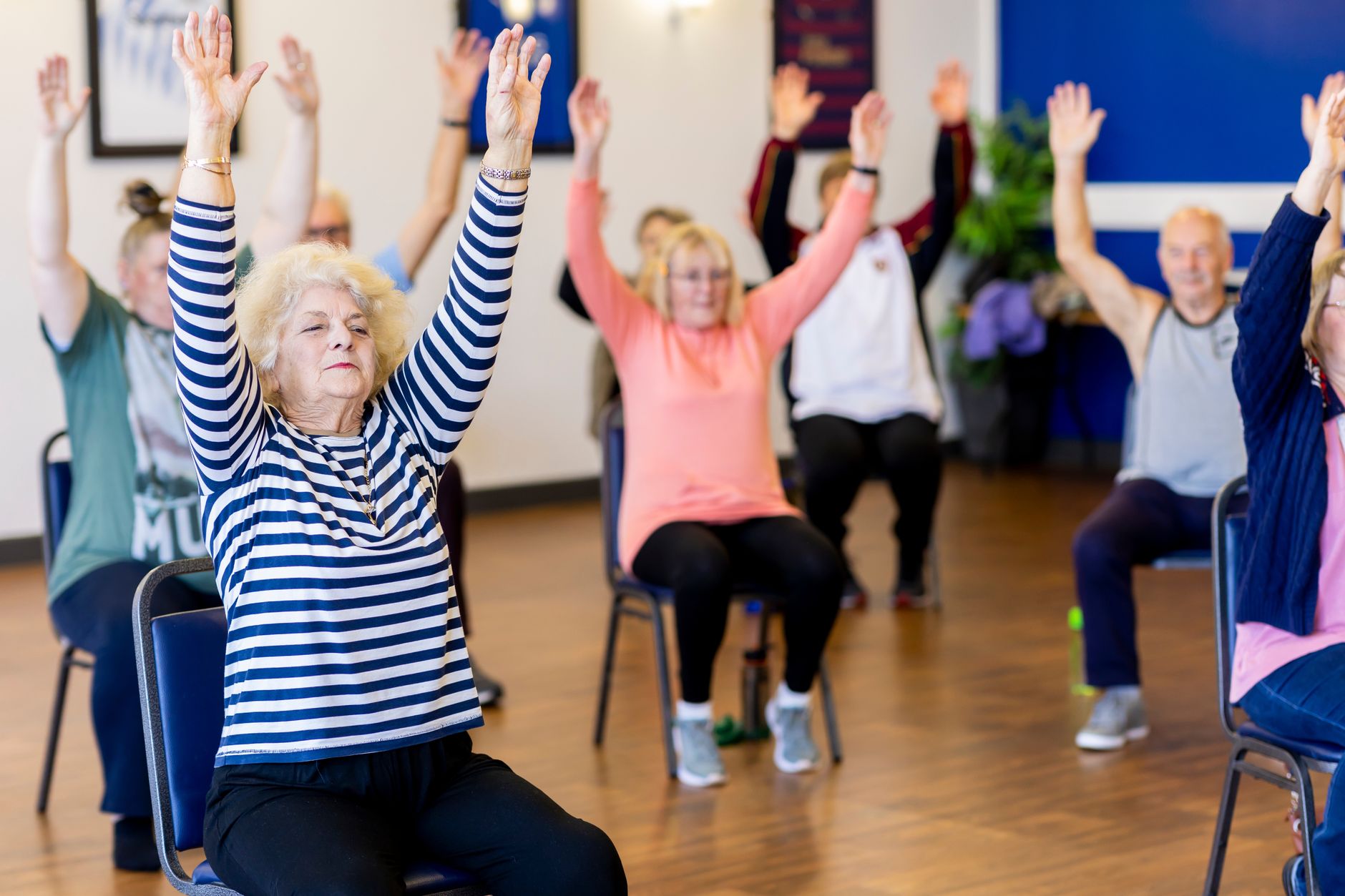
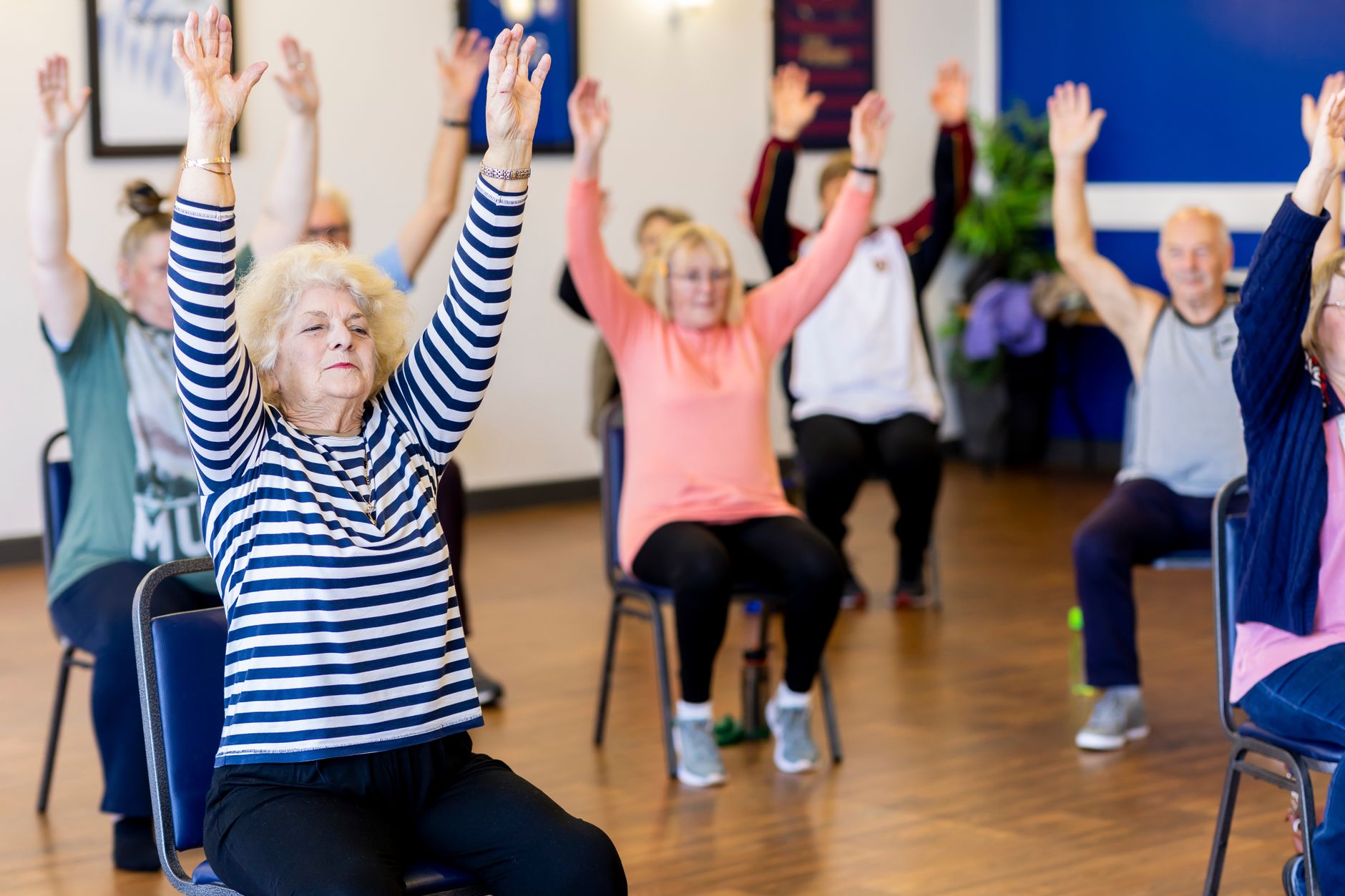
Arm raises:
- Sit tall in chair
- Raise arms overhead
- Lower back down
- 10-15 repetitions
- Can be done one arm at a time
Chest press:
- Hold arms at chest level
- Press arms forward
- Return to start
- 10-15 repetitions
- Keep movements controlled
Bicep curls:
- Hold arms at sides
- Bend elbows
- Bring hands to shoulders
- Lower back down
- 10-15 repetitions
- Can use light weights or resistance bands
Back and Core
Seated row:
- Hold arms in front
- Pull elbows back
- Squeeze shoulder blades
- Return to start
- 10-15 repetitions
Seated twist:
- Sit tall in chair
- Place hand on opposite knee
- Gently twist toward that side
- Hold briefly
- Return to center
- Repeat other side
- 5-10 repetitions each side
Abdominal crunches:
- Sit at edge of chair
- Lean back slightly
- Contract abdominal muscles
- Hold briefly
- Return to start
- 10-15 repetitions
Lower Body Exercises
Legs and Hips
Seated marching:
- Sit tall in chair
- Lift one knee
- Lower back down
- Repeat with other leg
- 10-15 repetitions each leg
Leg extensions:
- Sit in chair
- Extend one leg straight
- Hold briefly
- Bend knee back
- 10-15 repetitions each leg
Hip abduction:
- Sit in chair
- Move one leg outward
- Return to center
- 10-15 repetitions each leg
Calves and Ankles
Heel raises:
- Sit in chair
- Lift heels off floor
- Hold briefly
- Lower back down
- 10-15 repetitions
Ankle circles:
- Lift one foot slightly
- Make circles with ankle
- 10-15 circles each direction
- Repeat with other foot
Toe taps:
- Sit in chair
- Tap toes on floor
- Lift heels
- 10-15 repetitions
Cardiovascular Exercises
Seated Cardio
Seated marching with arm swings:
- March legs while swinging arms
- Maintain steady rhythm
- Continue for 1-2 minutes
- Build duration gradually
Seated jumping jacks (modified):
- Open arms and legs
- Return to start
- Continue for 1-2 minutes
- Keep movements controlled
Seated dancing:
- Move arms and legs to music
- Keep movements safe
- Enjoy the rhythm
- Continue for 2-3 minutes
Interval Training
Basic intervals:
- 30 seconds of movement
- 30 seconds of rest
- Repeat 5-10 times
- Adjust as needed
Progressive intervals:
- Start with shorter intervals
- Gradually increase duration
- Always maintain comfort
- Listen to body
Flexibility and Stretching
Upper Body Stretches
Neck stretch:
- Gently tilt head to side
- Hold 15-30 seconds
- Repeat other side
- 2-3 repetitions each side
Shoulder stretch:
- Bring arm across chest
- Use other arm to gently pull
- Hold 15-30 seconds
- Repeat other side
Chest stretch:
- Clasp hands behind back
- Straighten arms
- Open chest
- Hold 15-30 seconds
Lower Body Stretches
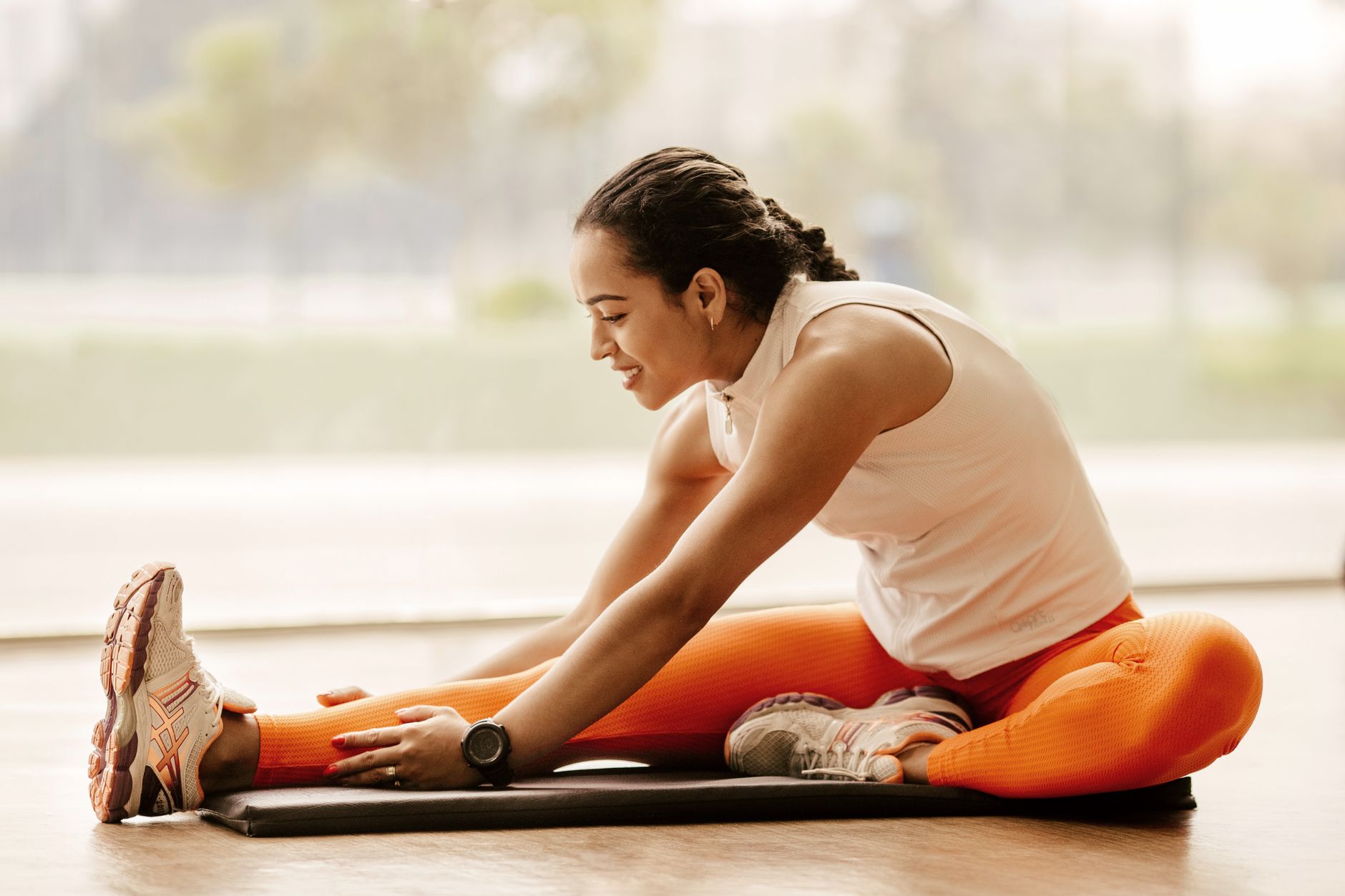
Hamstring stretch:
- Sit on edge of chair
- Extend one leg
- Reach toward toes
- Hold 15-30 seconds
- Repeat other leg
Quadriceps stretch:
- Sit in chair
- Bend one knee
- Grasp ankle
- Hold 15-30 seconds
- Repeat other leg
Calf stretch:
- Sit in chair
- Extend one leg
- Flex foot toward you
- Hold 15-30 seconds
- Repeat other leg
Creating Your Workout Routine
Daily Routine
Morning routine (10-15 minutes):
- Gentle stretching (3-5 min)
- Upper body exercises (5-7 min)
- Light cardio (2-3 min)
Afternoon routine (5-10 minutes):
- Brief stretching (2-3 min)
- Movement breaks (3-5 min)
- Light activity (2-3 min)
Evening routine (10-15 minutes):
- Stretching (5-7 min)
- Gentle exercises (3-5 min)
- Relaxation (2-3 min)
Sample Weekly Schedule
Monday:
- Morning: Upper body (10 min)
- Afternoon: Movement breaks (5 min)
- Evening: Stretching (10 min)
Tuesday:
- Morning: Lower body (10 min)
- Afternoon: Movement breaks (5 min)
- Evening: Stretching (10 min)
Wednesday:
- Morning: Full body (15 min)
- Afternoon: Rest or light activity
- Evening: Gentle stretching (10 min)
Thursday:
- Morning: Upper body (10 min)
- Afternoon: Movement breaks (5 min)
- Evening: Stretching (10 min)
Friday:
- Morning: Lower body (10 min)
- Afternoon: Movement breaks (5 min)
- Evening: Stretching (10 min)
Saturday:
- Morning: Full body (15-20 min)
- Afternoon: Rest or light activity
- Evening: Gentle stretching
Sunday:
- Rest or very light activity
- Gentle stretching if desired
Progression and Intensity
Starting Out
Beginner guidelines:
- Start with 5-10 minutes
- Focus on form
- Use bodyweight only
- 1-2 sets per exercise
- 8-10 repetitions
Building gradually:
- Increase duration first
- Then increase frequency
- Then add repetitions
- Then add sets
- Always maintain comfort
Increasing Intensity
Ways to progress:
- Add light weights
- Use resistance bands
- Increase repetitions
- Add more sets
- Reduce rest time
When to progress:
- Exercises feel easy
- Can complete full sets
- No pain or discomfort
- Good form maintained
- Doctor approves
Modifications and Adaptations
For Limited Mobility
Seated modifications:
- Reduce range of motion
- Use support
- Modify movements
- Focus on comfort
- Build gradually
Assisted movements:
- Use arm rests
- Ask for help
- Use resistance bands
- Modify as needed
- Stay safe
For Pain or Discomfort
Pain management:
- Reduce intensity
- Modify movements
- Use support
- Take breaks
- Consult doctor
Alternative movements:
- Choose different exercises
- Focus on pain-free range
- Use gentle movements
- Prioritize comfort
- Listen to body
Frequently Asked Questions
Are chair workouts effective for seniors?
Absolutely! Chair workouts can be highly effective for improving strength, flexibility, and cardiovascular health. Research shows that consistent chair-based exercise can significantly improve physical function and quality of life for seniors.
How long should a chair workout be?
Start with 10-15 minute sessions and gradually build to 20-30 minutes as tolerated. Even short 5-10 minute sessions provide benefits. Consistency is more important than duration.
Do I need any equipment for chair workouts?
No special equipment is required. You can use bodyweight only, or add light weights, resistance bands, or other equipment as you progress. A sturdy chair is the only essential item.
Can chair workouts help with weight loss?
Yes, chair workouts can contribute to weight loss when combined with proper nutrition. While they may burn fewer calories than standing exercises, they still provide cardiovascular and strength benefits that support weight management.
Are chair workouts safe for people with arthritis?
Chair workouts are often ideal for people with arthritis because they reduce joint stress while still providing exercise benefits. Always consult your doctor and work within your pain-free range.
How often should I do chair workouts?
Aim for 3-5 times per week for optimal benefits, but even 2-3 times per week provides significant improvements. Start with fewer sessions and gradually increase as you build strength and endurance.
Key Takeaways
- Chair workouts are safe and effective
- Improve strength, flexibility, and cardiovascular health
- Reduce fall risk and joint stress
- Can be done anywhere, anytime
- Suitable for all fitness levels
- Start slowly and progress gradually
- Listen to your body
- Modify as needed
- Consistency is key
- Enjoy the process
Related Articles
- Gentle Yoga Stretches
- Tai Chi for Seniors
- How Can Seniors Exercise Without Making Pain Worse?
- What Exercises Help Stiff Joints?
- Balance Exercises for Seniors
References
- American Council on Exercise. (2024). Chair Exercise Guidelines. ACEfitness.org
- National Institute on Aging. (2024). Exercise and Physical Activity. NIA.nih.gov
- American College of Sports Medicine. (2024). Exercise for Older Adults. ACSM.org