Quick Answer
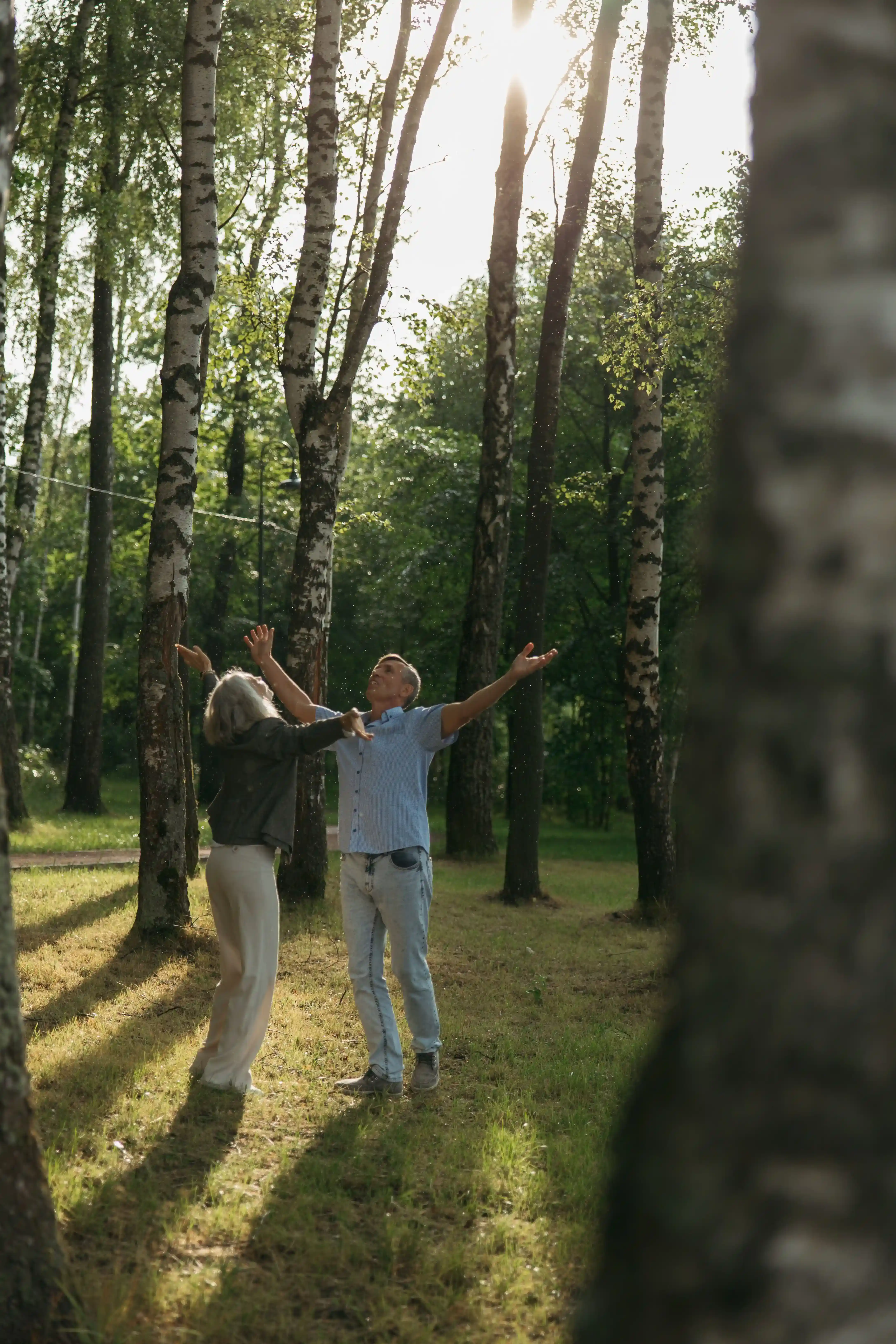
What exactly is forest bathing? Forest bathing is simply being present in a forest environment, engaging all senses mindfully. It's not exercise or hiking—just slow, intentional presence in nature with no agenda.
How long should seniors spend forest bathing? Research suggests 2-4 hours provides optimal benefits, though even 20-30 minutes in a park or tree-lined area offers meaningful stress reduction. Start with shorter sessions if new to the practice.
Do I need a forest to benefit from nature? While forests provide the strongest benefits, parks, botanical gardens, and tree-lined areas also offer stress reduction. The key is natural environments with trees and green space.
Can forest bathing help with anxiety? Yes, studies show forest bathing significantly reduces anxiety symptoms. The combination of phytoncides, natural sounds, and visual patterns calms the nervous system effectively.
Is forest bathing safe for seniors with mobility limitations? Yes, forest bathing can be adapted for any mobility level. Sitting on a bench in a park or garden and mindfully engaging with nature provides benefits.
Forest bathing, known in Japan as "shinrin-yoku," is the practice of immersing oneself in forest environments. Research conducted over decades confirms that this practice offers significant health benefits, particularly for seniors dealing with stress and its related health impacts.
Research Finding
What Is Forest Bathing?
Core Principles
Forest bathing is distinctly different from hiking, exercise, or foraging. It's simply being present in a forest environment, engaging all senses, and allowing the atmosphere to promote relaxation and healing.
| Principle | Description |
|---|---|
| Slow down | No destinations or fitness goals |
| Presence | Fully engage with the present moment |
| Senses | Use all five senses to experience nature |
| No agenda | No tasks, no phone calls, no photography for sharing |
| Comfort | Take breaks, sit often, stay comfortable |
The Japanese Origins
Shinrin-yoku was developed in Japan in the 1980s as a public health initiative. The government began promoting forest bathing as a preventive medicine approach after research demonstrated its measurable health benefits.
Official Recognition
The Science of Forest Bathing
Physiological Effects
Research shows forest environments trigger measurable physical changes:
| Effect | Change | Significance |
|---|---|---|
| Cortisol | Reduced 12-15% | Lower stress response |
| Blood pressure | Lowered significantly | Cardiovascular benefits |
| Heart rate | Decreased | Relaxation response |
| Natural killer cells | Increased 40-50% | Immune boost |
| Inflammatory markers | Reduced | Less chronic inflammation |
Psychological Benefits
Studies document consistent improvements in:
| Domain | Improvement |
|---|---|
| Anxiety | Significant reduction |
| Depression | Alleviated symptoms |
| Mood | Enhanced well-being |
| Mental clarity | Improved focus |
| Energy | Increased vitality |
| Sleep | Better quality |
Immune Function Enhancement
The immune benefits of forest bathing persist for up to 30 days after exposure:
| Component | Effect |
|---|---|
| Natural killer (NK) cells | Increased activity |
| Perforin | Enhanced production |
| Granulysin | Elevated levels |
| Anti-cancer proteins | Increased |
Why It Works
Phytoncides: Nature's Medicine
Trees release volatile organic compounds called phytoncides. When inhaled, these natural chemicals:
| Phytoncide Effect | Health Benefit |
|---|---|
| Boost NK cell activity | Enhanced immune surveillance |
| Reduce stress hormones | Lower cortisol |
| Lower blood pressure | Cardiovascular health |
| Reduce inflammation | Less chronic disease risk |
| Promote relaxation | Mental well-being |
Phytoncide Sources
Common trees that release high levels of phytoncides include pine, cedar, cypress, and spruce. Evergreen forests are particularly rich in these beneficial compounds.
Natural Soundscapes
Forest environments provide acoustic benefits:
| Sound Type | Effect |
|---|---|
| Leaves rustling | Calming, meditative |
| Birdsong | Mood enhancement |
| Water flowing | Stress reduction |
| Wind through trees | Grounding sensation |
| Silence | Mental reset |
Visual Benefits: Fractal Patterns
Nature contains self-similar patterns at multiple scales called fractals:
| Fractal Property | Brain Effect |
|---|---|
| Repetitive patterns | Stress reduction |
| Moderate complexity | Positive engagement |
| Natural variation | Fascination without overstimulation |
| Soft, dappled light | Calming visual input |
Visual Processing
Practical Forest Bathing for Seniors
Finding Suitable Locations
| Location Type | Benefits | Accessibility |
|---|---|---|
| National/state forests | Full phytoncide exposure | Varies by location |
| State parks | Designated trails, benches | Generally good |
| Botanical gardens | Accessible paths | Excellent |
| Tree-lined parks | Partial benefits | Very accessible |
| Nature preserves | Pristine environments | May have limitations |
Essential Guidelines
Duration Guidelines
| Duration | Benefits | Best For |
|---|---|---|
| 20-30 minutes | Acute stress reduction | Beginners, busy schedule |
| 45-60 minutes | Meaningful experience | Regular practice |
| 2-4 hours | Full benefits | Established practitioners |
What to Bring
| Item | Purpose |
|---|---|
| Comfortable walking shoes | Gentle movement |
| Layered clothing | Temperature changes |
| Water | Hydration |
| Light snacks | If staying longer |
| Small seat/cushion | Sitting comfort |
| Sunscreen | Sun protection |
Safety Considerations
Tell someone your plans, bring adequate water, start with shorter sessions closer to home, check weather conditions, and bring any necessary medications. Avoid overly remote areas initially.
Adapting Forest Bathing for Mobility Limitations
Seated Practice
| Adaptation | Description |
|---|---|
| Park bench sessions | Sit and mindfully observe nature |
| Garden time | Engage with plants and soil |
| Window views | Observe nature even from indoors |
| Potted plants | Nature connection at home |
| Virtual forest bathing | Guided nature videos |
Accessible Locations
| Venue Type | Accessibility Features |
|---|---|
| Botanical gardens | Paved paths, benches, wheelchairs |
| State parks with accessible trails | Smooth surfaces, regular rest stops |
| Japanese gardens | Designed for contemplation, accessible |
| Nature centers | Often have accessible programs |
Seasonal Considerations
| Season | Experience | Tips |
|---|---|---|
| Spring | New growth, flowers | Watch for pollinators |
| Summer | Full canopy, warmth | Early morning, bring water |
| Autumn | Color changes, harvest | Wear layers |
| Winter | Bare trees, quiet | Dress warmly, fewer crowds |
Weather Considerations
| Weather | Forest Bathing Appropriateness |
|---|---|
| Light rain | Yes, misty forests are magical |
| Heavy rain | Wait for clearing |
| Hot sun | Morning hours, shade |
| Cold | Dress layers, shorter sessions |
| Snow | Beautiful, dress warmly |
The 5-Senses Practice
Sight
- Observe colors: bark, leaves, sky
- Notice light filtering through canopy
- Watch for wildlife
- Notice textures and patterns
Sound
- Listen to wind through leaves
- Bird calls and songs
- Water sounds if near stream
- Your own footsteps
Smell
- Pine and cedar scent
- Earth and soil
- Flowers and herbs
- Fresh air
Touch
- Bark textures
- Leaves and needles
- Soil and stones
- Air on skin
Taste (Mindfully)
- Clean forest air
- Fresh spring water (if safe)
- Wild berries (if certain of identification)
Full Immersion
Combining with Other Practices
| Practice | How They Complement |
|---|---|
| Walking meditation | Mindful movement enhances benefits |
| Yoga | Stretching outdoors adds dimension |
| Gratitude practice | Nature enhances positive emotions |
| Deep breathing | Clean air supports breathing exercises |
| Photography | (For personal memories, not social sharing) |
FAQ: Forest Bathing for Seniors
What exactly is forest bathing? Forest bathing is simply being present in a forest environment, engaging all senses mindfully. It's not exercise or hiking—just slow, intentional presence in nature with no agenda.
How long should seniors spend forest bathing? Research suggests 2-4 hours provides optimal benefits, though even 20-30 minutes in a park or tree-lined area offers meaningful stress reduction. Start with shorter sessions if new to the practice.
Do I need a forest to benefit from nature? While forests provide the strongest benefits, parks, botanical gardens, and tree-lined areas also offer stress reduction. The key is natural environments with trees and green space.
Can forest bathing help with anxiety? Yes, studies show forest bathing significantly reduces anxiety symptoms. The combination of phytoncides, natural sounds, and visual patterns calms the nervous system effectively.
Is forest bathing safe for seniors with mobility limitations? Yes, forest bathing can be adapted for any mobility level. Sitting on a bench in a park or garden and mindfully engaging with nature provides benefits.
What time of day is best for forest bathing? Early morning (6-10 AM) typically offers optimal benefits due to higher phytoncide levels, cooler temperatures, and quieter environments. However, any time of day provides benefits.
Can I forest bathe in urban parks? Yes, urban parks with trees provide some benefits. Forests offer the strongest effects, but tree-lined urban areas are better than no nature exposure.
How often should I practice forest bathing? Research shows benefits from regular practice. Even once a week provides meaningful benefits. Daily practice, even shorter sessions, maximizes health improvements.
What should I avoid during forest bathing? Avoid phones, photography for social sharing, strenuous hiking, destinations, and rushing. The practice requires leaving your agenda behind.
Can forest bathing replace other forms of exercise? Forest bathing is not exercise—it's a separate wellness practice. It complements but does not replace regular physical activity for cardiovascular and strength benefits.
Related Articles
Stress Management
- Stress Management for Seniors
- Anxiety Management for Seniors
- Sleep Hygiene Checklist
- Morning Sunlight and Sleep
Nature Therapy
Mind-Body Practices
References
- Environmental Health and Preventive Medicine. (2024). Shinrin-yoku (Forest Bathing) Research. https://www.ehpm.org/
- Journal of Environmental Psychology. (2024). Nature and Stress Reduction.
- National Institute on Aging. (2024). Nature Exposure Benefits. https://www.nia.nih.gov/
- Harvard Health Publishing. (2024). Forest Bathing Health Effects. https://www.health.harvard.edu/
- International Journal of Immunopathology and Pharmacology. (2024). Phytoncides and Immune Function.
- Scientific Reports. (2024). Forest Therapy and Cortisol Reduction.
- University of Oregon. (2024). Fractal Patterns and Visual Processing.
- Japanese Forest Therapy Research Center. (2024). Shinrin-yoku Research Database.