Best Blood Pressure Monitors for Home Use
Home blood pressure monitoring is one of the most important tools for managing cardiovascular health. For the millions of Americans with hypertension, regular home monitoring provides crucial information that a single reading at the doctor's office cannot capture. Home readings reveal your blood pressure patterns throughout daily life, help identify white coat hypertension, and allow you and your healthcare provider to adjust treatment based on real-world data. Choosing an accurate, easy-to-use monitor is essential for effective blood pressure management.
The American Heart Association and other medical organizations recommend home blood pressure monitoring for most people with hypertension. Studies show that people who monitor at home have better blood pressure control than those who rely solely on office readings. However, not all monitors are created equal—accuracy, ease of use, cuff size, and features vary significantly between models. Understanding what to look for helps you select a monitor that will serve your needs reliably for years.
Why Home Blood Pressure Monitoring Matters
The Benefits of Tracking at Home
Why monitor at home:
Advantages Over Office Readings:
- Multiple readings over time
- Readings in your normal environment
- No "white coat" effect
- Identifies masked hypertension
- Tracks response to medications
- Engages you in your own care
What Home Monitoring Reveals:
- Your true average blood pressure
- Blood pressure patterns throughout the day
- Effect of activities, stress, and sleep
- Whether medications are working
- When blood pressure is highest and lowest
- Trends over weeks and months
Medical Guidelines Support It:
- American Heart Association recommends
- Helps achieve blood pressure goals
- Provides data for medication adjustments
- Identifies problematic patterns
- Improves medication adherence
- Associated with better outcomes
Types of Blood Pressure Monitors
Choosing the Right Style
Different designs for different needs:
Upper Arm Monitors:
- Most accurate type for home use
- Recommended by medical guidelines
- Cuff wraps around upper arm
- Automatic inflation and reading
- Most models available
- Best for most people
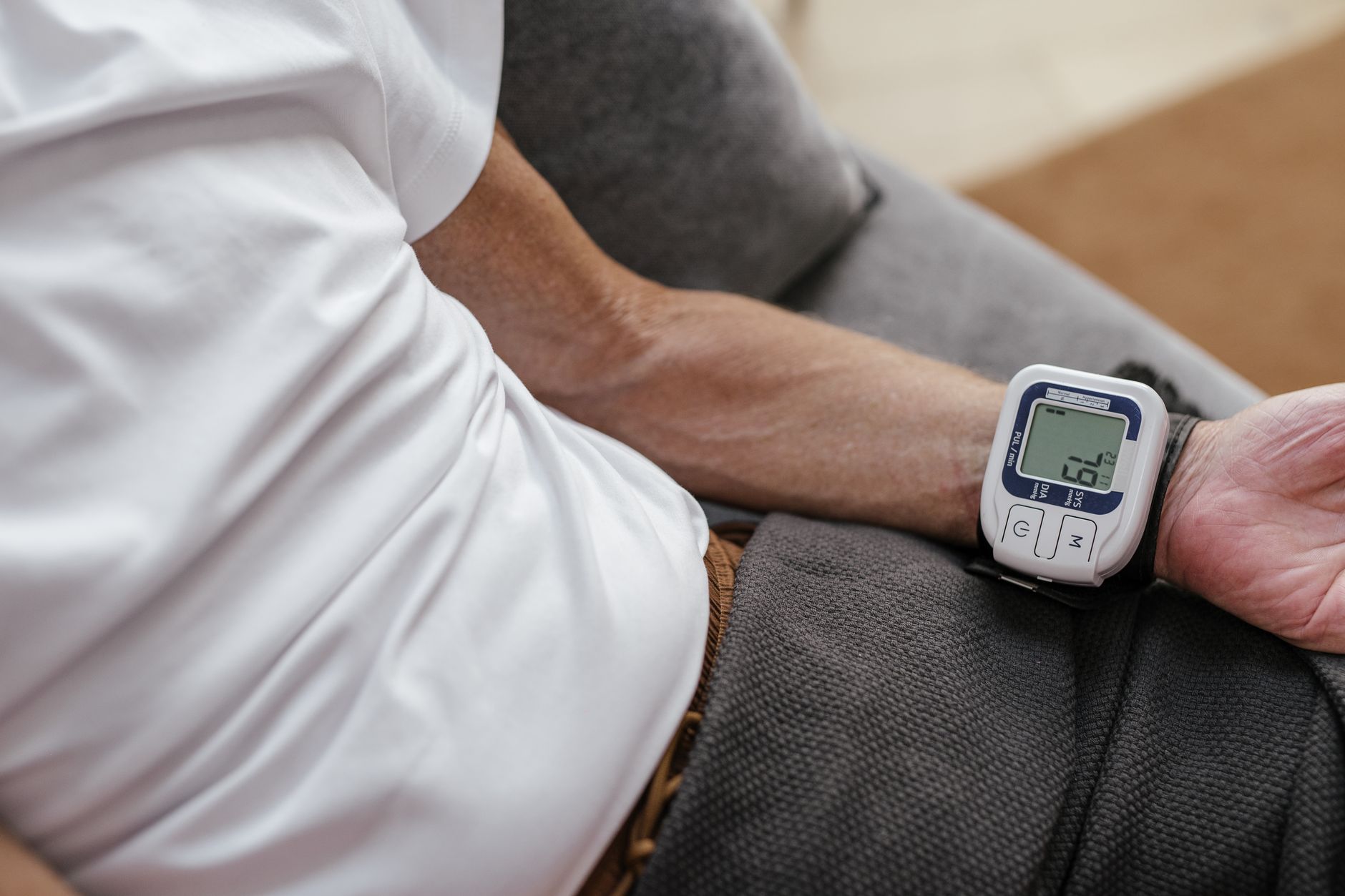
Wrist Monitors:
- More portable
- Good for those with large arms
- Must be positioned at heart level
- Generally less accurate than arm
- Sensitive to positioning
- Better than nothing if arm cuff doesn't fit
Finger Monitors:
- Not recommended for home monitoring
- Least accurate option
- Affected by temperature and position
- Not validated for clinical use
- Avoid for blood pressure management
- May be used for pulse rate only
Key Features to Consider
What Matters Most
Evaluating your options:
Accuracy and Validation:
- Look for clinically validated devices
- Check for FDA clearance
- Read independent testing results
- Accuracy is the most important factor
- Some monitors have proven accuracy
- Compare to readings at doctor's office
Cuff Size:
- Must fit your arm properly
- Wrong size = inaccurate readings
- Measure your arm circumference
- Most adults need standard or large cuff
- Extra-large cuffs available
- Some monitors include both sizes
Ease of Use:
- Large, readable display
- Simple button operation
- Clear instructions
- Easy cuff application
- Quick reading time
- Comfortable inflation
Memory and Tracking:
- Stores multiple readings
- Date and time stamp
- Average calculation
- Multiple user profiles
- Some track 100+ readings
- Important for trend tracking
Connectivity:
- Bluetooth to smartphone
- App integration
- Data sharing with doctor
- Cloud storage
- Some connect to health systems
- Makes tracking easier
Power Options:
- AC adapter included
- Battery operation
- Battery life
- Auto-shutoff feature
- Low battery indicator
- Consider your preferences
Top Blood Pressure Monitors Reviewed
Best Overall: Omron Series 7 (BP7350)
Our top recommendation:
Overview:
- Type: Upper arm monitor
- Cuff: Easy-wrap ComFit cuff (9-17")
- Display: Large backlit LCD
- Memory: 60 readings per user (2 users)
- Power: AC adapter or batteries
- Validation: Clinically validated
Key Features:
- AccuRate technology for proper positioning
- Easy one-touch operation
- Irregular heartbeat detection
- Hypertension indicator
- Motion sensor for accurate readings
- TruRead technology (takes 3 consecutive readings)
- Wide-range cuff fits most arms
Performance:
- Excellent accuracy
- Easy to use
- Comfortable cuff
- Clear readings
- Reliable operation
- Trusted brand
Pros:
- Highly accurate
- Easy to apply cuff
- Multiple user profiles
- Trusted Omron quality
- Good cuff size range
- Clear display
Cons:
- No Bluetooth connectivity
- Memory limited to 60 readings
- Higher price point
- No smartphone app
- Basic feature set
Best Value: Omron Series 3 (BP7100)
Affordable and reliable:
Overview:
- Type: Upper arm monitor
- Cuff: Standard adult cuff (9-17")
- Display: Large LCD
- Memory: 14 readings
- Power: Batteries only
- Validation: Clinically validated
Key Features:
- One-touch operation
- Irregular heartbeat detection
- Hypertension indicator
- Simple design
- Lightweight
- Easy to read display
Performance:
- Good accuracy
- Simple operation
- Reliable readings
- Comfortable
- No-frills approach
- Good for basic needs
Pros:
- Affordable price
- Easy to use
- Accurate readings
- Lightweight
- Good for beginners
- Trusted brand
Cons:
- Limited memory (14 readings)
- No AC adapter included
- No Bluetooth
- Basic features only
- No averaging function
Best with Bluetooth: Omron Complete (BP7900)
Smart monitoring with EKG:
Overview:
- Type: Upper arm monitor with EKG
- Cuff: Easy-wrap (9-17")
- Display: Large color touchscreen
- Memory: Unlimited with app
- Connectivity: Bluetooth
- Validation: FDA cleared
Key Features:
- Blood pressure + EKG in one device
- Detects atrial fibrillation
- Omron Connect app
- Unlimited reading storage
- Share data with doctor
- Color-coded results
- Heart health insights
Performance:
- Excellent accuracy
- EKG detection reliable
- App works well
- Easy data sharing
- Comprehensive tracking
- Advanced features
Pros:
- Combined BP + EKG
- Excellent app
- Unlimited storage
- AFib detection
- Easy sharing
- Color display
Cons:
- Higher price
- Requires smartphone for full features
- More complex
- EKG requires subscription for some features
- Overkill for basic needs
Best for Large Arms: Greater Goods Smart BP Monitor
Accurate with extra-large cuff:
Overview:
- Type: Upper arm monitor
- Cuff: Extra-large (13.75-16.5") included
- Display: Large backlit LCD
- Memory: 60 readings per user (2 users)
- Connectivity: Bluetooth
- Power: AC adapter or batteries
Key Features:
- Extra-large cuff included
- Bluetooth connectivity
- Free app (Balance Health)
- Irregular heartbeat detection
- Hypertension indicator
- Multiple user profiles
- USA-based support
Performance:
- Good accuracy
- Comfortable for large arms
- Easy to use
- Reliable readings
- Good customer support
- App works well
Pros:
- Includes large cuff
- Bluetooth connectivity
- Good value
- Responsive support
- Easy to use
- Accurate
Cons:
- App less polished than Omron
- Cuff may be too large for small arms
- Less brand recognition
- Limited retail availability
Best Wrist Monitor: Omron Series 7 Wrist (BP654)
When arm cuff doesn't work:
Overview:
- Type: Wrist monitor
- Cuff: Fits 5.3-8.5" wrist
- Display: Large LCD
- Memory: 100 readings
- Power: Batteries only
- Validation: Clinically validated
Key Features:
- Heart Zone guidance for positioning
- Easy one-touch operation
- Irregular heartbeat detection
- Hypertension indicator
- Portable design
- 100 reading memory
Performance:
- Good accuracy when positioned correctly
- Must be at heart level
- Positioning guidance helps
- Portable and convenient
- Good for travel
- Better than most wrist monitors
Pros:
- Portable
- Good for large arms
- Positioning guidance
- Decent accuracy
- Easy to use
- Travel-friendly
Cons:
- Requires careful positioning
- Less accurate than arm monitors
- No AC adapter
- Sensitive to movement
- Not first choice for most
Comparison Table
| Monitor | Type | Cuff Size | Memory | Bluetooth | Price |
|---|---|---|---|---|---|
| Omron Series 7 | Arm | 9-17" | 60/user | No | $$ |
| Omron Series 3 | Arm | 9-17" | 14 | No | $ |
| Omron Complete | Arm | 9-17" | Unlimited | Yes | $$$$ |
| Greater Goods | Arm | 13.75-16.5" | 60/user | Yes | $$ |
| Omron Wrist 7 | Wrist | 5.3-8.5" | 100 | No | $$ |
How to Get Accurate Readings
Proper Measurement Technique
Ensuring reliable results:
Before Measuring:
- Rest 5 minutes before reading
- Empty bladder
- Avoid caffeine 30 minutes before
- Avoid exercise 30 minutes before
- Don't smoke before measuring
- Sit quietly, avoid talking
Proper Position:
- Sit with back supported
- Feet flat on floor
- Legs uncrossed
- Arm supported at heart level
- Cuff on bare skin
- Cuff at heart level
Taking the Reading:
- Apply cuff correctly
- Position cuff on upper arm
- Keep still during reading
- Don't talk
- Record the result
- Note time of day
How Often to Measure:
- Twice daily (morning and evening)
- 2-3 readings each time
- Wait 1 minute between readings
- Measure at consistent times
- Track for at least 3-5 days before doctor visit
- More often when adjusting medications
Understanding Your Readings
Blood Pressure Categories
What the numbers mean:
| Category | Systolic | Diastolic |
|---|---|---|
| Normal | Under 120 | Under 80 |
| Elevated | 120-129 | Under 80 |
| High BP Stage 1 | 130-139 | 80-89 |
| High BP Stage 2 | 140+ | 90+ |
| Hypertensive Crisis | 180+ | 120+ |
When to Seek Emergency Care:
- Blood pressure 180/120 or higher
- Chest pain
- Severe headache
- Shortness of breath
- Vision changes
- Weakness or numbness
Key Takeaways
- Home blood pressure monitoring is recommended by medical guidelines and associated with better blood pressure control
- Upper arm monitors are the most accurate and recommended type for most people
- Proper cuff size is essential—wrong size leads to inaccurate readings
- Omron Series 7 offers the best combination of accuracy, ease of use, and reliability for most users
- For those wanting smartphone connectivity, the Omron Complete provides advanced features including EKG and AFib detection
- Wrist monitors are less accurate than arm monitors but may be necessary for those with very large arms
- Proper technique is crucial—rest 5 minutes, sit correctly, position cuff at heart level
- Measure twice daily (morning and evening), taking 2-3 readings each time
- Track your readings and share with your healthcare provider for medication adjustments
- Seek emergency care for blood pressure 180/120 or higher with symptoms
Disclaimer: This information is for educational purposes only. Home blood pressure monitors are not a substitute for medical care. Consult your healthcare provider about blood pressure management and before making any changes to your treatment plan.