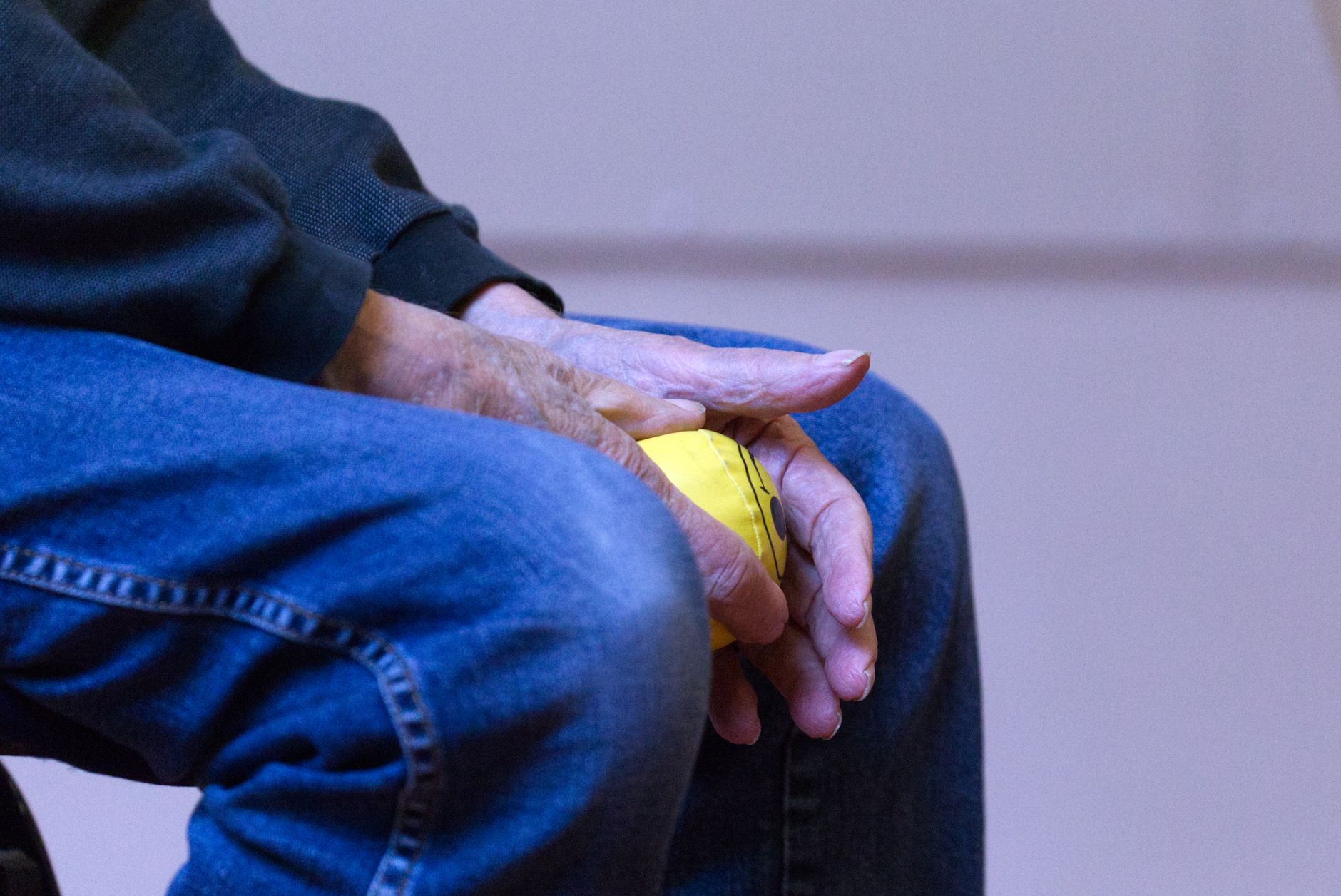
If your hands suddenly feel less strong than they used to, you may notice it during ordinary activities. Opening a jar, turning a key, carrying a cup, buttoning a shirt, or holding a phone may take more effort.
Hand weakness can happen for many reasons. Arthritis, reduced muscle strength, nerve compression, tendon problems, reduced activity, and neurological conditions can all affect how well your hands work.
The question worth asking is not only "How can I make my hands stronger?" It is also "Why are my hands weak?"
Some causes can improve with gentle exercise and changes to daily activities. Others need medical evaluation, particularly when weakness is sudden, getting worse, affects only one side, or occurs with numbness or other neurological symptoms.
Important: Sudden weakness in one hand or arm can be a sign of a stroke. If it starts suddenly, especially with facial drooping, trouble speaking, confusion, vision changes, severe dizziness, or difficulty walking, seek emergency medical care immediately.
Quick Answer: Why Do My Hands Feel Weak?
Common causes of hand weakness include:
- Arthritis affecting the joints
- Age-related muscle loss or reduced activity
- Carpal tunnel syndrome
- Cubital tunnel syndrome
- Peripheral neuropathy and other nerve problems
- Tendon and joint problems
- Neurological conditions, including problems affecting the brain or spinal cord
The pattern of your symptoms can provide useful clues.
For example:
- Painful gripping may point toward arthritis or a tendon problem.
- Numbness and tingling may suggest nerve involvement.
- Weakness mainly in the thumb may occur with carpal tunnel syndrome.
- Numbness or weakness involving the ring and little fingers may involve the ulnar nerve.
- Weakness in both hands that develops gradually may have a different cause from sudden weakness in one hand.
These patterns cannot diagnose the cause by themselves, but they can help you decide what to discuss with a healthcare professional.
When Sudden Hand Weakness May Be an Emergency
Not all hand weakness is an emergency. However, sudden weakness is different from gradually losing strength over months or years.
A stroke can cause sudden weakness or loss of movement on one side of the body, including the hand or arm.
Seek emergency medical care immediately if sudden hand or arm weakness occurs with:
- Facial drooping or an uneven smile
- Trouble speaking or understanding speech
- Sudden confusion
- Sudden vision changes
- Severe dizziness or loss of balance
- Difficulty walking
- Sudden numbness on one side
- A sudden, severe headache
- New weakness affecting one side of the body
Do not wait to see whether the symptoms disappear.
Even if symptoms improve after a short time, urgent medical evaluation may still be necessary because temporary neurological symptoms can be a warning sign of a more serious problem.
6 Questions to Ask Yourself About Hand Weakness
1. Did the weakness start suddenly or gradually?
A change that arrives over minutes or hours demands more attention than one that creeps in over months or years—and sudden weakness, particularly on one side, can indicate a neurological emergency.
Gradual weakness can have many causes, including arthritis, reduced activity, muscle loss, or nerve problems.
2. Is one hand weaker than the other?
A difference between your hands can sometimes provide a clue.
One-sided weakness may occur with nerve compression, injury, arthritis, or neurological conditions.
If one hand or arm suddenly becomes weak, treat it as an emergency, particularly if other neurological symptoms are present.
3. Do you also have numbness or tingling?
Numbness, pins-and-needles sensations, burning, or tingling may suggest that a nerve is involved.
Carpal tunnel syndrome, cubital tunnel syndrome, peripheral neuropathy, and problems involving nerves in the neck can all affect sensation and strength.
4. Does gripping hurt?
If your hand hurts when you grip, arthritis or a tendon problem may be contributing to your reduced grip.
Sometimes the hand is not actually losing as much muscle strength as it feels like it is. Pain can cause you to naturally reduce the force you use.
5. Are you dropping things more often?
Dropping cups, utensils, keys, or your phone can happen because of reduced strength, numbness, poor sensation, or coordination problems.
A noticeable increase in dropping objects is worth discussing with your healthcare provider, especially if it is new or getting worse.
6. Is the weakness getting worse?
Progressive weakness should not simply be attributed to aging.
If everyday activities are becoming increasingly difficult, schedule an evaluation to identify the underlying cause.
7 Common Causes of Weak Hands
1. Arthritis
Arthritis is a common reason older adults experience pain, stiffness, and difficulty using their hands.
Osteoarthritis can affect the finger joints and thumb. Rheumatoid arthritis can cause inflammation in multiple joints and may affect hand function more broadly.
Signs arthritis may be contributing to weak hands
You may notice:
- Pain when gripping or pinching
- Morning stiffness
- Swollen or enlarged finger joints
- Difficulty making a fist
- Difficulty opening jars
- Pain when turning keys or handles
- Reduced grip because gripping hurts
- Changes in the shape of finger joints
One useful clue is the relationship between pain and weakness.
If your hand feels weak mainly because gripping is painful, arthritis may be contributing.
If your hand feels weak without pain, particularly when weakness occurs with numbness or tingling, a nerve or neurological problem may deserve more attention.
2. Age-Related Muscle Loss and Reduced Activity
Grip strength naturally changes with age.
Muscle mass and strength can decline when physical activity decreases, particularly after illness, hospitalization, injury, or a long period of inactivity.
This does not mean that every decrease in hand strength is simply "normal aging."
You may notice:
- Difficulty opening containers
- Trouble carrying grocery bags
- More difficulty holding heavier objects
- Fatigue when using your hands
- Difficulty with tasks that used to feel easy
- Reduced strength after a long period of inactivity
The good news is that muscles can respond to appropriate strengthening at many ages.
However, the right type of exercise depends on why the weakness developed.
3. Carpal Tunnel Syndrome
Carpal tunnel syndrome occurs when the median nerve becomes compressed at the wrist. Because that nerve supplies much of the thumb side of the hand, the squeeze can dull sensation and weaken grip at the same time.
Common symptoms include:
- Numbness or tingling in the thumb
- Tingling in the index and middle fingers
- Hand symptoms that are worse at night
- Weakness when gripping
- Difficulty with fine motor tasks
- Dropping objects
- Difficulty with thumb movements
- Pain or discomfort that may extend into the forearm
Some people notice that they wake up at night with numb or tingling hands and have to shake their hands to make them feel better.
Treatment depends on the severity and cause. Options may include activity modification, wrist positioning or splinting, medication or injections in selected cases, and surgery when nerve compression is significant or does not improve with other treatment.
4. Cubital Tunnel Syndrome
Cubital tunnel syndrome involves compression or irritation of the ulnar nerve, which passes around the inside of the elbow. Symptoms concentrate in the ring and little fingers.
Possible symptoms include:
- Tingling in the ring finger
- Tingling in the little finger
- Numbness in these fingers
- Reduced grip strength
- Difficulty with fine hand movements
- Symptoms that worsen when the elbow stays bent for a long time
You may notice symptoms while talking on the phone, sleeping with your elbow bent, or resting your elbow on a hard surface.
Persistent symptoms should be evaluated, particularly when weakness is developing.
5. Peripheral Neuropathy and Other Nerve Problems
Nerves are responsible for carrying information between the brain, spinal cord, and the rest of the body.
When nerves are damaged or compressed, you may experience both sensory and strength changes.
Peripheral neuropathy can cause:
- Numbness
- Tingling
- Burning sensations
- Reduced sensation
- Weakness
- Difficulty with fine motor tasks
- Problems affecting both hands or both hands and feet
Diabetes is one common cause of peripheral neuropathy, but it is not the only possible cause.
Nerve problems can also occur because of certain medications, nutritional deficiencies, alcohol use, infections, injuries, or other medical conditions.
If weakness occurs together with persistent numbness or tingling, it is worth discussing with a healthcare professional.
6. Tendon and Joint Problems
Tendons connect muscles to bones and help your fingers and wrist move.
Problems affecting tendons can make normal hand movements painful or difficult.
Examples include:
- Trigger finger
- Tendon inflammation
- Tendon injuries
- De Quervain's tenosynovitis
- Other overuse-related tendon problems
You may notice:
- Pain during specific movements
- Swelling
- Catching or locking of a finger
- Pain near the base of the thumb
- Difficulty making certain movements
- Reduced hand function because movement is painful
A tendon problem can sometimes feel like weakness even when the muscles themselves are capable of producing normal force.
7. Neurological Conditions
Conditions affecting the brain, spinal cord, or nerves can cause hand weakness.
Examples include:
Stroke
A stroke can cause sudden weakness or loss of movement, often affecting one side of the body.
Hand or arm weakness may occur along with facial drooping, speech difficulty, confusion, vision problems, dizziness, or difficulty walking.
Sudden symptoms require emergency evaluation.
Cervical spine problems
Nerves that control the hands travel from the spinal cord through the neck and into the arms.
Changes in the cervical spine can sometimes compress these nerves and cause:
- Neck pain
- Arm pain
- Tingling
- Numbness
- Hand weakness
- Changes in coordination
Other neurological conditions
Various neurological disorders can affect strength, coordination, sensation, or fine motor control.
Progressive weakness, unexplained coordination problems, or weakness affecting several parts of the body should be evaluated rather than attributed to aging alone.
Weak Hands vs. Numb Hands: What's the Difference?
These symptoms can occur together, but they are not the same.
Weakness means you have difficulty producing or maintaining force.
Examples include:
- You cannot open a jar that you previously could open
- You have trouble squeezing an object
- You cannot hold a cup securely
- Your fingers do not move normally
- You have difficulty pinching or gripping
Numbness means your sense of touch is reduced or altered.
You may notice:
- Pins and needles
- Tingling
- Burning
- Reduced sensation
- Feeling like your fingers are asleep
Nerve problems can cause both.
For example, carpal tunnel syndrome may cause numbness and tingling together with weakness in certain hand movements.
If you are unsure whether what you are experiencing is weakness, numbness, pain, or a combination of these, describe the symptoms as specifically as possible when speaking with your healthcare provider.
What Can You Do About Weak Hands?
The best approach depends on the cause.
If the problem is related to reduced activity or general muscle weakness, gradual strengthening may help.
If arthritis is contributing, joint-protection strategies and appropriate movement may be more useful.
If a nerve is compressed, strengthening alone may not solve the problem.
If weakness is caused by a neurological condition, professional rehabilitation may be needed.
Try Gentle Hand Exercises
If your healthcare professional has confirmed that strengthening is appropriate, start gently.
Open and Close Your Hand
Slowly open your hand and spread your fingers.
Then gently close your hand.
Do not force your fingers into a tight fist.
Start with a few comfortable repetitions.
Finger-to-Thumb Touches
Touch the tip of your thumb to each fingertip, one at a time.
This works on finger movement and coordination.
Repeat slowly rather than rushing through the movement.
Gentle Soft-Ball Squeeze
Hold a soft therapy ball or similarly soft object.
Gently squeeze and release.
Start with a small number of repetitions.
You should not need to squeeze as hard as possible.
Finger Extension
Place a soft rubber band around your fingers and gently spread your fingers apart.
Use light resistance.
Stop if you develop pain or worsening symptoms.
Wrist Movement
Slowly move your wrist through a comfortable range of motion.
Avoid forcing the wrist into painful positions.
Important Exercise Safety
Do not assume that more exercise is always better.
Stop and seek professional advice if exercises cause:
- Increasing pain
- New numbness
- Tingling
- Swelling
- Significant weakness
- Symptoms that continue after exercise
If the weakness is new, progressive, associated with neurological symptoms, or caused by an injury, get medical advice before beginning resistance exercises.
Protect Your Hands During Everyday Activities
You can reduce the demands placed on weak or painful hands without giving up independence.
Try these strategies:
- Use both hands for heavier objects
- Choose larger handles when possible
- Use your palm instead of your fingertips when appropriate
- Slide heavy objects instead of lifting them
- Avoid unnecessarily tight gripping
- Keep your wrists in a comfortable, neutral position
- Use tools that provide leverage
- Take breaks during repetitive hand activities
- Keep frequently used objects within easy reach
The goal is not to stop using your hands.
The goal is to use them in ways that reduce unnecessary strain while maintaining function.
Assistive Devices Can Make Daily Tasks Easier
Simple tools can reduce the amount of grip strength required for everyday activities.
Examples include:
- Jar openers
- Large-handle utensils
- Button hooks
- Electric can openers
- Key turners
- Pen grips
- Easy-grip gardening tools
- Lever-style door handles
Using an assistive device does not mean you are giving up.
It can help you stay independent while you address the underlying cause of weakness.
If Your Hands Are Stiff, Gentle Warmth May Help
If stiffness is making movement uncomfortable, a warm towel or warm-water soak may temporarily make your hands easier to move.
Some people find gentle warmth helpful before hand exercises.
However, heat does not treat the underlying cause of nerve-related or neurological weakness.
Avoid excessive heat, particularly if you have reduced sensation in your hands.
When Should You See a Doctor About Weak Hands?
Make an appointment with a healthcare professional if:
- Weakness is new and does not improve
- Your grip is gradually becoming weaker
- You are dropping objects more often
- You have persistent numbness or tingling
- One hand is noticeably weaker than the other
- Hand weakness is interfering with dressing, eating, cooking, or other daily activities
- You have persistent hand or wrist pain
- Symptoms developed after an injury
- You have weakness together with neck or arm symptoms
- The weakness continues to get worse
Do not assume progressive weakness is simply part of getting older.
Finding the cause can help determine whether you need exercise, occupational therapy, medication, nerve treatment, or another type of care.
What Will a Doctor Check?
When you report hand weakness, your healthcare provider may ask when the symptoms started and whether they are getting worse.
They may also ask:
- Is one hand affected or both?
- Is there pain?
- Is there numbness or tingling?
- Are you dropping objects?
- Did the symptoms start after an injury?
- Do you have neck or arm symptoms?
- What medications and supplements do you take?
- Do you have conditions that can affect nerves or muscles?
The physical examination may include checking:
- Grip strength
- Finger movement
- Wrist movement
- Sensation
- Reflexes
- Coordination
- Arm and neck function
Depending on your symptoms, additional tests may sometimes be needed.
These can include blood tests, nerve conduction studies, electromyography, or imaging.
The specific tests depend on what your healthcare provider finds during the history and examination.
Frequently Asked Questions
Why do my hands feel weak as I get older?
Hand strength can decrease with age because of changes in muscle mass, activity levels, joints, tendons, and nerves.
However, new or worsening weakness should not automatically be dismissed as normal aging.
Arthritis, nerve compression, medication effects, neurological conditions, and other problems can also cause weak hands.
What is the difference between hand weakness and numbness?
Weakness means you have difficulty producing or maintaining force, such as opening a jar or gripping a cup.
Numbness means reduced or altered sensation.
The two can occur together, especially with nerve problems such as carpal tunnel syndrome or peripheral neuropathy.
Can hand exercises improve weak hands?
Gentle strengthening and range-of-motion exercises may improve hand function when weakness is related to reduced activity or muscle strength.
However, exercises are not appropriate for every cause of hand weakness.
New, worsening, painful, or nerve-related weakness should be evaluated before starting resistance exercises.
Why am I dropping things more often?
Dropping objects can happen because of reduced grip strength, pain, numbness, poor sensation, or problems with coordination.
If this is new, getting worse, or accompanied by weakness or numbness on one side of the body, contact a healthcare professional promptly.
Why is one hand weaker than the other?
One hand may be weaker because of an old injury, arthritis, nerve compression, tendon problems, or a neurological condition.
Sudden weakness in one hand or arm, especially with facial drooping, speech problems, severe dizziness, or other sudden neurological symptoms, can be a medical emergency.
Can arthritis make my hands feel weak?
Yes.
Arthritis can cause pain, stiffness, swelling, and changes around the finger or wrist joints.
Pain may also make you grip objects less firmly.
Gentle movement and joint-protection strategies may help, but persistent or worsening symptoms should be discussed with a healthcare professional.
Can carpal tunnel syndrome cause hand weakness?
Yes.
Carpal tunnel syndrome affects the median nerve at the wrist and can cause numbness, tingling, and weakness, particularly involving the thumb and nearby fingers.
Symptoms are often worse at night.
Treatment depends on the severity and may include activity changes, wrist splinting, injections, or surgery.
When should sudden hand weakness be treated as an emergency?
Sudden weakness in one hand or arm can be a sign of a stroke, particularly when it occurs with facial drooping, trouble speaking, confusion, vision changes, severe dizziness, loss of balance, or a sudden severe headache.
Seek emergency medical care immediately rather than waiting to see if the symptoms improve.
Key Takeaways
- Hand weakness can have many causes, including arthritis, reduced muscle strength, nerve compression, tendon problems, and neurological conditions.
- Weakness is different from numbness, although the two can occur together.
- Painful gripping may point toward a joint or tendon problem, while numbness and tingling may suggest nerve involvement.
- Gradual weakness should not automatically be dismissed as normal aging.
- Gentle exercise may help some people, but strengthening is not appropriate for every cause of hand weakness.
- Assistive devices can make everyday tasks easier while you work on the underlying problem.
- Progressive weakness, persistent numbness, or increasing difficulty with daily activities should be medically evaluated.
- Sudden hand or arm weakness, particularly on one side and with other neurological symptoms, can be a medical emergency.
Related Articles
- When Should Leg Weakness Be Taken Seriously
- Why Do I Walk Slower Than I Used To
- Why Do Seniors Feel Dizzy When Standing Up
- Why Do My Legs Feel Heavy When Walking
- Hand Exercises for Seniors
- How to Improve Grip Strength After 60
References
-
National Institute of Neurological Disorders and Stroke. Stroke information and warning signs. https://www.ninds.nih.gov/health-information/stroke
-
National Institute of Neurological Disorders and Stroke. Carpal Tunnel Syndrome. https://www.ninds.nih.gov/health-information/disorders/carpal-tunnel-syndrome
-
American Academy of Orthopaedic Surgeons. Hand and Wrist Conditioning Program. https://orthoinfo.aaos.org/
-
American Society for Surgery of the Hand. Hand and wrist conditions and treatment information. https://www.assh.org/
-
Arthritis Foundation. Hand exercises and arthritis resources. https://www.arthritis.org/
-
Centers for Disease Control and Prevention. Arthritis and physical activity. https://www.cdc.gov/arthritis/
-
National Institute of Neurological Disorders and Stroke. Peripheral Neuropathy information. https://www.ninds.nih.gov/
Disclaimer: This article is for educational purposes only and does not replace professional medical advice, diagnosis, or treatment. If you experience sudden or severe weakness, especially with symptoms that could indicate a stroke, seek emergency medical care immediately.