📌Key Takeaways
- Electric toothbrushes do more of the work — better for limited dexterity
- Look for easy-grip handles, soft bristles, 2-minute timer, and pressure sensor
- Triple Bristle design cleans all 3 tooth sides at once — faster, more effective
- Replace brush heads every 3 months
- Good oral health is linked to heart health, diabetes management, and overall wellness
Related: Medication Management Tips for Seniors — many medications cause the dry mouth that worsens tooth sensitivity
Why Oral Health Matters for Seniors
Twisting a toothpaste cap, steering a brush around the back molars for two full minutes, reaching every quadrant before your wrist gives out — manual brushing asks a lot of hands stiffened by arthritis, and that is before thinner enamel, receding gums, and medication-related dry mouth enter the picture.
Poor oral health is linked to serious systemic conditions, including heart disease, diabetes, pneumonia, and stroke: bacteria from inflamed gums can enter the bloodstream and drive inflammation elsewhere in the body. For anyone already managing one of those conditions, daily brushing is part of managing the condition, not an optional extra.
An electric brush takes over the scrubbing motion, removes more plaque than a manual brush, and uses timers and pressure sensors to enforce the technique dentists recommend. Below, we compare the best electric toothbrushes for seniors on ease of use, gentleness, and cleaning power.
Quick Picks: Best Electric Toothbrushes for Seniors
| Best For | Product | Why It Stands Out |
|---|---|---|
| 🏆 Best Overall | Triple Bristle Toothbrush | Three-sided cleaning, easy grip, gentle on gums |
| 🖐️ Best for Arthritis | Quip Electric Toothbrush | Slim lightweight handle, non-slip grip, simple controls |
| 🦷 Best for Sensitive Teeth | Philips Sonicare ProtectiveClean | Gentle sonic technology, sensitive mode, pressure sensor |
| 💰 Best Budget | Oral-B Pro 1000 | Affordable, pressure sensor, reliable cleaning |
| ⭐ Best Premium | Philips Sonicare ProtectiveClean | App connectivity, premium build, all smart features |
View our top pick Triple Bristle Toothbrush: Check Price
📊Best Electric Toothbrushes for Seniors Compared
| Brush | Best For | Brush Type | Pressure Sensor | Timer | Easy Grip |
|---|---|---|---|---|---|
| Triple Bristle | Overall | 3-sided oscillating | Yes | 2-min + quadrant | Yes |
| Philips Sonicare ProtectiveClean | Sensitive Teeth | Sonic | Yes | 2-min + quadrant | Yes |
| Oral-B Pro 1000 | Budget | Oscillating | Yes | 2-min + quadrant | Yes |
| Quip | Arthritis | Vibrating | No | 2-min pulses | Yes |
Click on any product to view full details and reviews
Key Features Senior Users Should Know
1. Easy-Grip Handle
Look for a thick barrel with a rubberized, non-slip surface. A wide handle needs far less pinch strength to control, and wet toothpaste turns slick plastic slippery fast.
2. Soft Bristles
Soft bristles flex against receding gums and thinning enamel. Medium or hard bristles do not clean better — they simply wear both away faster.
3. 2-Minute Timer
The American Dental Association recommends brushing for 2 minutes, twice a day. A built-in timer ensures you brush for the full recommended time. Many brushes also have a 30-second quadrant timer that signals when to move to the next section of your mouth.
4. Pressure Sensor
A pressure sensor beeps, flashes, or cuts power when you press too hard. Over-brushing damages gums and enamel, and receded gums leave less margin for error.
5. Lightweight Brush Head
A light head means less wrist work through those two minutes, which matters when forearm strength fades.
6. Long Battery Life
Weeks of brushing per charge means one less cable on the bathroom counter and no chance of grabbing a dead brush at bedtime.
7. Simple Controls
Large, raised buttons with clearly labeled settings win over touchscreens that are hard to see with reading glasses off and soapy hands.
Top Picks Reviewed
1. Best Overall: Triple Bristle Toothbrush
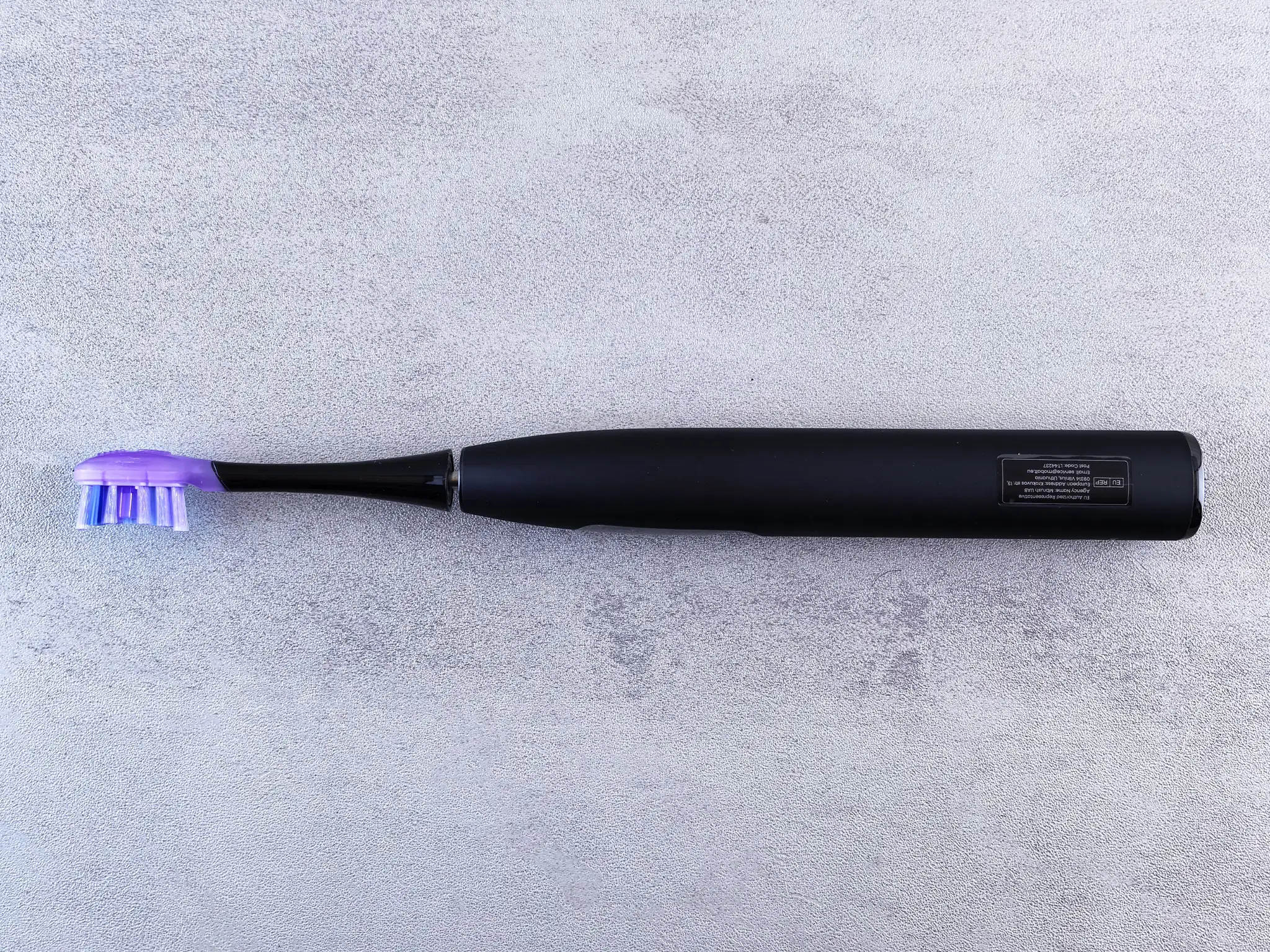
Three heads on the Triple Bristle wrap the front, back, and top of each tooth in a single pass, so the wrist barely moves and the two minutes finish themselves. That is the biggest dexterity advantage in this lineup.
Why it stands out for seniors:
- Triple-head design cleans all 3 sides of each tooth at once
- Thick, easy-grip handle for arthritis and limited hand strength
- Soft bristles gentle on gums and enamel
- 2-minute timer with 30-second quadrant alerts
- Multiple cleaning modes including sensitive
- Pressure sensor prevents over-brushing
Best for: Seniors whose hands or wrists tire mid-brush, and anyone who struggles to reach every surface with an ordinary brush.
Pros:
- Cleans all three sides of the tooth at once — faster brushing with less scrubbing
- Thick, ergonomic handle is easy to grip with arthritic or weak hands
- Built-in pressure sensor and 2-minute timer help protect gums
- Multiple modes, including a sensitive setting
Cons:
- Replacement heads can be pricier than standard brush heads
- The three-sided head takes a little practice to get used to
Triple Bristle Toothbrush
Unique 3-headed electric toothbrush that cleans all sides of your teeth at once. Easy-grip handle, soft bristles, and pressure sensor. Perfect for seniors.
2. Best for Sensitive Teeth: Philips Sonicare ProtectiveClean
The Philips Sonicare ProtectiveClean pairs gentle sonic vibration with a mode built specifically for sensitive teeth and receding gums.
Why it stands out for seniors:
- Gentle sonic technology that is easy on gums
- Sensitive mode for sensitive teeth and gums
- Pressure sensor that alerts when brushing too hard
- 2-minute timer with quadrant intervals
- Soft brush heads available
Best for: Seniors whose main complaint is hot-and-cold twinges or bleeding gums rather than grip trouble.
Pros:
- Gentle sonic vibrations clean with minimal direct pressure on gums
- Dedicated sensitive mode for comfortable brushing
- Pressure sensor alerts before you brush too hard
- Soft and extra-soft replacement heads widely available
Cons:
- Higher upfront price than budget brushes
- Slim handle can feel slippery when wet without a rubber grip
Philips Sonicare ProtectiveClean
Gentle sonic electric toothbrush with sensitive mode and pressure sensor. Ideal for seniors with sensitive teeth or receding gums.
3. Best Budget: Oral-B Pro 1000
At its price, the Oral-B Pro 1000 includes the two features that actually protect gums — a sensor that stops the pulsations when you press too hard and a timer with quadrant beeps — and leaves out the rest.
Why it stands out for seniors:
- Affordable price
- CrossAction brush head removes plaque effectively
- Pressure sensor stops pulsation when brushing too hard
- 2-minute timer with 30-second quadrant alerts
- Simple, easy-to-use design
Best for: Budget buyers who want dependable cleaning and do not need multiple modes. Replacement heads are cheap and sold nearly everywhere.
Pros:
- Affordable price with the key features seniors need
- Pressure sensor stops pulsation when you press too hard
- Round brush head surrounds each tooth for thorough cleaning
- Replacement heads are widely available and reasonably priced
Cons:
- Only one cleaning mode (no dedicated sensitive mode)
- Oscillating head may feel intense for very sensitive gums
Oral-B Pro 1000
Affordable electric toothbrush with pressure sensor and 2-minute timer. Reliable cleaning at a budget-friendly price for seniors.
4. Best for Arthritis: Quip Electric Toothbrush
The Quip is built around grip and simplicity: a slim, lightweight body with a rubberized non-slip surface, one button, and nothing to dock or configure.
Why it stands out for seniors:
- Slim, lightweight design easy to hold
- Non-slip grip
- Gentle vibrating bristles
- 2-minute timer with 30-second pulses
- Simple, single-button operation
Best for: Arthritic or weak hands, and anyone who finds chargers and mode menus more trouble than they are worth. The trade-off is no pressure sensor.
Pros:
- Slim, lightweight design is easy to hold and maneuver
- Non-slip rubber grip keeps the handle steady in wet hands
- Gentle vibrating bristles are easy on sensitive gums
- Single-button operation — no confusing modes
Cons:
- No pressure sensor to alert against over-brushing
- Uses replaceable AAA batteries rather than a rechargeable dock
Quip Electric Toothbrush
Slim, lightweight electric toothbrush with non-slip grip and simple operation. Easy to hold for seniors with arthritis.
Brushing With Sensitive Teeth
Sensitive teeth are one of the most common reasons seniors move to an electric brush — and one of the most common reasons they give up on brushing altogether. A sip of iced tea, cold air on the walk to the mailbox, or a spoonful of ice cream can send a sharp twinge through a tooth once the root surface is exposed. When brushing starts to hurt too, people start skipping it, and the plaque that builds up makes the sensitivity worse.
Sensitive teeth in seniors are most often caused by:
- Receding gums — exposing the softer, more sensitive root surface
- Thinning enamel — from years of brushing, acidic foods, and wear
- Gum disease — which exposes sensitive root surfaces
- Dry mouth — often a side effect of medications
- Cavities or worn fillings
The two models in this lineup built for that problem are the Philips Sonicare ProtectiveClean (variable sonic action plus a dedicated sensitive mode) and the Triple Bristle (soft bristles, a sensitive mode, and shorter sessions). Both are gentler on exposed roots than a typical oscillating brush, which cleans well but can feel intense against receded gums.
📋Gentle Brushing Tips for Sensitive Teeth
0/10 completed- Use a soft or extra-soft bristled brush head
- Use the sensitive or gentle cleaning mode
- Apply light pressure — let the brush do the work
- Brush in small, gentle circular motions
- Use fluoride toothpaste designed for sensitive teeth
- Brush for 2 minutes, twice a day — do not rush
- Replace your brush head every 3 months
- Avoid brushing immediately after eating acidic foods
- Rinse with lukewarm (not hot or cold) water
- See your dentist if sensitivity persists or worsens
Common Mistakes That Worsen Sensitive Teeth
Most worsening sensitivity traces back to everyday habits rather than the brush itself.
- Brushing too hard — pressing harder does not clean better. It damages enamel and pushes gums back, exposing sensitive roots. Use light pressure and let the electric brush do the work.
- Using medium or hard bristles — stiff bristles scratch enamel and irritate receding gums. Always choose soft or extra-soft heads.
- Brushing right after acidic meals — acid softens enamel. Wait 30–60 minutes after eating citrus, tomatoes, or soda before brushing.
- Skipping the sensitive mode — if your brush has a sensitive setting, use it. It reduces vibration intensity for a more comfortable clean.
- Ignoring a worn brush head — old, frayed bristles become stiff and harsh. Replace the head every 3 months, or sooner if bristles look worn.
When to See a Dentist
Tooth sensitivity can sometimes signal a more serious issue. See your dentist if:
- Sensitivity persists for more than 2 weeks
- You have sharp, severe pain
- Your gums are red, swollen, or bleeding
- You have visible cavities or broken teeth
- Sensitivity is accompanied by bad breath or a bad taste in your mouth
- You have loose teeth
Your dentist can identify the cause and recommend treatments such as fluoride treatments, desensitizing agents, gum treatments, or fillings.
Buying Guide
What to Look For
- Handle design — Thick, ergonomic, non-slip for easy gripping
- Bristles — Always soft for gum and enamel protection
- Timer — 2-minute timer with 30-second quadrant alerts
- Pressure sensor — Prevents over-brushing damage
- Cleaning modes — Look for a "sensitive" or "gentle" mode
- Battery life — Long-lasting battery for convenience
- Replacement head cost — Factor in ongoing cost of heads
What to Avoid
- Hard or medium bristles
- Small, slippery handles
- Complicated touchscreen controls
- No pressure sensor (if you have sensitive gums)
- Expensive replacement heads
Common Mistakes Seniors Make When Choosing an Electric Toothbrush
- Choosing based on price alone — the cheapest brush may lack a pressure sensor or come with hard bristles that damage gums.
- Ignoring replacement head cost — some heads cost nearly as much as the brush over a year. Factor the ongoing cost into your budget.
- Assuming more features means better — for many seniors, a simple one-button brush is easier than a model with five modes and an app.
- Skipping the pressure sensor — if you have sensitive or receding gums, a pressure sensor is one of the most important protective features.
- Buying the wrong bristle type — always choose soft bristles. Medium and hard bristles can wear away enamel and irritate gums.
Oral Care Tips for Seniors
📋Senior Oral Care Checklist
0/10 completed- Brush for 2 minutes, twice a day, with a soft-bristled brush
- Floss daily to remove plaque between teeth
- Use fluoride toothpaste to strengthen enamel
- Replace your brush head every 3 months
- Visit the dentist regularly (every 6 months)
- Stay hydrated to combat dry mouth
- Avoid sugary foods and drinks that cause cavities
- If you have dentures, clean them daily
- Report any pain, bleeding, or changes to your dentist
- Consider an electric toothbrush for more effective cleaning
Which Electric Toothbrush Should You Buy?
Answer two quick questions to narrow it down, find Your Electric Toothbrush
What is your biggest concern?
Answer the questions below to find your recommendation
FAQ
What is the best electric toothbrush for seniors?
The best electric toothbrush for seniors has an easy-to-grip handle, gentle (soft) bristles, a built-in 2-minute timer, a pressure sensor to prevent over-brushing, and a long battery life. The Triple Bristle toothbrush is a good choice because it cleans all three sides of the tooth at once, making brushing faster and more effective.
Are electric toothbrushes better for seniors?
Yes, electric toothbrushes are often better for seniors. They do more of the work, making brushing more effective even with limited hand strength or dexterity. Built-in timers ensure you brush for the full 2 minutes, and pressure sensors prevent gum damage from over-brushing.
How do I choose an electric toothbrush for arthritis?
For arthritis, look for an electric toothbrush with a thick, non-slip, ergonomic handle that is easy to grip. A lightweight brush head reduces wrist strain. The Triple Bristle toothbrush is a good option because it cleans all sides of the tooth at once, reducing the time and effort needed.
What is a pressure sensor and why does it matter?
A pressure sensor alerts you (by beeping, vibrating, or pausing) when you are brushing too hard. Over-brushing can damage tooth enamel and recede gums, leading to sensitivity and tooth loss. For seniors, who may have thinner enamel or receding gums, a pressure sensor is an important protective feature.
How often should I replace my electric toothbrush head?
Replace your electric toothbrush head every 3 months, or sooner if the bristles become frayed or worn. Worn bristles do not clean effectively and can harbor bacteria. Some brush heads have indicator bristles that fade when it is time to replace them.
Is it safe to use an electric toothbrush with dentures?
You can use an electric toothbrush on natural teeth even if you have partial dentures. For full dentures, follow your dentist's recommendations — some denture wearers use a soft-bristled brush to clean their dentures separately. Always ask your dentist for personalized advice.
Can an electric toothbrush make sensitive teeth worse?
It can — but only if you use it incorrectly. Brushing too hard or fitting a medium or hard head scratches thinning enamel and pushes receding gums back. With soft or extra-soft bristles, a sensitive mode, and a pressure sensor, an electric brush is usually gentler than a manual one because it lifts plaque with far less scrubbing. Use light pressure and let the brush do the work.
What type of electric toothbrush is gentlest for sensitive teeth — oscillating or sonic?
Sonic brushes are generally gentler than oscillating (rotating) brushes for sensitive teeth. Sonic models use high-frequency vibrations to create fluid dynamics that clean between teeth with less direct pressure on the gums. Either type can be gentle, though, as long as it has soft bristles, a sensitive mode, and a pressure sensor.
Related Articles
- Arthritis Exercise Handbook — Managing joint pain that affects daily tasks like brushing
- Heart Disease Risk Factors for Seniors — How oral health connects to heart health
- Best Incontinence Underwear for Seniors — More senior care guides
References
- American Dental Association (ADA) — Oral health recommendations
- Centers for Disease Control and Prevention (CDC) — Oral health for older adults
- National Institute on Aging — Dental health for seniors
- American Heart Association — Oral health and heart health connection
Disclaimer: This article contains affiliate links. When you click on these links and make a purchase, we may earn a small commission at no extra cost to you. Product prices and availability are accurate as of the date published and are subject to change. This information is for educational purposes only and does not constitute medical advice. Consult your dentist for personalized oral health advice.